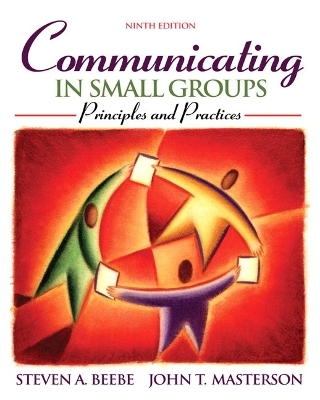
Communicating in Small Groups
Pearson (Verlag)
978-0-205-54721-0 (ISBN)
- Titel erscheint in neuer Auflage
- Artikel merken

PART I FOUNDATIONS OF GROUP AND TEAM COMMUNICATION
CHAPTER ONE Introducing Group and Team Principles and Practices
What Is Small Group Communication?
What About Teams?
What Are the Advantages and Disadvantages of Working in Groups and Teams?
What Are the Different Types of Small Groups?
What Is Virtual Small Group Communication?
How Can You Become a Competent Small Group Communicator
The Nine Core Small Group Communication Competencies
CHAPTER TWO Small Group Communication Theory
The Nature of Theory and the Theory-Building Process
Theory: A Practical Approach to Group Communication
The Purpose of Communication in Small Groups: Making Sense
Theoretical Perspectives for the Study of Group and Team Communication
Describing Elements of Group and Team Communication
CHAPTER THREE Group Formation
Why Do People Join Groups?
Interpersonal Needs
Individual Goals
Group and Team Goals
Establishing Mutuality of Concern
Interpersonal Attraction
Group Attraction
Homogeneity and Diversity in Groups
Group Formation over Time
Group Re-Formation
PART II MANAGING GROUP AND TEAM RELATIONSHIPS
CHAPTER FOUR Relating to Others in Groups and Teams
Roles
Norms
Status
Power
Trust
The Development of Group Relationships over Time
CHAPTER FIVE Improving Group Climate
Defensive and Supportive Climates
Interpersonal Confirmation and Disconfirmation
Group Cohesiveness
Communication Networks
Group Size
Group Climate and Productivity
CHAPTER SIX Enhancing Group and Team Communication Skills
Verbal Dynamics in the Small Group
Listening
The Importance of Nonverbal Communication in Groups
Applications of Nonverbal Communication Research to Groups and Teams
Functions of Nonverbal Cues in Groups and Teams
Interpreting Nonverbal Communication
CHAPTER SEVEN Managing Conflict
What Is Conflict?
Types of Conflict
Conflict and Diversity in Small Groups
Conflict-Management Styles
Collaborative Conflict Management: Principles and Skills
When People Are Not Cooperative: Dealing with Difficult Group Members
Groupthink: Conflict Avoidance
Consensus: Reaching Agreement through Communication
PART III MANAGING GROUP AND TEAM TASKS
CHAPTER EIGHT Preparing to Collaborate
Developing a Discussion Plan
Formulating Discussion Questions
Using Logic and Reasoning
Evaluating Evidence in Group Discussion
Using Critical-Analysis Skills: Avoiding Reasoning Fallacies
CHAPTER NINE Making Decisions and Solving Problems
Group Decision Making: Choosing among Alternatives
Group Problem Solving: Overcoming Obstacles to Achieve a Goal
Three Approaches to Group Problem Solving
Cultural Assumptions about Group Problem Solving and Decision Making
CHAPTER TEN Using Problem-Solving Techniques
An Overview of Prescriptive Problem-Solving Strategies
Finding a Balance between Group Structure and Interaction
Reflective Thinking: The Traditional Approach to Group Problem Solving
Question-Oriented Approaches to Problem Solving
Beyond Technique
CHAPTER ELEVEN Enhancing Creativity in Groups and Teams
What Is Creativity?
Why Study Creativity?
Myths about Creativity
Barriers to Group and Team Creativity
Principles of Group and Team Creativity
Techniques for Enhancing Group and Team Creativity
Brainstorming
CHAPTER TWELVE Leadership
What Is Leadership?
Trait Perspective: Characteristics of Effective Leaders
Functional Perspective: Group Needs and Roles
Situational Perspective: Adapting Style to Context
Transformational Leadership
Emergent Leadership in Small Groups
Leadership and Self-Deception in Organizations
Leadership Training
APPENDIX A Principles and Practices for Effective Meetings
Giving Meetings Structure
Becoming a Meeting Facilitator: Managing Group and Team Interaction
How to Lead Meetings
How to Participate in Meetings
Putting Principles into Practice
APPENDIX B Principles and Practices for Communicating to an Audience
Panel Discussions
Symposium Presentations
Forum Presentations
Planning What to Say to an Audience
Presenting Information to an Audience
Glossary
Notes
Credits
Index
| Erscheint lt. Verlag | 29.1.2008 |
|---|---|
| Sprache | englisch |
| Maße | 256 x 203 mm |
| Gewicht | 698 g |
| Themenwelt | Sozialwissenschaften ► Kommunikation / Medien ► Kommunikationswissenschaft |
| ISBN-10 | 0-205-54721-4 / 0205547214 |
| ISBN-13 | 978-0-205-54721-0 / 9780205547210 |
| Zustand | Neuware |
| Informationen gemäß Produktsicherheitsverordnung (GPSR) | |
| Haben Sie eine Frage zum Produkt? |
aus dem Bereich