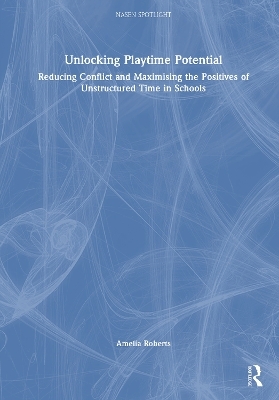
Unlocking Playground Potential
Routledge (Verlag)
978-1-032-52879-3 (ISBN)
- Noch nicht erschienen (ca. Mai 2026)
- Versandkostenfrei
- Auch auf Rechnung
- Artikel merken
Playgrounds, break times and lunches are a crucial part of the school day but can often be a significant source of worry for both staff and students. This book brings together the most relevant research and practical insights from schools to understand the underlying reasons behind stress and conflict and to find creative ways to turn playtime into a positive experience for all.
Chapters cover a range of key topics, from playground design and staff training to supporting student interactions and reducing bullying. Full of practical ideas for improving wellbeing across school settings, the book:
Breaks research into easily digestible chunks, explaining key theories and incorporating contributions from researchers in the field
Contains advice on using playground maps to understand students’ opinions of different areas and engage them in redesigning play elements such as games and sensory circuits
Provides ideas for whole school approaches to rethink hotspots such as tricky transitions back into lessons or lunchtimes that just don’t work
Includes a wealth of case studies showcasing ways different schools have made the most of playtime, alongside reflection opportunities for the reader and reflections from practitioners.
This book will help schools to turn breaktimes back into opportunities for exploring friendship, reducing stress, and enhancing learning through play and social interaction. It is essential reading for senior leadership teams, SENCOs, teachers, and playground supervisors.
Amelia Roberts is an Associate Professor at UCL and Head of Department (Psychology and Human Development), formerly Deputy Director of UCL Centre for Inclusive Education Vice Dean (Enterprise) at the Institute of Education. Her research focuses on the relationship between research and schools, including how schools translate their knowledge and experience back into the research. Amelia has developed a number of inclusion and wellbeing-focused university-school partnership programmes and works internationally, including a UNICEF funded ‘Inclusive Classrooms’ project in Oman. She has also worked with the DFE on projects related to special educational needs, managed a centre for adults with disabilities in Hong Kong and has experience as a primary school TA and in an on-site Alternative Provision in a South London secondary school.
About the Author
About the Contributor
Preface
Chapter 1: Why are playtimes, breaktimes and lunchtimes important?
Chapter 2: Core ideas emerging from the research
Chapter 3: How to assess your school’s break times: stress, behaviour, transitions
Chapter 4: Playground design
Chapter 5: Managing Transitions
Chapter 6: Recognition and support for Midday and Lunchtime Supervisors in creating harmonious break times
Chapter 7: Children and young people at particular risk of poor experiences during play time
Chapter 8: Designing a project for your school: networks, collaboration and frameworks
Downloadable Practical Resources
Downloadable resource: Framework for thinking about playgrounds and breaktimes
Index
| Erscheint lt. Verlag | 15.5.2026 |
|---|---|
| Reihe/Serie | nasen spotlight |
| Zusatzinfo | 15 Tables, black and white; 16 Line drawings, black and white; 6 Halftones, black and white; 22 Illustrations, black and white |
| Verlagsort | London |
| Sprache | englisch |
| Maße | 210 x 297 mm |
| Gewicht | 453 g |
| Themenwelt | Sozialwissenschaften ► Pädagogik ► Schulpädagogik / Grundschule |
| Sozialwissenschaften ► Pädagogik ► Schulpädagogik / Sekundarstufe I+II | |
| Sozialwissenschaften ► Pädagogik ► Sonder-, Heil- und Förderpädagogik | |
| ISBN-10 | 1-032-52879-6 / 1032528796 |
| ISBN-13 | 978-1-032-52879-3 / 9781032528793 |
| Zustand | Neuware |
| Informationen gemäß Produktsicherheitsverordnung (GPSR) | |
| Haben Sie eine Frage zum Produkt? |
aus dem Bereich