


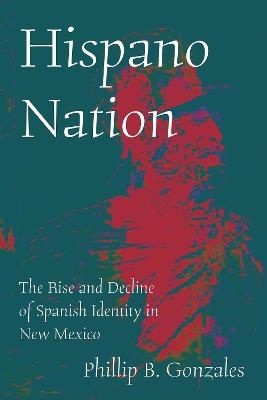
Hispano Nation
The Rise and Decline of Spanish Identity in New Mexico
Seiten
2026
University of New Mexico Press (Verlag)
978-0-8263-6972-7 (ISBN)
University of New Mexico Press (Verlag)
978-0-8263-6972-7 (ISBN)
- Noch nicht erschienen (ca. August 2026)
- Versandkostenfrei
- Auch auf Rechnung
- Artikel merken
A genuinely original exploration of Spanish identity among Nuevomexicanos and Nuevomexicanas, a classic cultural theme in Southwest studies.
Spanish identity has always been a striking hallmark of New Mexico culture, yet many questions remain about how this unique and provocative construction originated and what it has meant to the state’s Hispanic populace. Through a meticulous handling of the historical record, Gonzales arrives at a clear definition of what Spanish identity has been and what it continues to be. He uncovers Spanish identity’s origins deep in New Mexico’s past, its cultural and political development in the nineteenth-century, the pinnacle of popularity it enjoyed beginning in the early twentieth century, and its eventual decline.
In Hispano Nation Gonzales argues that Spanish identity was formulated in the nineteenth century along the lines of ethnic nationalism. He deftly addresses the controversies that have surrounded Spanish identity, including whether it reflected a “true” ethnic identity in lieu of a Mexican identity for the Nuevomexicano people, and how historical conflict with Indigenous people became ingrained itself in the Spanish Americans’ view of their own heritage. The narrative is enlivened throughout with engaging stories, penetrating analyses, fascinating cultural actors, and visits to known historical legacies.
Spanish identity has always been a striking hallmark of New Mexico culture, yet many questions remain about how this unique and provocative construction originated and what it has meant to the state’s Hispanic populace. Through a meticulous handling of the historical record, Gonzales arrives at a clear definition of what Spanish identity has been and what it continues to be. He uncovers Spanish identity’s origins deep in New Mexico’s past, its cultural and political development in the nineteenth-century, the pinnacle of popularity it enjoyed beginning in the early twentieth century, and its eventual decline.
In Hispano Nation Gonzales argues that Spanish identity was formulated in the nineteenth century along the lines of ethnic nationalism. He deftly addresses the controversies that have surrounded Spanish identity, including whether it reflected a “true” ethnic identity in lieu of a Mexican identity for the Nuevomexicano people, and how historical conflict with Indigenous people became ingrained itself in the Spanish Americans’ view of their own heritage. The narrative is enlivened throughout with engaging stories, penetrating analyses, fascinating cultural actors, and visits to known historical legacies.
Phillip B. Gonzales is a professor of sociology emeritus at the University of New Mexico. He has authored and edited several books, including Política: Nuevomexicanos and American Political Incorporation, 1821–1910
| Erscheint lt. Verlag | 18.8.2026 |
|---|---|
| Verlagsort | Albuquerque, NM |
| Sprache | englisch |
| Maße | 152 x 229 mm |
| Gewicht | 567 g |
| Themenwelt | Sachbuch/Ratgeber ► Geschichte / Politik ► Regional- / Landesgeschichte |
| Geisteswissenschaften ► Geschichte ► Regional- / Ländergeschichte | |
| Sozialwissenschaften ► Ethnologie | |
| Sozialwissenschaften ► Soziologie | |
| ISBN-10 | 0-8263-6972-3 / 0826369723 |
| ISBN-13 | 978-0-8263-6972-7 / 9780826369727 |
| Zustand | Neuware |
| Informationen gemäß Produktsicherheitsverordnung (GPSR) | |
| Haben Sie eine Frage zum Produkt? |
Mehr entdecken
aus dem Bereich



aus dem Bereich
eine Geschichte der Vereinigten Staaten von 1950 bis heute
Buch | Hardcover (2024)
Klett-Cotta (Verlag)
CHF 48,95


