


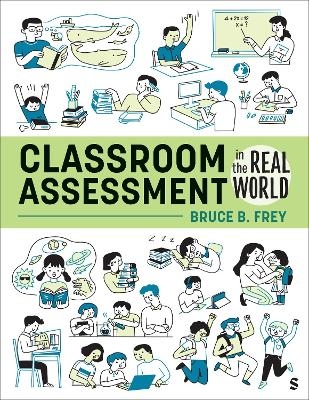
Classroom Assessment in the Real World
SAGE Publications Inc (Verlag)
9781071882030 (ISBN)
- Noch nicht erschienen (ca. April 2026)
- Versandkostenfrei
- Auch auf Rechnung
- Artikel merken
Bruce B. Frey, PhD, is an award-winning researcher, author, teacher, and professor of educational psychology at the University of Kansas. He is the editor of The SAGE Encyclopedia of Educational Research, Measurement and Evaluation and the SAGE Encyclopedia of Educational Design. In addition to being the lead author for The Statistics for People Who (Think They) Hate Statistics series, his books for Sage include There’s a Stat for That!, and 100 Questions (and Answers) About Tests and Measurement. He also wrote Statistics Hacks for O’Reilly Media. In his spare time, Bruce leads a secret life as Professor Bubblegum, host of a YouTube channel and Echo Valley, a podcast that celebrates bubblegum pop music of the late 1960s. The show is wildly popular with the young people.
Preface
Acknowledgments
About the Author
Chapter 1: Everything You Wanted to Know about Classroom Assessment (but didn’t know to ask)
How Chapter 1 Fits in Our Instructional Strategy
Classroom Assessment Then and Now
Choose Your Own Path
Fair and Just
Validity And Reliability
Looking Back in This Chapter
Listening to Teachers
Questions with No Wrong Answers
Key Terms in this Chapter
Chapter 2: Choose Your Own Path: Who are you?
How Chapter 2 Fits in Our Instructional Strategy
Defining Your Assessment Philosophy
Bloom’s Taxonomy
Social Justice and Equity
Universal Design or Accommodations (or Both?)
Looking Back in This Chapter
Listening to Teachers
Questions with No Wrong Answers
Key Terms in this Chapter
Chapter 3: Working Backwards: Connecting Learning Objectives and Assessment
How Chapter 3 Fits in Our Instructional Strategy
The System
Bloom’s Taxonomy
Learning Objectives
Backward Design
Choose Your Own Path
Fair and Just
Looking Back in This Chapter
Listening to Teachers
Questions with No Wrong Answers
Key Terms in this Chapter
Chapter 4: The Power of Formative Assessment: Feedback that Increases Learning
How Chapter 4 Fits in Our Instructional Strategy
Formative Assessment
Choose Your Own Path
Formative Assessment is Different from the Other Guys
How to Do It
What Informal Formative Assessment Looks Like in the Classroom
What Formal Formative Assessment Looks Like in the Classroom
Formative Assessment Land
Fair and Just
Assessing the Assessment
Looking Back in This Chapter
Listening to Teachers
Questions with No Wrong Answers
Key Terms in this Chapter
Chapter 5: Choosing the Right Answer: Multiple-Choice Questions and Stuff Like That
How Chapter 5 Fits in Our Instructional Strategy
Following Tradition
No Judgment Here
Item Formats
Analyzing Multiple-Choice Items
Table of Specifications
Choose Your Own Path
Fair and Just
Assessing the Assessment
Looking Back in This Chapter
Listening to Teachers
Questions with No Wrong Answers
Key Terms in this Chapter
Chapter 6: Building the Right Answer Constructed-Response Items
How Chapter 6 Fits in Our Instructional Strategy
Building an Answer
What Constructed-Response Items Look Like
Essay Tests and Writing Assignments
Choose Your Own Path
Rubrics
How to Make a Rubric
Fair and Just
Looking Back in This Chapter
Listening to Teachers
Questions with No Wrong Answers
Key Terms in this Chapter
Chapter 7: Performance-Based Assessment What Can Your Students Do?
How Chapter 7 Fits in Our Instructional Strategy
Assessing Ability
What is Performance-Based Assessment?
How and When to Use Performance Assessment
Choose Your Own Path
Fair and Just
Portfolios
What Performance-Based Assessment Looks Like in the Classroom
Assessing the Assessment
Looking Back in This Chapter
Listening to Teachers
Questions with No Wrong Answers
Key Terms in this Chapter
Chapter 8: Authentic Assessment Keeping it Real
How Chapter 8 Fits in Our Instructional Strategy
In Search of “Authentic” Assessment
What Authentic Assessment Looks Like in the Classroom
Choose Your Own Path
Fair and Just
Assessing the Assessment
Looking Back in This Chapter
Listening to Teachers
Questions with No Wrong Answers
Key Terms in this Chapter
Chapter 9: One for All and All for One: Universal Design
How Chapter 9 Fits in Our Instructional Strategy
One Test that Works for All
A Brief History of Accessibility
Designing Universal Design
Accommodations and Alternate Assessments
Fair and Just
Choose Your Own Path
Writing Universally Designed Tests
The Nuts-and-Bolts and the Nitty-Gritty
Assessing the Assessment
Looking Back in this Chapter
Listening to Teachers
Questions with No Wrong Answers
Key Terms in this Chapter
Chapter 10: Classroom Assessment Online and Onscreen
How Chapter 10 Fits in Our Instructional Strategy
Online Assessment
First, the Bad News
But, Now the Good News!
How to Think about Online Assessment
There’s an App for That
Item Analysis Online
Fancy Item Types
Fair and Just
Technology and Authentic Assessment
Choose Your Own Path
Looking Back in this Chapter
Listening to Teachers
Questions with No Wrong Answers
Key Terms in this Chapter
Chapter 11: Keeping Score Math and Stuff
How Chapter 11 Fits in Our Instructional Strategy
Creating Scores
Descriptive Statistics
What’s Normal Anyway?
Working with Real Data in the Classroom
Choose Your Own Path
Fair and Just
Looking Back in This Chapter
Questions with No Wrong Answers
Key Terms in this Chapter
Chapter 12: Making the Grade
How Chapter 12 Fits in Our Instructional Strategy
Philosophies of Grading
Choose Your Own Path
Validity and Reliability of Grading
Standards-Based Grading
Grading and the Different Approaches to Assessment
Talking with Parents
Fair and Just
Grading Plans
Looking Back in This Chapter
Questions with No Wrong Answers
Key Terms in this Chapter
Chapter 13: Standardized Tests
How Chapter 13 Fits in Our Instructional Strategy
Standardized Tests
How Standardized Tests Are Built
Validity and Reliability of Standardized Tests
Interpreting Standardized Test Scores
Talking to Parents about Standardized Test Scores
Statewide Standardized Tests
Ethics of Preparing Students for Standardized Tests
Fair and Just
Looking Back in This Chapter
Questions with No Wrong Answers
Key Terms in this Chapter
| Erscheint lt. Verlag | 14.4.2026 |
|---|---|
| Verlagsort | Thousand Oaks |
| Sprache | englisch |
| Maße | 187 x 231 mm |
| Themenwelt | Sozialwissenschaften ► Pädagogik |
| ISBN-13 | 9781071882030 / 9781071882030 |
| Zustand | Neuware |
| Informationen gemäß Produktsicherheitsverordnung (GPSR) | |
| Haben Sie eine Frage zum Produkt? |
aus dem Bereich


