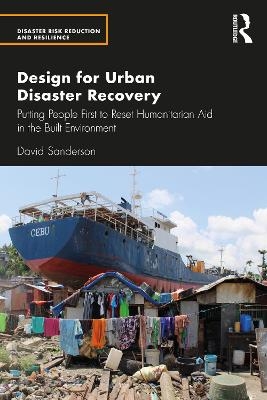
Design for Disaster Recovery
Routledge (Verlag)
978-1-032-41155-2 (ISBN)
- Noch nicht erschienen (ca. März 2026)
- Versandkostenfrei
- Auch auf Rechnung
- Artikel merken
At a time of escalating urban disasters and sharply reduced aid budgets, humanitarian aid, long held in need of reform, has no choice but to reset.
This book argues that humanitarian aid must accomplish this reset by prioritising people’s agency and localising responses. This book provides lessons learned from leading practitioners working in urban development who dissented from established top-down practices to forge better, people-centred approaches. These lessons are compared with the wicked problem of post-disaster shelter provision, reviewing good approaches that work, and some bad ones that don’t. This book ends by proposing three ways for aid to let go, through supporting and trusting people to do the right thing.
This book ultimately seeks to reinforce that engaging in processes is vital for effective disaster recovery programmes. That means putting first those caught up in disaster and supporting local organisations who are best placed to provide the right support. It will be crucial reading for anyone working in humanitarian aid, especially planners, architects, engineers and community development practitioners.
David Sanderson trained as an architect and has worked for over 30 years across the World, engaging in development and disasters. After four years with a disaster management consultancy, he joined the NGO CARE International UK in 1998 as head of policy, specialising in urban issues, and was subsequently regional manager for Southern and West Africa, based in Johannesburg. In 2006, David became Director of a UK centre focusing on development and emergencies. Between 2013 and 2014, he was a full-time Visiting Professor at Harvard University’s Graduate School of Design. After 18 months as a Professor in Norway, he joined the University of New South Wales, Sydney in 2016 as the Inaugural Judith Neilson Chair of Architecture. He has served on the boards of CARE, the Norwegian Refugee Council and the Humanitarian Innovation Fund.
1. A Disaster Strikes Mishal. 2. Unpacking Urban Disasters. 3. Resetting Humanitarian Response. 4. Learning from Development. 5. Putting People First. 6. Sheltering After Disaster. 7. Letting Go.
| Erscheint lt. Verlag | 25.3.2026 |
|---|---|
| Reihe/Serie | Disaster Risk Reduction and Resilience |
| Zusatzinfo | 11 Line drawings, black and white; 11 Illustrations, black and white |
| Verlagsort | London |
| Sprache | englisch |
| Maße | 156 x 234 mm |
| Themenwelt | Naturwissenschaften ► Biologie ► Ökologie / Naturschutz |
| Sozialwissenschaften ► Soziologie ► Spezielle Soziologien | |
| Technik ► Architektur | |
| ISBN-10 | 1-032-41155-4 / 1032411554 |
| ISBN-13 | 978-1-032-41155-2 / 9781032411552 |
| Zustand | Neuware |
| Informationen gemäß Produktsicherheitsverordnung (GPSR) | |
| Haben Sie eine Frage zum Produkt? |
aus dem Bereich