


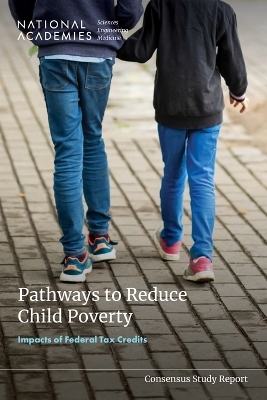
Pathways to Reduce Child Poverty
Impacts of Federal Tax Credits
Seiten
2026
National Academies Press (Verlag)
978-0-309-99409-5 (ISBN)
National Academies Press (Verlag)
978-0-309-99409-5 (ISBN)
- Noch nicht erschienen (ca. Juni 2026)
- Versandkostenfrei
- Auch auf Rechnung
- Artikel merken
Federal tax credits are among the nation's most powerful tools for reducing child poverty. Temporary expansions of the Earned Income Tax Credit (EITC) and Child Tax Credit (CTC) under the American Rescue Plan Act of 2021 demonstrated the scale of impact these policies can have, lifting more than 2 million children above the poverty line and showing that alternative designs could reduce child poverty even further.
Pathways to Reduce Child Poverty: Impacts of Federal Tax Credits provides an in-depth assessment of how these credits worked in 2021, what effects they had across different groups of children, and the potential trade-offs of long-term policy options. Developed by a committee of experts, the report offers evidence-based insights for policymakers, funders, researchers, and advocates. It highlights how different credit designs could shape children's well-being, employment incentives, and fiscal costs, and points to opportunities for future research to strengthen policy decisions.
Table of Contents
Front Matter
Summary
1 Introduction
2 Key Provisions of the EITC and CTC Including Changes Under the TCJA and ARPA
3 Measuring Child Poverty with the Supplemental Poverty Measure
4 Take-Up of the EITC and CTC under ARPA in 2021
5 Experiences of Families and Nonprofit Organizations with the EITC and CTC Policies in 2021
6 Other COVID-19 Pandemic-Period Policies and Programs and Their Potential Confounding Effects for Assessing Impacts of the EITC and CTC in 2021
7 Potential Labor Supply and Employment Effects of Tax Credits
8 Impact of the EITC and CTC on Child Poverty in 2021
9 Alternative Policy Options
10 Recommendations for Improvements in the Measurement and Evaluation of the Impacts of the EITC and CTC on Child Poverty
Appendix A: Committee and Staff Biosketches
Appendix B: Key Terms
Appendix C: Specification of the Official Poverty Measure and the Supplemental Poverty Measure
Appendix D: Demographic Portrait of Child Poverty in the United States
Appendix E: Evidence on Strengths and Limitations of IRS and Survey Data to Measure EITC and CTC Take-Up
Appendix F: Synthesizing Elasticity Estimates from the EITC and CTC Literature
Appendix G: Detailed Tables for Impacts of EITC and CTC Policies in 2021 on Child Poverty Rates for Subgroups
Appendix H: Urban Institute TRIM3 Technical Specification: Using Microsimulation to Assess the Impact of the 2021 Child Tax Credit and Earned Income Tax Credit
Appendix I: Additional Tables on Alternative Policy Options
References
Pathways to Reduce Child Poverty: Impacts of Federal Tax Credits provides an in-depth assessment of how these credits worked in 2021, what effects they had across different groups of children, and the potential trade-offs of long-term policy options. Developed by a committee of experts, the report offers evidence-based insights for policymakers, funders, researchers, and advocates. It highlights how different credit designs could shape children's well-being, employment incentives, and fiscal costs, and points to opportunities for future research to strengthen policy decisions.
Table of Contents
Front Matter
Summary
1 Introduction
2 Key Provisions of the EITC and CTC Including Changes Under the TCJA and ARPA
3 Measuring Child Poverty with the Supplemental Poverty Measure
4 Take-Up of the EITC and CTC under ARPA in 2021
5 Experiences of Families and Nonprofit Organizations with the EITC and CTC Policies in 2021
6 Other COVID-19 Pandemic-Period Policies and Programs and Their Potential Confounding Effects for Assessing Impacts of the EITC and CTC in 2021
7 Potential Labor Supply and Employment Effects of Tax Credits
8 Impact of the EITC and CTC on Child Poverty in 2021
9 Alternative Policy Options
10 Recommendations for Improvements in the Measurement and Evaluation of the Impacts of the EITC and CTC on Child Poverty
Appendix A: Committee and Staff Biosketches
Appendix B: Key Terms
Appendix C: Specification of the Official Poverty Measure and the Supplemental Poverty Measure
Appendix D: Demographic Portrait of Child Poverty in the United States
Appendix E: Evidence on Strengths and Limitations of IRS and Survey Data to Measure EITC and CTC Take-Up
Appendix F: Synthesizing Elasticity Estimates from the EITC and CTC Literature
Appendix G: Detailed Tables for Impacts of EITC and CTC Policies in 2021 on Child Poverty Rates for Subgroups
Appendix H: Urban Institute TRIM3 Technical Specification: Using Microsimulation to Assess the Impact of the 2021 Child Tax Credit and Earned Income Tax Credit
Appendix I: Additional Tables on Alternative Policy Options
References
| Erscheint lt. Verlag | 25.6.2026 |
|---|---|
| Verlagsort | Washington |
| Sprache | englisch |
| Maße | 152 x 229 mm |
| Themenwelt | Sozialwissenschaften ► Soziologie ► Empirische Sozialforschung |
| Sozialwissenschaften ► Soziologie ► Mikrosoziologie | |
| ISBN-10 | 0-309-99409-8 / 0309994098 |
| ISBN-13 | 978-0-309-99409-5 / 9780309994095 |
| Zustand | Neuware |
| Informationen gemäß Produktsicherheitsverordnung (GPSR) | |
| Haben Sie eine Frage zum Produkt? |
Mehr entdecken
aus dem Bereich


aus dem Bereich
Buch | Hardcover (2023)
De Gruyter Oldenbourg (Verlag)
CHF 48,90
ein Arbeitsbuch
Buch | Softcover (2021)
De Gruyter Oldenbourg (Verlag)
CHF 48,90


