


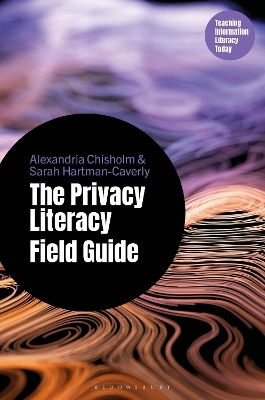
The Privacy Literacy Field Guide
Seiten
2026
Libraries Unlimited Inc (Verlag)
979-8-216-38784-8 (ISBN)
Libraries Unlimited Inc (Verlag)
979-8-216-38784-8 (ISBN)
- Titel nicht im Sortiment
- Artikel merken
Explore best practices in privacy literacy instruction and programming and learn how to apply them to your own library work.
Answering a need for practical and theory-informed approaches to privacy literacy practices, The Privacy Literacy Field Guide responds to the challenges that practitioners experience.
By offering privacy literacy programming, libraries can broaden and enhance their impact in an emerging area of societal importance, while leveraging librarians’ unique expertise in data flows and ethical commitment to privacy.
The Privacy Literacy Field Guide provides a roadmap for academic librarians to navigate the rapidly evolving information ecosystem, build professional self-efficacy, and implement privacy literacy learning experiences into instructional, student engagement, and outreach programming.
Arranged in three sections, this volume supports librarians in establishing professional privacy knowledge, designing privacy literacy learning experiences, and implementing privacy literacy in their instruction, outreach, and engagement work. The foundations section delivers an introduction to privacy theory, guides readers in the development of a personal privacy current awareness action plan, and discusses pedagogical and learning design considerations—including a chapter on how not to teach privacy literacy. The approaches section reviews contemporary topical approaches to privacy literacy instruction informed by the authors’ award-winning privacy workshop series, introducing learning experiences for the digital footprint, digital professionalism and digital citizenship, digital wellness, algorithmic literacy, generative AI, and privacy and social justice. The applications section delivers practical advice on developing privacy literacy programming, collaborating with campus and external partners, and assessing and advocating for privacy literacy work. Each chapter concludes with reflection questions, activities, and supplemental resources to support readers in applying concepts to their work.
Answering a need for practical and theory-informed approaches to privacy literacy practices, The Privacy Literacy Field Guide responds to the challenges that practitioners experience.
By offering privacy literacy programming, libraries can broaden and enhance their impact in an emerging area of societal importance, while leveraging librarians’ unique expertise in data flows and ethical commitment to privacy.
The Privacy Literacy Field Guide provides a roadmap for academic librarians to navigate the rapidly evolving information ecosystem, build professional self-efficacy, and implement privacy literacy learning experiences into instructional, student engagement, and outreach programming.
Arranged in three sections, this volume supports librarians in establishing professional privacy knowledge, designing privacy literacy learning experiences, and implementing privacy literacy in their instruction, outreach, and engagement work. The foundations section delivers an introduction to privacy theory, guides readers in the development of a personal privacy current awareness action plan, and discusses pedagogical and learning design considerations—including a chapter on how not to teach privacy literacy. The approaches section reviews contemporary topical approaches to privacy literacy instruction informed by the authors’ award-winning privacy workshop series, introducing learning experiences for the digital footprint, digital professionalism and digital citizenship, digital wellness, algorithmic literacy, generative AI, and privacy and social justice. The applications section delivers practical advice on developing privacy literacy programming, collaborating with campus and external partners, and assessing and advocating for privacy literacy work. Each chapter concludes with reflection questions, activities, and supplemental resources to support readers in applying concepts to their work.
Alexandria Chisholm is an Associate Librarian at Penn State Berks, USA. Sarah Hartman-Caverly is an Academic Reference and Instruction librarian at Penn State Berks, USA.
Introduction
Part 1: Foundations
1. Why Privacy Literacy
2. Privacy Current Awareness
3. Pedagogy and Teaching Considerations
4. How Not to Teach Privacy Literacy
Part 2: Approaches
5. Digital Footprint
6. Digital Professionalism and Digital Citizenship
7. Digital Wellness
8. Algorithmic literacy
9. Generative AI
10. Data Justice
Part 3. Applications
11. Learning Design
12. Co-curricular Partnerships
13. Disciplinary Partnerships
14. External Partnerships
15. Assessment
Conclusion
Recommended Readings
| Erscheint lt. Verlag | 1.10.2026 |
|---|---|
| Reihe/Serie | Libraries Unlimited Series for Teaching Information Literacy Today |
| Sprache | englisch |
| Maße | 156 x 235 mm |
| Themenwelt | Sozialwissenschaften ► Kommunikation / Medien ► Buchhandel / Bibliothekswesen |
| ISBN-13 | 979-8-216-38784-8 / 9798216387848 |
| Zustand | Neuware |
| Informationen gemäß Produktsicherheitsverordnung (GPSR) | |
| Haben Sie eine Frage zum Produkt? |
Mehr entdecken
aus dem Bereich



aus dem Bereich


