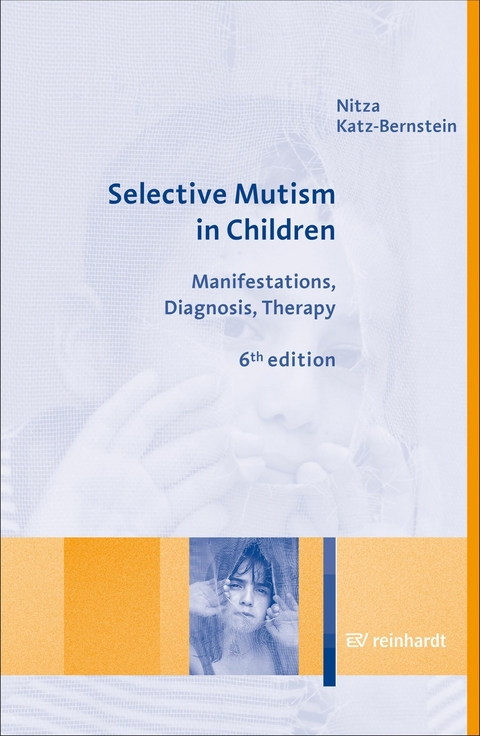
Selective Mutism in Children (eBook)
243 Seiten
Ernst Reinhardt Verlag
978-3-497-62025-8 (ISBN)
Nitza Katz-Bernstein elaborates in her book the symptoms of this dysfunction and explains the diagnostics and different therapies. She takes into consideration therapeutic elements from various disciplines such as speech therapy, as well as different schools of child and adolescent psychotherapy.
Prof. Dr. Nitza Katz-Bernstein, Consultant, Super visor, Child and Adolescent Psychotherapist (SPV, CH) and speech therapist, Switzerland, led the centre for counselling and therapy of the Faculty of Rehabili ta-tion Sciences, University of Dortmund, Germany. She is visiting Professor at the Tel Aviv University / Israel.
Content
A Brief History. . . . . . . . . . . . . . . . . . . . . . . . . . . . . . . . . . . . . . . . . . . . . . 9
Introduction. . . . . . . . . . . . . . . . . . . . . . . . . . . . . . . . . . . . . . . . . . . . . . . . . 13
Part I Theoretical Approaches . . . . . . . . . . . . . . . . . . . . . . . . . . . . . . 21
1 What is (Selective) Mutism?. . . . . . . . . . . . . . . . . . . . . . . . . . . . 22
1.1 Definition and Manifestation. . . . . . . . . . . . . . . . . . . . . . . . . . . 22
1.2 Diagnostic Criteria. . . . . . . . . . . . . . . . . . . . . . . . . . . . . . . . . . . 24
1.3 Types of Mutism. . . . . . . . . . . . . . . . . . . . . . . . . . . . . . . . . . . . . 26
1.4 Epidemiology, Co-Morbidity and Risk Factors . . . . . . . . . . . 28
1.5 A Contribution to Aetiology: Why Are Children Silent?
The Failure to Overcome Unfamiliarity. 33
2 Linguistic and Developmental-Psychological Approaches -
How Speaking and (Selective) Silence Develop . 36
2.1 Why a Developmental-Psychological Approach?. . . . . . . . . . 36
2.2 Language Acquisition and Language Development -
Social-Interactive Position . 38
2.2.1 Communication and Dialogue Structures - How Is Communication Learned? . 39
2.2.2 Triangular Processes - Being Able to Deal with Requirements. 43
2.2.3 Internal Mental Representation -
The Power of Imagination and Evaluation . 47
2.2.4 Symbolisation and Narrative Organisation -
Acquisition of Narrative Skills. 50
2.2.5 Separation of Internal and External Dialogue - Conversation Strategies. 53
2.2.6 Internalised Values - Regulating Behaviour (= Mentalising) . 55
2.3 Summary . . . . . . . . . . . . . . . . . . . . . . . . . . . . . . . . . . . . . . . . . . . 57
Part II Diagnostics and Therapy Coordination . . . . . . . . . . . . . . . . . 59
1 Diagnostic Surveys - How Can (Selective) Mutism be Recorded?. 60
2 Setting and Case Management - Who, What, Where, When and What for?. 65
3 Survey of Data Relevant to Therapy. . . . . . . . . . . . . . . . . . . . . 68
Part III Therapeutic Approaches and Efficacious Treatments. . . . . 79
1 Therapeutic Attitude. . . . . . . . . . . . . . . . . . . . . . . . . . . . . . . . . . 80
1.1 Exert Pressure or Use Laissez Faire? -
Planning the Therapeutic Relationship as a "Scaffolding" Principle. 81
1.2 Relationship Design and Motivation. . . . . . . . . . . . . . . . . . . . . 82
1.3 Models, Techniques, Training Programmes. . . . . . . . . . . . . . . 87
1.4 Integrative Principles for Therapeutic Work . . . . . . . . . . . . . . 88
2 Therapy Planning . . . . . . . . . . . . . . . . . . . . . . . . . . . . . . . . . . . . 91
2.1 Clarification of the Tasks of the Treatment -
Dealing with Ambiguous Messages. 91
2.2 Separation from Attachment Figures -
Mum Waits Outside!. 95
2.3 Safe Place -
The Safe Place as a Starting Point . 99
2.4 Strengthening the "Alter Ego" - "Prove to Me that I'm Okay the Way I Am!". 105
2.5 Perseverance - Working without Response. 109
Part IV Communicating Non-Verbally. . . . . . . . . . . . . . . . . . . . . . . . . 111
1 Constructing Communicative Behaviour - "Turn-taking". 112
2 Working with Puppets and Transitional Objects - A Hut for the Bear . 114
3 The Fairytale Book with Speech Bubbles - "Howl, Boom, Sigh ...". 118
4 Language Therapies - Building Language without Speaking. 121
5 Symbolisation and Narrative Processing - Narration without Language. 125
5.1 The Symbolic Game as Therapeutic Intervention. . . . . . . . . . 125
5.2 The Relevance of Symbolic Play in Therapy. . . . . . . . . . . . . . 127
5.3 The Therapeutic Role in Symbolic Play. . . . . . . . . . . . . . . . . . 129
5.4 Digression: Developmental Diagnosis of Symbolic Play . . . .
| Erscheint lt. Verlag | 1.9.2025 |
|---|---|
| Übersetzer | Terry Moston, Harriet Rössger |
| Verlagsort | München |
| Sprache | deutsch |
| Themenwelt | Geisteswissenschaften ► Psychologie ► Allgemeine Psychologie |
| Medizin / Pharmazie ► Medizinische Fachgebiete ► Psychiatrie / Psychotherapie | |
| Sozialwissenschaften ► Pädagogik ► Sonder-, Heil- und Förderpädagogik | |
| Schlagworte | Child and Adolescent Psychotherapy • communicative behaviour • developmental psychological approaches • Diagnostic criteria • Language acquisition • Manifestation • Mute Child • Selevtively mute children • Speech therapy • symbolic play • types of mutism • Verbal communication |
| ISBN-10 | 3-497-62025-4 / 3497620254 |
| ISBN-13 | 978-3-497-62025-8 / 9783497620258 |
| Informationen gemäß Produktsicherheitsverordnung (GPSR) | |
| Haben Sie eine Frage zum Produkt? |
 EPUB (Wasserzeichen)
DRM: Digitales Wasserzeichen
Dieses eBook enthält ein digitales Wasserzeichen und ist damit für Sie personalisiert. Bei einer missbräuchlichen Weitergabe des eBooks an Dritte ist eine Rückverfolgung an die Quelle möglich.
Dateiformat: EPUB (Electronic Publication)
EPUB ist ein offener Standard für eBooks und eignet sich besonders zur Darstellung von Belletristik und Sachbüchern. Der Fließtext wird dynamisch an die Display- und Schriftgröße angepasst. Auch für mobile Lesegeräte ist EPUB daher gut geeignet.
Systemvoraussetzungen:
PC/Mac: Mit einem PC oder Mac können Sie dieses eBook lesen. Sie benötigen dafür die kostenlose Software Adobe Digital Editions.
eReader: Dieses eBook kann mit (fast) allen eBook-Readern gelesen werden. Mit dem amazon-Kindle ist es aber nicht kompatibel.
Smartphone/Tablet: Egal ob Apple oder Android, dieses eBook können Sie lesen. Sie benötigen dafür eine kostenlose App.
Geräteliste und zusätzliche Hinweise
Buying eBooks from abroad
For tax law reasons we can sell eBooks just within Germany and Switzerland. Regrettably we cannot fulfill eBook-orders from other countries.
aus dem Bereich