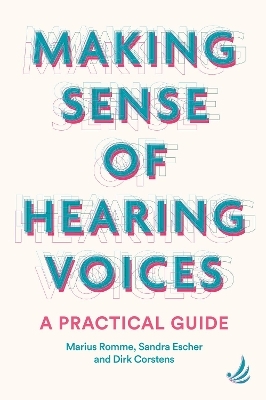
Making Sense of Hearing Voices
PCCS Books (Verlag)
978-1-915220-68-4 (ISBN)
This magnificent book brings together in one volume all the
theory, learning, research, wisdom from practice and practical examples of the
revolutionary work of Marius Romme, Sandra Escher and Dirk Corstens into
supporting people who hear voices. Challenging the fundamental premises of
mainstream psychiatry, Romme, Escher and Corstens have pioneered their approach
of 'making sense of voices' since the 1980s. They were the first to listen to
and talk with the voices of voice hearers, and to realise that the identities
of the voices and what they had to say held huge meaning in the contexts of
voice hearers' lives. These were not hallucinations or delusions but phenomena
whose words offered clues both to the person's history (frequently of childhood
abuse and severe trauma) and how they might be helped to learn to live with
their voices and recover. For far too many people, the blunt interventions
preferred by mainstream psychiatry - incarceration in psychiatric institutions,
loss of independence and long-term reliance on welfare and heavy doses of
neuroleptics and tranquillisers - had in fact robbed them of the mental and
emotional capacity and external resources they needed to help themselves.
This book explains the history and reports the wealth of research
conducted to support this way of working, together with detailed practical
advice on how to use the approach with voice hearers. Drawing on the accounts
of numerous voice hearers, in addition to the clinical research, this book is
the go-to resource for those who hear voices, the people who love and support
them and those whose work brings them into contact with voice hearers and who
wish to help them find ways to negotiate a positive relationship with their
sometimes unwelcome and vociferous companions.
Unlike
medication, this approach works, has no distressing side effects, and can
enable the person to co-exist with the voices that they find helpful, while
others that could be hostile and even seemingly evil, can be managed or even go
away. Once heeded, their messages, which could often be attempts to protect the
voice hearer, were no longer needed.
Marius Romme is emeritus professor of social psychiatry at Maastricht University and lives in Amsterdam. Sandra Escher (died 2021) had a PhD in medicine and was a research-journalist. Dirk Corstens works as a social psychiatrist and psychotherapist in his own private practice. Marius and Sandra organised many conferences on hearing voices and were the inspiration behind the international hearing voices movement and the World Hearing Voices Congresses. Both conducted research on adults and children who hear voices. They published four books and several articles and gave numerous lectures on hearing voices. Together they developed and delivered training courses for counsellors and voice-hearers in the Netherlands and many other countries. Dirk has taught courses on Working with Voices with Ron Coleman and Eleanor Longden in the UK, France and Australia, and with Trevor Eyles and Birgitte Bjerregaard in Denmark. He has conducted research on constructs and Talking with Voices and is collaborating in ongoing research on Talking with Voices. He was president of Intervoice for many years, until voice-hearers took over that position. Together with Peter Oud and Gert Haringsma, he set up the Voices Clinic Alkmaar in 2020. With Martijn Kole, Sanna Martha and Heleen Wadman, he delivers Peer-supported Open Dialogue for social networks.
Foreword: The voice of the hearing
voices movement by Jim van Os
Introduction
How the book is organised
Research projects and
investigations
Terminology
Part 1 - Background
and foundation
1. A
content-focused approach to hearing voices
2. The
scientific foundation of the approach
3. The
relation between voices and life history
Part 2 - The
voices analysis, from interview to construct
4. The voices analysis, stage 1: Conducting the Maastricht
Hearing Voices Interview
5. The
voices analysis, stage 2: Drawing up a report
6. The voices analysis, stage 3: Producing a construct of the
person's social-emotional problems
Part 3 - Exploring
ways of dealing with voices
7. Dealing
with hearing voices as a process
8. Education
9. 'Working with Voices': A training course for voice-hearers
and caregivers
10. Dealing
with voices in the stage of confusion
11. Keeping
a diary as an aid to communication
12. Taking
ownership of the voices as a form of emancipation
13. One
hundred constructs under the magnifying glass
14. Voice
Dialogue and Talking with Voices
15. Living
with voices - developing one's own identity
Part 4 - Continuing
the process
16. Support
from peers and self-help groups
17. Networks:
Making connections and sharing experiences
18. Dealing
with the effects of trauma
19. Cognitive behavioural therapy
and hallucinations integration treatment for hearing voices
20. Medication
21. Open
Dialogue and 'Working with Voices'
22. Alternative
explanations and care
References
Appendices
| Erscheinungsdatum | 10.10.2025 |
|---|---|
| Verlagsort | Manchester |
| Sprache | englisch |
| Maße | 156 x 234 mm |
| Themenwelt | Geisteswissenschaften ► Psychologie ► Klinische Psychologie |
| Medizin / Pharmazie ► Gesundheitswesen | |
| Sozialwissenschaften ► Pädagogik ► Sozialpädagogik | |
| Sozialwissenschaften ► Soziologie | |
| ISBN-10 | 1-915220-68-8 / 1915220688 |
| ISBN-13 | 978-1-915220-68-4 / 9781915220684 |
| Zustand | Neuware |
| Informationen gemäß Produktsicherheitsverordnung (GPSR) | |
| Haben Sie eine Frage zum Produkt? |
aus dem Bereich