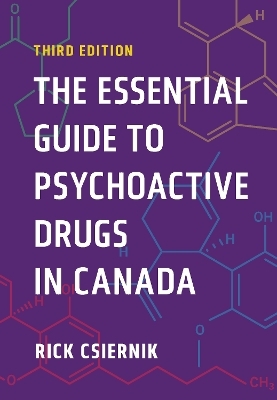
The Essential Guide to Psychoactive Drugs in Canada, Third Edition
Canadian Scholars (Verlag)
978-1-77338-504-4 (ISBN)
- Noch nicht erschienen
- Versandkostenfrei
- Auch auf Rechnung
- Artikel merken
This third edition continues the work of the previous editions, featuring thoroughly updated references as well as new boxes focusing on key contemporary pharmacological issues including differences in opioid versus stimulant overdose, e-cigarettes and vaping, psychedelic assisted therapy, microdosing, and Δ8-Tetrahydrocannabinol. The appendices are expanded to include an easy-to-read summary of the effects of active drug use and withdrawal as well as the effects of psychoactive drugs on adolescents and seniors.
Light on jargon and heavy on evidence, The Essential Guide to Psychoactive Drugs in Canada supplies the blueprints that every service provider needs to dispense sound, evidence-based care and is an ideal resource for counsellors, therapists, instructors, and students looking to acquire an in-depth practical understanding of drug use, medication, and addiction.
Rick Csiernik is Senior Instructor, Addiction Studies Program, Wilfrid Laurier University, and Professor Emeritus, School of Social Work, King's University College at Western University, and was co-developer of the McMaster University Addiction Studies Program. Csiernik has authored and edited several best-selling Canadian Scholars titles. He is also the author of more than 250 peer-reviewed publications and has been recipient of the King's University College Award for Excellence in Teaching, the McMaster University Instructor Appreciation Award, the Hugh Mellon Excellence in Research Award, the Ontario Volunteer Award, and the Jeff Wilbee Award for leadership in the field of addiction.
Tables, Figures, and Boxes
Preface
Chapter 1: Pharmacological Principles
1.1 Understanding Addiction
1.2 Psychoactive Drug Groups
1.3 The Nervous System
1.4 Pharmacokinetics
1.5 Pharmacodynamics
1.6 Sleeping and Dreaming
1.7 Learning Activities
Chapter 2: Depressants
2.1 Sedative-Hypnotics
2.2 Antihistamines
2.3 Inhalants, Solvents, and Anaesthetic Gases
2.4 Alcohol
2.5 Opioids
2.6 Opioid Antagonists
2.7 Learning Activities
Chapter 3: Stimulants
3.1 Cocaine
3.2 Amphetamine and Methamphetamine
3.3 Fenethylline (Captagon) 3.4 Methylphenidate (Ritalin and Concerta)
3.5 Anorexiants
3.6 Decongestants
3.7 Khat (Qat)
3.8 Methylendioxypyrovalerone (Bath Salts)
3.9 Betel/Areca Nut
3.10 Nicotine
3.11 Caffeine
3.12 Learning Activities
Chapter 4: Hallucinogens
4.1 LSD-Like Hallucinogens: Indolealkylamine
4.2 Mescaline-Like Hallucinogens: Phenylethylamines
4.3 Dissociative Anaesthetics: Arylcycloalkylamines
4.4 Cannabis
4.5 Novel Psychoactive Substances (NPS)
4.6 Learning Activities
Chapter 5: Psychotherapeutic Agents
5.1 Antidepressants
5.2 Antipsychotics
5.3 Mood Stabilizers
5.4 Learning Activities
Appendix A: Which Neurotransmitters Does a Psychoactive Drug Alter?
Appendix B: Summary of Psychoactive Drug Active and Withdrawal Affects
Appendix C: Summary of Effects of Psychoactive Drug Consumption During Pregnancy
Appendix D: Summary of Effects of Psychoactive Drug Consumption on Adolescents
Appendix E: Summary of Effects of Psychoactive Drug Consumption on Seniors
References
Copyright Acknowledgements
Index
| Erscheinungsdatum | 03.01.2026 |
|---|---|
| Zusatzinfo | 1 illustrations - 1 Index |
| Verlagsort | Toronto |
| Sprache | englisch |
| Maße | 171 x 248 mm |
| Themenwelt | Medizin / Pharmazie ► Medizinische Fachgebiete ► Psychiatrie / Psychotherapie |
| Medizin / Pharmazie ► Medizinische Fachgebiete ► Suchtkrankheiten | |
| Sozialwissenschaften ► Soziologie | |
| ISBN-10 | 1-77338-504-6 / 1773385046 |
| ISBN-13 | 978-1-77338-504-4 / 9781773385044 |
| Zustand | Neuware |
| Informationen gemäß Produktsicherheitsverordnung (GPSR) | |
| Haben Sie eine Frage zum Produkt? |
aus dem Bereich