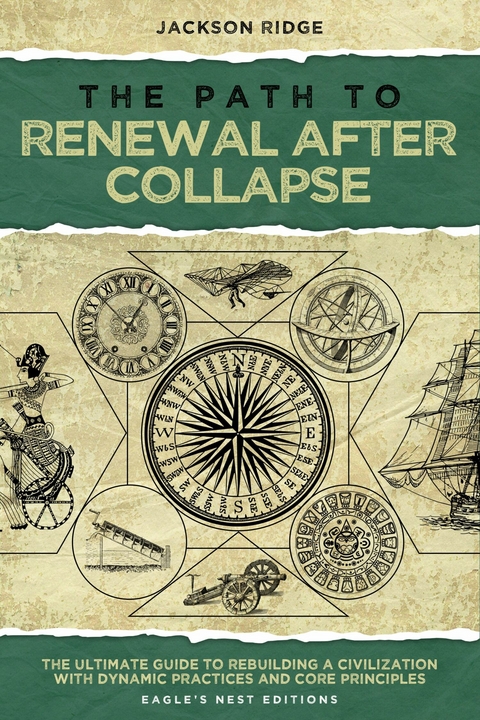
The Path to Renewal After Collapse (eBook)
169 Seiten
Publishdrive (Verlag)
978-0-00-098063-2 (ISBN)
What would you do if civilization as we know it came to an end? No Wi-Fi. No grocery stores. No government. Would you thrive-or merely survive?
In The Path to Renewal After Collapse, you'll embark on a thought-provoking and practical journey into the art of rebuilding a thriving society from scratch. This is not just a survival guide; it's a roadmap for resilience, creativity, and hope in the face of collapse.
From mastering renewable energy and sustainable agriculture to designing ethical governance systems and building community connections, this book dives deep into the essential skills and principles needed to turn chaos into opportunity. Written with a touch of humor, a dash of inspiration, and packed with dynamic practices, it breaks down complex concepts into approachable, actionable steps.
Whether you're a seasoned prepper, a curious learner, or just someone who loves imagining what-if scenarios, this book will equip you with the tools to create a better future-one that thrives on innovation, cooperation, and sustainability.
Visually rich and meticulously structured, this book doesn't just provide theoretical ideas-it translates them into actionable strategies for reshaping society. Whether you're an educator, a sustainability enthusiast, or simply someone curious about how to create a brighter future, this book offers something for everyone.
This guide goes beyond simply presenting solutions-it challenges readers to rethink their roles in shaping the world. By focusing on both the big picture and the finer details, it bridges the gap between vision and action.
Whether you're looking for inspiration, education, or actionable tools, The Path to Renewal After Collapse is your ultimate companion on the journey toward a sustainable and ethically grounded civilization.
Chapter 1: Surviving the Collapse
Amid societal collapse, survival becomes your top priority. This chapter outlines the critical actions needed to meet your basic needs, safeguard yourself and your loved ones, and take the first steps toward rebuilding in a drastically changed world.
1.1 Understanding the Collapse
Societal collapse often evokes images of sudden, devastating events—natural disasters, wars, or economic crises that disrupt entire communities and nations. Yet, the reality of collapse is typically far more intricate and multifaceted. Grasping the potential causes, identifying the warning signs of an approaching collapse, and preparing for its psychological effects on individuals and communities are critical initial steps to securing your survival and that of those around you.
Common Causes of Societal Collapse
Throughout history, civilizations have risen and fallen, often due to an interplay of factors that overwhelm the systems sustaining societies. These causes can be grouped into environmental, economic, political, and social categories, often intersecting and amplifying one another.
Environmental Causes: Environmental degradation frequently precedes societal collapse. Overpopulation, deforestation, soil erosion, and water scarcity are examples of how human activity undermines the natural systems that sustain life. Climate change, with its capacity to disrupt weather patterns, raise sea levels, and intensify extreme weather events, poses a contemporary threat to global stability.
Historical examples include the Mayans and Easter Islanders, whose societies faltered due to environmental mismanagement. For the Mayans, deforestation and soil exhaustion led to agricultural decline, famine, and unrest. The Easter Islanders overexploited their resources, resulting in deforestation, loss of wildlife, and societal breakdown.
Economic Causes: Economic collapse stems from factors like hyperinflation, financial crises, or resource depletion. Failed economies often erode the stability on which societies rely. The Roman Empire’s decline, for instance, involved economic mismanagement, inflation, and overdependence on slave labor, destabilizing its economy and contributing to its fall.
In modern history, the Great Depression highlights how economic failure can trigger widespread suffering and upheaval. Though recovery followed, the Depression left lasting scars and spurred changes in economic governance, underscoring the link between economic and societal resilience.
Political Causes: Political instability and corruption can destabilize civilizations. Governments that fail to maintain order, deliver services, or meet public needs risk societal disintegration. The Soviet Union exemplifies how political corruption, coupled with economic decline, led to the collapse of a superpower. Its inability to address mounting challenges caused the state to fragment, bringing widespread hardship and a reordering of regional power.
Social Causes: Social decay, characterized by rising inequality, loss of cohesion, and moral decline, also undermines societies. When social trust deteriorates, conflicts arise, and communities fracture. The French Revolution demonstrates how inequality and disconnection between rulers and the populace sparked a violent uprising, reshaping French society.
Signs of Impending Collapse
Identifying the warning signs of an impending collapse is essential for effective preparation and response. These signs often emerge as a convergence of the factors mentioned earlier, creating a perfect storm capable of overwhelming even resilient societies.
One early indicator is the deterioration of infrastructure and public services. When roads, bridges, and utilities fall into disrepair, and essential services like healthcare, education, and law enforcement degrade, it signals that the systems supporting society are faltering.
Another critical sign is the erosion of trust in institutions. When governments, financial systems, and social structures are perceived as corrupt or ineffective, public confidence wanes, increasing the likelihood of social unrest and violence.
Economic instability, such as rising unemployment, inflation, and shortages of vital goods, is another red flag. As people struggle to meet basic needs, crime may rise, and social order can unravel, creating a cycle of escalating instability.
Environmental degradation, though slower to unfold, also serves as a warning. Persistent droughts, falling agricultural yields, and resource depletion are clear indicators that a society could be approaching a tipping point.
The Psychological Impact of Collapse on Individuals and Communities
The psychological toll of societal collapse cannot be underestimated. The loss of stability, security, and normalcy often triggers widespread fear, anxiety, and trauma. Individuals may experience emotions ranging from denial and anger to despair and hopelessness, while communities can fracture as survival becomes the focus, trust erodes, and social cohesion unravels.
In the early stages, denial is a common reaction. Many people hold onto the hope that normalcy will return, even as evidence of collapse mounts. This denial can delay necessary preparations, leaving individuals and communities vulnerable when the crisis fully unfolds.
As reality sets in, fear and anxiety often dominate. Uncertainty about the future, coupled with a loss of control over circumstances, heightens stress and can lead to panic. These emotional reactions can worsen the collapse, as decisions driven by fear often undermine reason and stability.
Over time, the trauma of enduring collapse can have long-lasting effects on mental health. Conditions like depression, post-traumatic stress disorder (PTSD), and other psychological issues may become widespread, particularly after prolonged or violent crises. Communities may find it challenging to rebuild trust and cohesion, as the collective trauma deepens divisions and fuels conflict.
Recognizing the psychological impact of societal collapse is crucial for preparing yourself and your community. Strengthening mental resilience, nurturing strong social connections, and crafting a clear plan of action can mitigate these effects, improving your chances of surviving and thriving in a post-collapse world.
1.2 Immediate Survival Needs
When the fabric of society begins to fray and collapse is imminent or already in progress, the most immediate concern becomes survival. In such a scenario, all the luxuries and conveniences of modern life fade into insignificance compared to the primal needs of water, food, and shelter. Securing these basic necessities is the first and most crucial step to ensure that you and your loved ones can withstand the initial shock of a collapsing civilization.
Securing Water Sources
Water is the most essential resource for survival, as the human body can only last a few days without it. In a post-collapse world, the infrastructure delivering clean water may no longer function. Your top priority, therefore, is to secure a consistent and safe water source.
In the immediate aftermath, there are several ways to find and purify water. Natural sources like rivers, lakes, or springs can provide a lifeline, but contamination risks increase in a collapsed society without effective waste management. Thus, all water must be treated before consumption.
Boiling water is a simple and highly effective method of purification, eliminating most pathogens. If fuel is available, bring the water to a rolling boil for at least one minute; at higher altitudes, boil for three minutes.
When boiling is impractical, chemical treatments are a viable alternative. Water purification tablets, often containing iodine or chlorine, offer a short-term solution. Follow the instructions carefully, as improper use may leave water unsafe. Portable filters, such as those with activated carbon or ceramic elements, can also remove many contaminants, though they may not eliminate all viruses. Redundancy in purification methods is essential to ensure a reliable water supply.
Rainwater harvesting is another effective strategy, particularly in areas with frequent rainfall. Simple systems can collect rainwater from roofs or surfaces into storage containers. However, rainwater should be treated before drinking, especially if it’s collected from potentially contaminated surfaces.
In extreme cases where natural sources are scarce, methods like dew collection or solar stills may be necessary. Dew collection involves using absorbent materials to gather moisture from plants or surfaces in the early morning, while solar stills use sunlight to evaporate and condense water from soil or vegetation. These methods can be labor-intensive and produce small quantities but can be lifesaving in arid conditions.
Long-term water storage is equally critical. Large, food-grade containers can hold reserves for times when fresh water is unavailable. Store water in a cool, dark place and check regularly for contamination. Adding a small amount of chlorine bleach (free of additives) can help prevent bacteria and algae growth, extending shelf life.
Establishing a dependable water supply involves not only addressing immediate needs but also creating sustainable systems for the future. Conserve water diligently, monitor for contamination, and always seek out and test new sources. Water is life, and in a collapsed society, it may become your most valuable asset.
Finding or Constructing Shelter
Shelter is the second most vital component of survival. Without functioning...
| Erscheint lt. Verlag | 31.7.2025 |
|---|---|
| Sprache | englisch |
| Themenwelt | Sozialwissenschaften ► Politik / Verwaltung |
| ISBN-10 | 0-00-098063-3 / 0000980633 |
| ISBN-13 | 978-0-00-098063-2 / 9780000980632 |
| Informationen gemäß Produktsicherheitsverordnung (GPSR) | |
| Haben Sie eine Frage zum Produkt? |
 EPUB (Adobe DRM)
Größe: 5,2 MB
Kopierschutz: Adobe-DRM
Adobe-DRM ist ein Kopierschutz, der das eBook vor Mißbrauch schützen soll. Dabei wird das eBook bereits beim Download auf Ihre persönliche Adobe-ID autorisiert. Lesen können Sie das eBook dann nur auf den Geräten, welche ebenfalls auf Ihre Adobe-ID registriert sind.
Details zum Adobe-DRM
Dateiformat: EPUB (Electronic Publication)
EPUB ist ein offener Standard für eBooks und eignet sich besonders zur Darstellung von Belletristik und Sachbüchern. Der Fließtext wird dynamisch an die Display- und Schriftgröße angepasst. Auch für mobile Lesegeräte ist EPUB daher gut geeignet.
Systemvoraussetzungen:
PC/Mac: Mit einem PC oder Mac können Sie dieses eBook lesen. Sie benötigen eine
eReader: Dieses eBook kann mit (fast) allen eBook-Readern gelesen werden. Mit dem amazon-Kindle ist es aber nicht kompatibel.
Smartphone/Tablet: Egal ob Apple oder Android, dieses eBook können Sie lesen. Sie benötigen eine
Geräteliste und zusätzliche Hinweise
Buying eBooks from abroad
For tax law reasons we can sell eBooks just within Germany and Switzerland. Regrettably we cannot fulfill eBook-orders from other countries.
aus dem Bereich