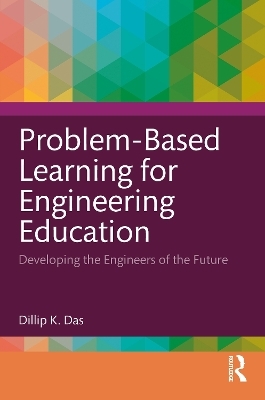
Problem-Based Learning for Engineering Education
Routledge (Verlag)
978-1-032-86366-5 (ISBN)
The narrative unfolds across four distinct sections: Background and Theoretical Perspectives; Methodological Aspects of PBL; Implications of PBL in Engineering Education and Case Studies; and Plausible Examples and Reflections and Future Direction.
Part I establishes a robust foundation by defining PBL, tracing its historical roots, and weighing its potential against challenges. A critical examination of PBL's relevance underscores the urgent need for a paradigm shift in engineering education. The part weaves a "golden thread" that permeates subsequent explorations. A theoretical perspective of PBL follows, exploring its underpinnings and theoretical frameworks. This is complemented by a comparative analysis, offering insights into PBL's efficacy compared to traditional learning methods.
The second part examines the alignment of PBL with Outcomes-Based Education, lays the groundwork for a coherent and practical integration of these educational approaches within the Engineering curriculum, and also offers methodological approaches to deliver and practice PBL.
Part III explores PBL's application for reinforcing engineering education, emphasising its tangible impact. It probes into PBL as a means to instil entrepreneurial attributes in students and further expands to encompass the decolonisation and internationalisation of engineering education through PBL.
The final part provides case studies, offer plausible examples, reflects on the lessons learned and draws insightful conclusions, synthesising the findings into a cohesive whole.
Overall, this book seeks to make a substantial contribution to the ongoing discourse on innovative teaching methodologies, particularly within the context of engineering education. Through a meticulous examination of theoretical foundations, comparative analyses, and the provision of practical methodologies, it aims to serve as a valuable resource for educators, researchers, and policymakers who seek to enhance the effectiveness and relevance of engineering education in our ever-evolving world.
Dillip K. Das holds a PhD in Urban and Regional Planning, complemented by a background in Civil Engineering and City Planning. He is currently actively involved in teaching, research, and community engagement as an Associate Professor in the Discipline of Civil Engineering at the University of KwaZulu-Natal, Durban, South Africa. He is co-author of two books, namely Planning for Regional Tourism Development and Planning for Balanced Regional Development, and has published over 200 peer-reviewed research articles. He has also led andco-led several research and industry projects, including a project linked to teaching and learning.
Part I: Background and Theoretical Perspectives. 1. Problem-Based Learning (PBL): Background. 2. Problem-Based Learning: Theoretical Foundations and Pedagogical Approaches. 3. A Comparative Analysis of Problem-Based Learning and Traditional Methods of Learning. 4. Challenges in Engineering Education and the Prospective Role of Problem-Based Learning. Part II: Methodological Aspects of PBL. 5. Alignment of Problem-Based Learning with Outcomes-Based Learning. 6. A Methodological Approach for Problem-Based Learning in Engineering Education. Part III: Implications of PBL Engineering Education. 7. Problem-Based Learning for Reinforcing Engineering Education. 8. Problem-Based Learning as a Means for Embedding Entrepreneurial Attributes Among Engineering Students. 9. Decolonisation and Internationalisation of Engineering Education through Problem-Based Learning. Part IV: Case Studies, Plausible Examples, and Reflections and Future Direction. 10. Problem-Based Learning in Engineering: Case Studies Across Disciplines. 11. Plausible Examples of Problem-Based Learning. 12. Reflections and Future Directions in Problem-Based Learning for Engineering Education.
| Erscheinungsdatum | 19.11.2025 |
|---|---|
| Zusatzinfo | 38 Tables, black and white; 16 Line drawings, black and white; 1 Halftones, black and white; 17 Illustrations, black and white |
| Verlagsort | London |
| Sprache | englisch |
| Maße | 156 x 234 mm |
| Gewicht | 740 g |
| Themenwelt | Sozialwissenschaften ► Pädagogik ► Allgemeines / Lexika |
| Sozialwissenschaften ► Pädagogik ► Bildungstheorie | |
| Technik ► Bauwesen | |
| ISBN-10 | 1-032-86366-8 / 1032863668 |
| ISBN-13 | 978-1-032-86366-5 / 9781032863665 |
| Zustand | Neuware |
| Informationen gemäß Produktsicherheitsverordnung (GPSR) | |
| Haben Sie eine Frage zum Produkt? |
aus dem Bereich