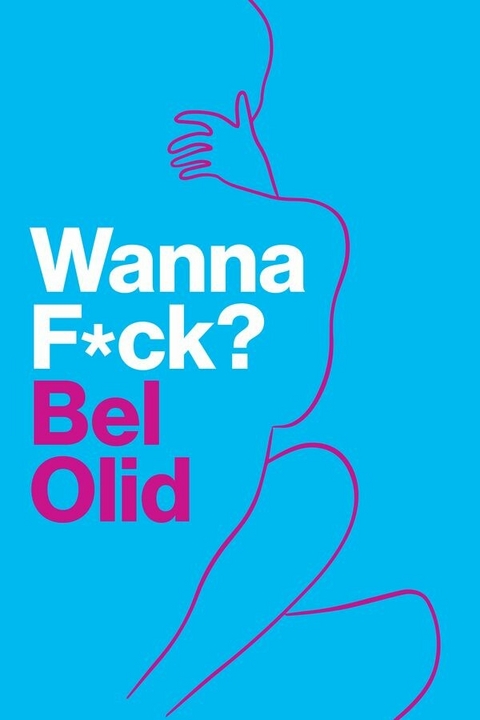
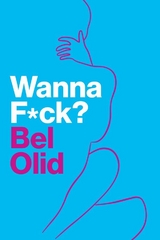
Bel Olid is a Catalan writer and translator who stopped trying to be the woman the world demands and started trying just...to be.
Following our desires, sharing pleasure: sounds easy, right? And yet our sexualities are conditioned by expectations, prejudices and taboos that make it difficult to listen to our own bodies, let alone anyone else s. Bel Olid clears away the taboos and invites readers to explore pathways to more connected sexualities and more pleasurable relationships. Because perhaps the first thing we need to learn about sex is to unlearn. Unlearn the desire we ve been taught we must feel, unlearn the shame. Forget the bodies that we ve been obliged to like, forget the behaviour presented as the only type possible. And then, with fresh eyes, look deep inside and ask ourselves what we want, what we like, what we feel like discovering. Listening to our desire, and listening to the other person too. Daring ourselves to doubt, explore, make mistakes, stop at any time. Let s step into the ocean of possibilities.
LGBTIQ+
life
If we’ve been able to convert as tangible a thing as the body into a tangled labyrinth of lies, what won’t we do with the ethereal force of desire? We’ve simplified it, we’ve carved it up, we’ve mutilated it, we’ve robbed it of meaning, we’ve denied it. We’ve hounded it, we’ve blinded it, tamed it, deadened it. And, when it’s gone off-script, we’ve demonized, shrunk, persecuted it. In the process of diminishing the unattainable, we’ve created labels that claim to classify us as normal people and strange people.
Lesbians, bisexuals, gays, trans, intersex, queer and more. This alphabet soup, which keeps gaining acronyms as we uncover oppressions we’d normalized until now, is a curious blend of sexual orientations, gender identities, gender expressions and even non-normative biological sexes. But, before we go any further, let’s unpack a little what all of this means.
Naming ourselves so we exist
Biological sex relates to certain physical characteristics we’re born with and how they are interpreted. Even though officially we can only be registered as woman or man, there are actually women, men and intersex people. You’re assigned a gender according to your biological sex. Right now in our society, we’re assigned only as a woman or a man, rather than giving a person the chance to express their preference for one group or the other. Because of this, intersex people are subjected to operations or other medical procedures which ‘adjust’ their bodies as far as possible to the social demands of what a woman’s or man’s body means, in order to assign them to one of the two normative genders. Different behaviours are expected of the people assigned to each gender, and we condition little ones to follow the gender mandate – the rules imposed on us according to whether we’ve been classified as future women or future men, and which will push us to develop certain gender roles.
On the other hand, there is gender identity, our internal perception of the gender to which we belong, which doesn’t always coincide with the gender assigned to us at birth. Here the fan unfolds: in addition to ‘woman’ and ‘man’, we have various gender identities, such as gender fluid (a dynamic mix of man and woman, with moments in which one carries more weight than the other) or agender (not a man or a woman). There are also people who identify as non-binary or gender-neutral (outside the system of genders), and a thousand other labels that we often group under the queer umbrella (which goes beyond gender identity, but also includes it).
The people who have a gender identity that coincides with the gender they were assigned at birth are cisgender or cis people. Those who don’t are trans people, because they transition from one gender to another. This transition can be between the two normative genders or towards being non-binary, and can involve body modifications (via hormonal treatments, surgeries or prostheses) or not. Some people who fall outside the binary don’t identify as trans, some don’t identify as cis.
Gender expression is how we represent the gender we identify with in society. Normative gender expressions are those that stick to social norms. For example, a woman who wears her hair long, dresses in clothes and accessories bought from the women’s section in shops, removes her body hair, wears make-up, and uses gestures traditionally considered feminine, has a normative gender expression, because she’s a woman that looks like a woman (according to social demands). Anything else is a non-normative expression of gender. We very often assume that a person with a non-normative gender expression also has a non-normative sexual orientation, even though they don’t necessarily go together.
Sexual orientation is about what kind of person attracts us, whether sexually, emotionally, romantically, spiritually … We label sexual orientation according to the relationship between the gender of the person desiring and the genders of the people desired. When a person feels attracted to people of their own gender, they’re considered homosexual, and if they feel attracted to people of the other gender, they’re considered heterosexual. If they’re attracted to people of both their own gender and the other, they’re bisexual.
This classification comes up against an obvious stumbling-block: it rests on the binary conception of gender (as if there were only two) when we’ve spent the last few pages trying to make it clear that there are more than two genders (and also more than two sexes). To avoid this pitfall, some people state that the ‘bisexual’ label encompasses attraction to all genders, and others label themselves pansexuals: those who feel attracted to people of various genders. On the other hand, asexual people don’t feel sexually attracted to anyone. Among asexual people, there are those who don’t feel sexual attraction but do feel emotional attraction, and those who don’t feel either. There are also people who can feel sexual attraction at certain times, but in an exceptional, short-lived way, and they call themselves asexual too. Some masturbate (they don’t feel attraction for other people, but they do have a desire for solitary sexual pleasure); others don’t. Asexuality has nothing to do with celibacy, which is the conscious decision not to take part in sexual activities even if they are desired. There are also demisexual people who only feel sexual attraction to people with whom they have strong emotional bonds, and feel no sexual attraction for people they don’t know or with whom they don’t have a loving or trusting relationship.
Note that with all orientations (except asexuality and demisexuality), we talk about attraction according to gender, but there are other aspects that also come into play. For example, we might be attracted to people with specific expressions of gender, or with specific physical characteristics. Or who like the same music as us, or taking photos of butterflies. There are names for all this (and much more) too, but we won’t get into it. The difference is that there’s no discrimination against people who desire people with short hair, for example. There’s only discrimination if they are (or seem to be) of the same gender.
What use are they really, these labels? And once we’ve found one that fits, does that mean it won’t change? If reality isn’t monosexual and the majority of people have felt attraction to people of different genders at some point in their lives, wouldn’t it be easier to simply erase all the labels and go with what we feel at a given moment? In the world I’d like to live in, yes. In the world I actually live in, it’s a little more complicated.
Go forth and multiply
The Christian tradition that permeates Western culture tries to persuade us that sex has nothing to do with desire, only with reproduction. Desire is an evil that, if it can’t be avoided, must be prevented from controlling what we do. As long as they could reproduce without feeling desire, people who have a vulva and have been raised to be women were excluded from the fairground of recreational sexuality.
It’s not been that way for years now, you’ll say. And you’d be right. Since the development of effective, accessible contraception that doesn’t depend on the collaboration of cis men, women have been freed from procreation as a probable consequence of cisheterosexual – or cishet, for short – relations, and therefore been able to explore their sexuality with less fear. At the same time, this ideology is the basis for certain beliefs that have taken root so deeply in the collective consciousness that they still stain the glass through which we view non-reproductive sexualities.
To start with, the (false, as we’ve already seen) separation into just two groups of people, men and women, serves the reproductive vision of sexuality: to reproduce, at least two fertile people with differing reproductive organs are required. If we equate sexuality with reproduction, the default combination is cis man and cis woman. That is, cishet sexuality. People who follow reproductive logic are the ‘normal’ ones, even when their sexual activities don’t have this aim. From birth, we are spoon-fed the idea that we must find a partner to reproduce with, and for many people it’s a virtually never-ending source of unhappiness.
We grow up without anyone explicitly telling us we must be heterosexual, but with a thousand messages indicating that there is no other option. We ask little girls if they have a boyfriend, and little boys if they have a girlfriend; in stories and films, we only show them heterosexual couples. This is perhaps beginning to change, in the sense that the media are starting to show couples (always couples – this we don’t question) of two men and two women. At the same time, the implication is that this is an exception to the rule, and these representations also present homosexuality as acceptable only in as far as the other norms are obeyed: monogamy and the will to ‘create a family’.
I remember myself at fifteen, looking at my maths teacher’s breasts (a stunning woman) and my language teacher’s bum (a...
| Erscheint lt. Verlag | 15.7.2025 |
|---|---|
| Übersetzer | Laura McGloughlin |
| Sprache | englisch |
| Themenwelt | Sozialwissenschaften ► Soziologie ► Spezielle Soziologien |
| Schlagworte | asexual • Bel Olid • Bisexual • Care • cultural norms • Desire • enthusiasm • gay • good mental health • healthy relationships • heterosexual • homosexual • how to discover sexuality • how to know your own desires • how to live authentically • Lesbian • LGBT • listening to your desire • Pleasure • pride • Rainbow • Sex • Sex Education • Sexuality • sexual taboo • Shame • Transgender • Wanna Fuck? |
| ISBN-10 | 1-5095-6477-2 / 1509564772 |
| ISBN-13 | 978-1-5095-6477-4 / 9781509564774 |
| Informationen gemäß Produktsicherheitsverordnung (GPSR) | |
| Haben Sie eine Frage zum Produkt? |
 EPUB (Adobe DRM)
Kopierschutz: Adobe-DRM
Adobe-DRM ist ein Kopierschutz, der das eBook vor Mißbrauch schützen soll. Dabei wird das eBook bereits beim Download auf Ihre persönliche Adobe-ID autorisiert. Lesen können Sie das eBook dann nur auf den Geräten, welche ebenfalls auf Ihre Adobe-ID registriert sind.
Details zum Adobe-DRM
Dateiformat: EPUB (Electronic Publication)
EPUB ist ein offener Standard für eBooks und eignet sich besonders zur Darstellung von Belletristik und Sachbüchern. Der Fließtext wird dynamisch an die Display- und Schriftgröße angepasst. Auch für mobile Lesegeräte ist EPUB daher gut geeignet.
Systemvoraussetzungen:
PC/Mac: Mit einem PC oder Mac können Sie dieses eBook lesen. Sie benötigen eine
eReader: Dieses eBook kann mit (fast) allen eBook-Readern gelesen werden. Mit dem amazon-Kindle ist es aber nicht kompatibel.
Smartphone/Tablet: Egal ob Apple oder Android, dieses eBook können Sie lesen. Sie benötigen eine
Geräteliste und zusätzliche Hinweise
Buying eBooks from abroad
For tax law reasons we can sell eBooks just within Germany and Switzerland. Regrettably we cannot fulfill eBook-orders from other countries.
aus dem Bereich