


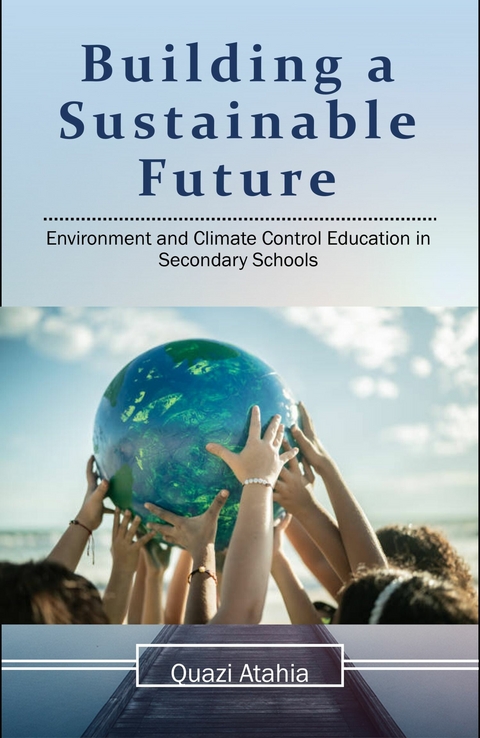
Building Sustainable Future (eBook)
389 Seiten
Publishdrive (Verlag)
978-0-00-096013-9 (ISBN)
Building a Sustainable Future: Environment and Climate Control Education in Secondary Schools is a comprehensive and student-friendly guide designed to equip young learners with the knowledge, values, and skills necessary to understand and protect our planet.
Structured across five thematic parts-Earth Systems, Environmental Challenges, Climate Change, Sustainability, and Global Best Practices-this book introduces core environmental concepts, explores human impacts on ecosystems, and highlights practical solutions through real-world case studies and innovations. It emphasizes systems thinking, climate literacy, and active problem-solving.
Filled with illustrations, chapter-end activities, and inspiring examples from around the world, this book empowers secondary school students to become informed citizens and environmental change-makers in their communities.
Whether used in classrooms, school programs, or independent study, Building a Sustainable Future serves as both a foundational science resource and a call to action for a greener, more resilient future.
Example 2: Industrial Systems
Boundaries: A factory has boundaries defined by its location, production processes, and supply chain.
Limits: Factories have limits on energy consumption, raw material use, and waste production. If these limits are exceeded, factories may face resource shortages, waste management issues, or pollution.
The Importance of Recognizing Boundaries and Limits
Understanding boundaries and limits is critical for managing systems sustainably and avoiding negative consequences. Systems that push beyond their boundaries or limits may experience collapses, failures, or irreparable damage.
Sustainability: By recognizing and respecting the limits of a system, we can design solutions that keep systems within their capable boundaries, ensuring long-term sustainability.
Preventing Systemic Failures: Identifying boundaries and limits helps us understand how much change a system can absorb before it reaches a critical threshold. By acting early, we can prevent irreversible damage.
Resource Management: Knowing the boundaries of a system helps us manage resources wisely, ensuring that they are not overexploited and that they can regenerate.
Example: Sustainable Agriculture
Boundaries: A farm has natural boundaries defined by its land area, climate, and soil fertility.
Limits: The farm has a limit on how much water, fertilizer, and energy it can use without damaging the soil, water sources, or air quality. By understanding these limits, farmers can practice sustainable farming techniques that conserve resources and minimize environmental impact.
Boundaries and Limits in Global Systems
The concept of boundaries and limits is not only applicable to small-scale systems but also to large, global systems. The Earth’s biosphere has clear limits to how much pollution it can absorb, how much land can be converted to cities and agricultural zones, and how much carbon dioxide can be emitted before experiencing irreversible changes.
Example: Global Ecosystem Boundaries
The Earth has physical boundaries, such as oceans, continents, and atmosphere, which define the extent of life on the planet.
These boundaries are limited by resource availability (water, land, minerals) and the Earth’s capacity to process waste, absorb carbon, and maintain biodiversity.
Every system—whether natural or human-made—has its boundaries and limits. Understanding these boundaries is crucial for maintaining balance and sustainability. By recognizing the carrying capacity of natural systems and the limits of human infrastructure, we can prevent overexploitation, degradation, and collapse. The future of our planet depends on our ability to manage systems within their boundaries and respect the limits of growth.
How can we better manage boundaries and limits to create a more sustainable future?
Energy and Matter Flow
Energy and matter flow are essential concepts in understanding how systems function and interact. These flows are what drive the activities within a system, whether it’s a natural ecosystem or a human-made system. The movement of energy and matter ensures the continuation of processes such as growth, sustainability, and adaptation.
Energy Flow in Systems
Energy flow refers to the transfer of energy through a system, enabling processes and functions to occur. Energy cannot be created or destroyed, but it can be converted from one form to another, and it flows in a certain direction within a system.
Types of Energy:
- Solar Energy: The sun is the primary source of energy for most systems on Earth. Solar energy drives many natural processes, such as photosynthesis in plants, and is the main source of energy for climate systems.
- Chemical Energy: Energy stored in chemical bonds. In biological systems, plants capture solar energy and store it as chemical energy in glucose molecules. This energy is passed through the food chain to herbivores and carnivores.
- Mechanical Energy: Energy associated with movement. In human-made systems, this includes machines, vehicles, and transportation networks that convert energy into motion.
- Thermal Energy: Heat energy. This energy plays a key role in maintaining temperature balances in systems, such as the Earth’s climate and the regulation of body temperature in living organisms.
The Flow of Energy in Natural Systems
In natural ecosystems, energy flows through the system from one organism or component to another. The flow of energy is often described using the food chain or food web, which illustrates how energy is transferred from producers to consumers and decomposers.
Example: Food Chain and Energy Flow
- Producers (plants, algae, etc.) capture solar energy through photosynthesis and store it as chemical energy.
- Primary Consumers (herbivores) consume producers, absorbing the stored energy.
- Secondary Consumers (carnivores) eat primary consumers, gaining energy from them.
- Decomposers break down dead organisms, releasing energy back into the soil and atmosphere.
Efficiency of Energy Flow:
Energy transfer is not 100% efficient. Each time energy is transferred from one level of the food chain to the next, some energy is lost in the form of heat. This is known as the 10% Rule: typically, only about 10% of the energy from one trophic level is passed on to the next level, while the rest is lost.
Energy Flow in Human-Made Systems
In human-made systems, energy flow involves the transfer of energy from one form to another, often with the goal of performing work or supporting processes.
Example: Electrical Power Systems
Energy Input: Energy is harnessed from various sources, such as fossil fuels, solar power, or wind.
Energy Conversion: The energy is converted into electricity through processes like burning fuel or using wind turbines.
Energy Output: The electricity flows through the grid to homes, factories, and businesses to power machines, lighting, and other technologies.
Energy Efficiency:
Efficiency in human-made systems is important to reduce waste and maximize the use of energy. For example, energy-efficient buildings and renewable energy sources help reduce energy consumption and promote sustainability.
Matter Flow in Systems
Matter flow refers to the movement of physical substances within a system. In natural systems, matter is continually recycled and transformed, while in human-made systems, matter may be extracted, transformed, and disposed of.
Types of Matter Flow:
- Biogeochemical Cycles: These cycles describe how matter flows through ecosystems. For example, the carbon cycle shows how carbon moves between the atmosphere, plants, animals, and soil. The nitrogen cycle demonstrates how nitrogen is converted into forms usable by plants and returned to the atmosphere.
- Water Cycle: The continuous movement of water through the Earth’s atmosphere, surface, and underground is a crucial flow of matter that sustains all life on Earth.
The Flow of Matter in Natural Systems
In ecosystems, matter is recycled through various processes, ensuring the availability of essential elements and compounds for sustaining life. These flows are interconnected with energy flow.
Example 1: The Carbon Cycle
Photosynthesis: Plants absorb carbon dioxide from the atmosphere and convert it into glucose, storing energy.
Consumption: Animals consume plants and the carbon enters their bodies.
Decomposition: When plants and animals die, decomposers break them down, releasing carbon back into the soil or atmosphere.
Human Impact: Human activities like burning fossil fuels release additional carbon into the atmosphere, contributing to climate change.
Example 2: The Nitrogen Cycle
Nitrogen Fixation: Certain bacteria convert atmospheric nitrogen into a form that plants can use.
Decomposition: When plants and animals decompose, nitrogen returns to the soil, where it can be taken up by plants again.
Human Impact: Overuse of fertilizers can lead to nitrogen pollution, disrupting natural cycles.
The Flow of Matter in Human-Made Systems
In human-made systems, matter flows through production processes, consumption, and waste management. The circular economy concept encourages the reuse and recycling of materials to reduce waste and limit environmental impacts.
Example: Manufacturing Systems
Raw Materials: Raw materials (such as metals, wood, or plastic) are extracted from nature.
Production: These materials are processed and transformed into goods, such as cars or electronics.
Consumption: Goods are purchased and used by consumers.
Waste: After use, products are either disposed of in landfills, recycled, or repurposed. The goal is to minimize waste and ensure matter flows back into the economy.
The Importance of Energy and Matter Flow in Sustainability
Both energy and matter flow are critical for the sustainability of natural and human-made systems. Managing how energy and matter are used, conserved, and recycled is essential for maintaining ecological balance and ensuring long-term...
| Erscheint lt. Verlag | 11.6.2025 |
|---|---|
| Sprache | englisch |
| Themenwelt | Sozialwissenschaften ► Pädagogik |
| ISBN-10 | 0-00-096013-6 / 0000960136 |
| ISBN-13 | 978-0-00-096013-9 / 9780000960139 |
| Informationen gemäß Produktsicherheitsverordnung (GPSR) | |
| Haben Sie eine Frage zum Produkt? |
 EPUB (Adobe DRM)
Größe: 15,0 MB
Kopierschutz: Adobe-DRM
Adobe-DRM ist ein Kopierschutz, der das eBook vor Mißbrauch schützen soll. Dabei wird das eBook bereits beim Download auf Ihre persönliche Adobe-ID autorisiert. Lesen können Sie das eBook dann nur auf den Geräten, welche ebenfalls auf Ihre Adobe-ID registriert sind.
Details zum Adobe-DRM
Dateiformat: EPUB (Electronic Publication)
EPUB ist ein offener Standard für eBooks und eignet sich besonders zur Darstellung von Belletristik und Sachbüchern. Der Fließtext wird dynamisch an die Display- und Schriftgröße angepasst. Auch für mobile Lesegeräte ist EPUB daher gut geeignet.
Systemvoraussetzungen:
PC/Mac: Mit einem PC oder Mac können Sie dieses eBook lesen. Sie benötigen eine
eReader: Dieses eBook kann mit (fast) allen eBook-Readern gelesen werden. Mit dem amazon-Kindle ist es aber nicht kompatibel.
Smartphone/Tablet: Egal ob Apple oder Android, dieses eBook können Sie lesen. Sie benötigen eine
Geräteliste und zusätzliche Hinweise
Buying eBooks from abroad
For tax law reasons we can sell eBooks just within Germany and Switzerland. Regrettably we cannot fulfill eBook-orders from other countries.
aus dem Bereich


