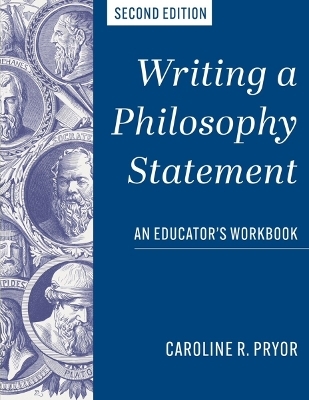
Writing a Philosophy Statement
Myers Education Press (Verlag)
978-1-9755-0849-4 (ISBN)
Writing a Philosophy Statement: An Educator's Workbook, Second Edition provides a step-by-step process for writing a clear and concise philosophy of education statement based on a reader's beliefs about their approaches to teaching. This unique book provides information about five key philosophical approaches to teaching, using a range of activities for preservice and experienced teachers to examine classroom dilemmas. The workbook explores a variety of philosophical stances, including:
Five philosophical approaches to teaching
Strategies for identifying your approach to teaching
Strategies for applying your approach in a written philosophy of education statement
Practical uses for your philosophy statement
Example Professional Development Activities include Case Studies; Check Lists; Sample Philosophy Statements; Tips and Tools for Writing a Philosophy Statement; and Using your Statement in Job Interviews and Graduate School Applications. A key feature of this book is the highly researched two-dimensional Philosophy of Education Scale, helpful in identifying an individual's most and least likely approaches to teaching. The Scale includes a range of teaching practices that can prompt readers' deep understanding of the sources that impact their approach decisions. This book offers educational leaders a much-needed pathway for collaborative communication about how teachers can impact school climate, change and attainment.
Writing a Philosophy Statement is an essential tool for undergraduate and graduate students of education who are preparing for a career in teaching and for the academic rigors that they will encounter.
Perfect for courses such as: Introduction to Education; Analysis of Instruction; Curriculum and Instruction; Research on Curriculum and Instruction; School Practice and Change; Philosophy of Education; Leadership and Change; Leadership and Collaboration; Principles of Leadership; Foundations of Education; History of Education; Senior Seminar; Student Teaching; Field Experience; and Methods of Instruction
Caroline R. Pryor is Professor of Curriculum and Instruction in the School of Education, Health, and Human Behavior at Southern Illinois University Edwardsville. She joined SIUE in 2005 after having served five years as Assistant Professor/Regents Fellow at Texas A&M University. Pryor teaches graduate courses in Analysis of Instruction, Curriculum Models, Adult Education and Grant Writing. Pryor's teaching and research focus is STEM-Social Studies curriculum integration, with a focus on philosophical approaches to teaching. She is the immediate past chair of the Special Interest Group (SIG) Democratic Citizenship in Education of the American Educational Research Association (AERA) and serves on the SIUE Museum Advisory Council.
Section One
Overview
Introduction
Five Philosophical Approaches
The Executive Approach
Descriptors of an Executive Teacher
Teaching Example
The Humanist Approach
Descriptors of a Humanist Teacher
Teaching Example
The Subject Specialist Approach
Descriptors of a Subject Specialist Teacher
Teaching Example
The Citizen Teacher Approach
Descriptors of a Citizen Teacher
Teaching Example
The Explorer Approach
Descriptors of an Explorer Teacher
Teaching Example
Test for Understanding
Table 1 Comparison of Five Approaches to Teaching
Table 2 Philosophy of Education Scale
Section Two
Identifying Your Philosophical Approach
Collecting Personal Artifacts
Tips for Developing a Professional Journal Creating a Professional Journal
Tips for Writing a Professional Journal
Tips for Writing a Biographical Journal
Tips for Interviewing
Case Study: Five Approaches to Grading Philosophical Approaches in School Practices and Activities
Sample Philosophy of Education Statements
Section Three
Organizing Your Data
Personal Artifacts
Journal Data
Interview Data
Case Study Example
Results of the Philosophy of Education Scale
Section Four
How to Write a Philosophy of Education Statement
Tips to the Writing Process
Six fast paragraph starters
Four quick editing tips
Section Five
Practical Use of your Philosophy of Education Statement
Activities for Group Reflection and Discussion
School Leadership and Administration
Using a Philosophy Statement in Educational Leadership
Job Interviews
Sample Questions and Responses
Practice Interview Sessions
Graduate School Applications
Staff Development Leadership
Curriculum Development
Appendices
Appendix A: Historical Aspects of Five Philosophical Approaches to Teaching
Appendix B: Table of Philosophic Ideas
Appendix C: Supplemental Websites
References
About the Author
| Erscheinungsdatum | 30.07.2025 |
|---|---|
| Sprache | englisch |
| Maße | 216 x 279 mm |
| Themenwelt | Sozialwissenschaften ► Pädagogik ► Allgemeines / Lexika |
| Sozialwissenschaften ► Pädagogik ► Bildungstheorie | |
| ISBN-10 | 1-9755-0849-1 / 1975508491 |
| ISBN-13 | 978-1-9755-0849-4 / 9781975508494 |
| Zustand | Neuware |
| Informationen gemäß Produktsicherheitsverordnung (GPSR) | |
| Haben Sie eine Frage zum Produkt? |
aus dem Bereich