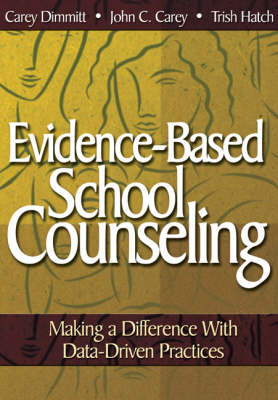
Evidence-Based School Counseling
Corwin Press Inc (Verlag)
978-1-4129-4890-6 (ISBN)
Measure the difference you make in students′ academic, career, and personal/social development!
Today′s school counselors are under enormous pressure to document their effectiveness by using data and producing quantitative accountability reports—whether or not they′ve had the appropriate training. This authoritative guide from highly respected counselor educators and trainers gives preservice and inservice school counselors the tools to knowledgeably identify evidence-based practices in their field and to use data in designing, implementing, and evaluating programs and interventions.
Evidence-Based School Counseling provides a practical process for using evidence to determine three critical issues: what needs to be done, which interventions should be implemented, and whether or not the interventions are effective. Aligned with the American School Counselor Association′s National Model, this resource offers counselors skill-building guidelines for:
Selecting, collecting, and analyzing data for informed planning
Carrying out action research and building collaborative partnerships
Measuring student learning and behavior change
Communicating results to stakeholders, and more
As counselors successfully incorporate data-based decision making and program planning into their work, they will witness positive academic and personal changes in the lives of their students.
Carey Dimmitt is the Associate Director of the Center for School Counseling Outcome Research, an Assistant Professor of School Counseling, and the Clinical Director of the School Counseling Program at the University of Massachusetts, Amherst. She received her Ph.D. in Counseling Psychology from UMass-Amherst. Prior to her work as a counselor educator, Dr. Dimmitt worked for 14 years with children and families in schools and community mental health settings. Dr. Dimmitt’s major scholarly interests are in the areas of outcome research, effective teaching and counseling practices K-16, school counseling curriculum development, clinical training for school counselors, and systemic change in educational institutions. She is the mother of two children. Dr. John Carey is Director of the Ronald H. Fredrickson Center for School Counseling Outcome Research & Evaluation and Professor of School Counseling at UMASS Amherst. He is a recipient of an American School Counseling Association (ASCA) Counselor Educator of the Year Award. Dr. Carey is included on the Fulbright Specialist Roster and works internationally to improve school-based counseling and school counselor education. His research interests include school counseling outcome measurement, policy research in school-based counseling, standards-based models of school counseling, and the development of research-based interventions to promote academic achievement and eliminate the achievement gap. He is coeditor of Multicultural Counseling in Schools: A Practical Handbook. Trish Hatch, Ph.D. is a nationally recognized leader in school counseling, known for her work bridging research, practice, and policy. A former school counselor, administrator, and district leader, she joined the faculty at San Diego State University (SDSU), where she directed the School Counseling Program from 2004 to 2015 and was later named Professor Emeritus upon her retirement. As Founder and Board Chair of Hatching Results, Inc., she continues to provide governance leadership while the company delivers nationwide training and consultation on data-driven, evidence-based practices Dr. Hatch is the best-selling author of The Use of Data in School Counseling: Hatching Results for Students, Programs, and the Profession (2014) and co-author, with Julie Hartline, of the Second Edition (2023). She co-authored Evidence-Based School Counseling: Making a Difference With Data-Driven Practices (Dimmitt, Carey, & Hatch, 2007) and The ASCA National Model: A Framework for School Counseling Programs (ASCA, 2003, 2005). This seminal document redefined the role of school counselors nationwide. Additional textsin the Hatching Results series include Hatching Results for Elementary School Counseling: Implementing Core Curriculum and Other Tier One Activities (Hatch, Duarte, & De Gregorio, 2018); Hatching Results for Secondary School Counseling: Implementing Core Curriculum, Individual Student Planning, and Other Tier One Activities (Hatch, Triplett, Duarte, & Gomez, 2019); and Hatching Tier Two and Three Interventions in Your Elementary School Counseling Program (Hatch, Kruger, Pablo Roman, & colleagues, 2019) Known for her dynamic leadership, passionate advocacy, and unwavering commitment to the profession, Dr. Hatch served as an expert consultant on school counseling for the Obama administration at the White House and the U.S. Department of Education. She also co-led the 2014 White House Convening on School Counseling at SDSU in partnership with the Office of the First Lady’s Reach Higher Initiative. A former ASCA Vice President and state association president, Dr. Hatch has received numerous honors, including the ASCA Administrator of the Year Award, the Mary Gehrke Lifetime Achievement Award, induction into the H.B. McDaniel Hall of Fame at Stanford University, the NACAC Excellence in Education Award, and recognition by the California Association of School Counselors (CASC) as both School Counselor Educator of the Year and recipient of its Lifetime Achievement Award.
Preface
Acknowledgments
About the Authors
1. Moving to Evidence-Based School Counseling Practice
Integrating Evidence and Practice
A Model for Evidence-Based School Counseling Practice
Evidence-Based School Counseling in the Context of the Reform Movement
School Counseling and Standards
School Counseling Reform
Summary
2. Data-Based Decision Making: Knowing What Needs to Be Addressed
Data-Based Decision Making and School Improvement
Data-Based Decision-Making Models
A General Model for Data-Based Decision Making
Enabling Conditions for Data-Based Decision Making
Summary
3. Practical Considerations in Using Data
Types of Data
Collecting, Analyzing, and Disaggregating Data
Developing Data-Based Action Plans
Creating an Action Plan With Evaluation in Mind: Using Process, Perception, and Results Data
Data Over Time
Summary
4. Choosing Interventions: Reading and Weighing Outcome Research
Why Are Research-Based School Counseling Interventions Important?
Becoming an Informed Consumer of Research
The Research Context
How Can School Counselors Find Interventions That Will Work?
Summary
5. Evaluating School Counseling Interventions and Programs
What Is Evaluation?
Programs and Interventions
Evaluating Interventions
Evaluating Programs
"Customer" Satisfaction
Using External Experts in School Counseling Reviews
Summary
Sample Intervention Evaluation Action Plan: Evaluation of Second Step Violence Prevention Curriculum (Fifth Grade)
6. Action Research and Collaborative Partnerships
What Is Action Research?
Action Research Partnerships
Why Conduct Action Research?
How to Conduct Action Research
Summary
7. Measuring Student Learning and Behavior Change
Types of Assessment
Measuring Student Learning Effectively
Using Existing Assessment Tools
Measuring Changes in Attitudes, Skills, and Knowledge
Developing Pre- and Posttests
Summary
Sample Learning Goals and Related Pre- and Posttest Questions
Sample Standards-Aligned Curriculum and Pre- and Posttests
Fifth Grade-Middle School Transition Lesson
8. Using Surveys to Gather Information
Using Existing Surveys
Survey Development
Summary
9. Moving to Evidence-Based School Counseling Practice
An Integrated Evidence-Based Proactive Approach
The Journey: Getting From Here to There
A Five-Year Plan
Reporting About Results to Enhance Legitimacy
Disseminating Results Effectively
The ASCA National Model and Results Reporting
Planning Your Ongoing Professional Skill Development
Reconstructing Professional Identity
Appendix A: Guidance Curriculum Action Plans, Intentional Guidance Action Plans, and a Needs Assessment Survey
Appendix B: Summary of School Counseling Outcome Research Articles and Findings
References
Index
| Erscheint lt. Verlag | 14.8.2007 |
|---|---|
| Verlagsort | Thousand Oaks |
| Sprache | englisch |
| Maße | 177 x 254 mm |
| Gewicht | 220 g |
| Themenwelt | Sozialwissenschaften ► Pädagogik ► Didaktik |
| ISBN-10 | 1-4129-4890-8 / 1412948908 |
| ISBN-13 | 978-1-4129-4890-6 / 9781412948906 |
| Zustand | Neuware |
| Informationen gemäß Produktsicherheitsverordnung (GPSR) | |
| Haben Sie eine Frage zum Produkt? |
aus dem Bereich