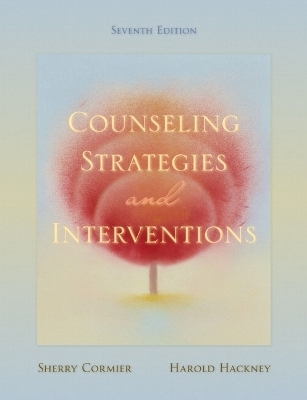
Counseling Strategies and Interventions
Pearson (Verlag)
978-0-205-52163-0 (ISBN)
- Titel erscheint in neuer Auflage
- Artikel merken
This practical, highly readable text focuses on basic counseling skills within a multicultural context, providing students with the tools and strategies they need to become effective members of the counseling profession. Comprehensive but concise, it is rooted in contemporary issues and the diversity of real-world counseling throughout. The authors offer a unique focus both on the student's growth and development as a counselor, and on how the student can best use supervision in this developmental process.
Preface xvii
Chapter One: The Helping Profession
What Is Helping?
Settings in Which Counselors Work
Counselor Qualities and Skills
Training and Credentialing of Professional Counselors
Chapter Two: The Helping Relationship
The Importance of the Relationship to Clients
Accurate Empathy
Positive Regard
Congruence
Self-Disclosure
Positive Feedback Statements : Encouragement and Strengths Perspective
A Climate of Safety
Chapter Three: Attending to Clients
Communication of Attentiveness
Facial Expressions
Eye Contact
Body Positions and Use of Space
Verbal Behavior and Selective Attention
Listening for Context
Chapter Four: Recognizing Communication Patterns
Ritualized Patterns of Communication
Interactive Communication Patterns: Culture and Gender
Silence
Chapter Five:Managing the Counseling Session
The First Interview
Cultural Variables and the First Interview
Structuring of Initial Moments
Client Reactions to Initial Interviews
Intake-Interview Content
Using Intake-Interview Information
Opening Subsequent Interviews
Terminating the Interview
Terminating the Counseling Relationship
Chapter Six: Responding to Cognitive Content
Recognizing Alternatives
Responding to Alternatives
Verbal Responses to Cognitive Content
Differentiation and Selective Responding
The Differentiation Process in Cross-Cultural Counseling
Effects of Responding to Cognitive Content
Chapter Seven: Responding to Affective Content
The Importance of Responding to Affective Content
Verbal and Nonverbal Cues Associated with Emotions
Types of Affective Messages
Affective Competence
Verbal Responses to Affective Messages
Effects of Responding to Affective Content
Chapter Eight: Conceptualizing Issues and Setting Goals
The Client’s World
The Role of the Counselor in Assessing Client Concerns
Process and Outcome Goals
Culturally Appropriate Counseling Goals
Three Elements of Good Outcome Goals
Translating Vague Concerns into Specific Goals
Client Resistance to Goal Setting and the Stages of Change Model
Client Participation in Goal Setting
Chapter Nine: Using Integrative Counseling Strategies and Interventions
Working with Client Feelings
Working with Client Behaviors
Working with Client Beliefs and Attitudes
Working with client language, symbolic meaning, and stories
Working with Client Interactional Patterns and Relationships
Working with Client Cultural and Social Systems
Chapter Ten: Common Challenges for Beginning Counselors
by T. Anne Hawkins, Sherry Cormier, and Janine Bernard
Common Concerns of Beginning Counselors
Preparing for Ethical Challenges
Preparing for Supervision Challenges
Appendix A: Websites for Ethical Codes and Related Standards of Professional Organizations
Appendix B: Counseling Strategies Checklist
References
Index
| Erscheint lt. Verlag | 19.4.2007 |
|---|---|
| Sprache | englisch |
| Maße | 233 x 178 mm |
| Gewicht | 322 g |
| Themenwelt | Sozialwissenschaften ► Pädagogik ► Sozialpädagogik |
| Sozialwissenschaften ► Soziologie | |
| ISBN-10 | 0-205-52163-0 / 0205521630 |
| ISBN-13 | 978-0-205-52163-0 / 9780205521630 |
| Zustand | Neuware |
| Informationen gemäß Produktsicherheitsverordnung (GPSR) | |
| Haben Sie eine Frage zum Produkt? |
aus dem Bereich