Choosing to Command
Fire Engineering Books (Verlag)
978-1-59370-511-4 (ISBN)
- Titel z.Zt. nicht lieferbar
- Versandkostenfrei
- Auch auf Rechnung
- Artikel merken
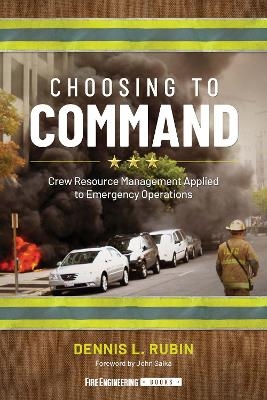
The time has come for all public safety industry organizations to adopt and incorporate crew resource management or similar programs focused on making the best critical decisions at incidents. The goal of Dennis Rubin's essential new book is to urge organizations to integrate a critical decision-making model into the incident command system and use methods to improve critical decision making to bring about the next significant improvements for firefighter safety, operational efficiency, and effectiveness.
There are many tactics, strategy, and command courses available at local, state, national, and international levels. But there isn't much information included in these amazing courses that addresses critical decision making. This book aims to change that. Here you will find a discussion of the history and current science of crew resource management as well as invaluable information on:
Leadership and teamwork
Communicating under stress
Task allocation
Applications to operating conditions, such as abandoned buildings, aviation fires, and more
Crew resource management uses the basic philosophy that to err is human, and that's never truer than in stressful situations. Building on the successful work of such organizations as the Federal Aviation Administration and the US Armed Forces in developing crew resource management, this book focuses on making the best decision at an incident the first time - every time.
Dennis L. Rubin has fire and rescue experience spanning more than 45 years. Rubin has served as a line firefighter and emergency medical technician, company officer, staff officer, command officer, and chief of the department in Atlanta, Georgia Washington, DC and Kansas City, Kansas, Fire Departments. Chief Rubin's educational accomplishments include a masters in Organizational Leadership from Waldorf University, a bachelor of science in Fire Administration from the University of Maryland, and an associate degree in applied science in Fire Science Management from the Northern Virginia Community College. Rubin is a graduate of the National Fire Academy's Executive Fire Officer Program and the Naval Post Graduate School's Executive Leadership Course in Homeland Security. Rubin is a certified incident safety officer and has obtained the Chief Fire Officer Designation and Chief Medical Officer Designation bestowed by the Center for Public Safety Excellence. Rubin is a nationally registered emergency medical technician. Rubin is a popular lecturer at local, state, national, and international venues. Rubin's teaching credentials are significant. Rubin was an adjunct faculty member with several state fire-rescue training agencies. He is part of the contract faculty at the National Fire Academy. Rubin has been a member of seven National Fire Academy course development teams to include Incident Command, Leadership, Infection Control for the Fire Service, Incident Safety Officer, and Tactical Operations. Rubin is the author of several emergency service textbooks all published by Fire Engineering Books. Rubin's first release was Rube's Rules for Survival. This book is a collection of case studies dealing with the mission critical topic of fire fighter safety. The next book that Rubin authored was D.C. Fire, discussing his 4 years as the fire chief of our nation's capital. Rubin's third textbook is It's Always About Leadership, which reviews Rubin's leadership principles. The fourth text is titled Choosing to Command. This textbook discusses critical decision-making at fire-rescue incidents. Chief Rubin contributes to several fire-rescue service publications and has written more than 200 technical articles relating to fire rescue department operations, administration, emergency management, training, and safety. Rubin has three children and five grandchildren. Rubin is an active member of the Kansas City, Kansas, Downtown Rotary Club.
Foreword
Acknowledgments
. Introduction
Flashback Change Demonstration
Change Comes to Critical Decision-Making
Incident Action Plan
Command Decision-Making Background
Taking A Page from the Commercial Aviation Decision-Making Playbook
CRM to the Rescue
Introduction to CRM
Change Is Difficult
Our Challenge
Critical Learning Points
Crew Resource Management Discussion Questions
2. The History of Crew Resource Management
Seemed Like Just Another Day at the Office
Fuel Quantity
Impact and Effects of this Aviation Case
Critical Learning Points
CRM Discussion Questions
3. The Need for Crew Resource Management within Emergency Operations
National Institute for Occupational Safety and Health
Fire Rescue Incident Command Progression
Building Fire Case Study
Building Fire Case Study Aftermath
Building Fire Case Study Operational Alternatives
Critical Learning Points
Crew Resource Management Discussion Questions
4. The Science Behind Crew Resource Management
The Domino Theory
Root Causes and Impacts of Accidents
The Swiss Cheese Theory
The Sterile Cockpit 82 2 Aviation Case Study
Sterile Command Post
The Disruptive Command Post 82 2 Pipeline Case Study
Pipeline Case Study Operational Alternatives
Get-home-itis Syndrome
Get-home-itis Aviation Case Study 82 2 American Airlines Flight 42
Get-home-itis and Its Impact and Effects on Fire Rescue
Operations
Triad of Get-home-itis Fire Rescue Case Studies
USAF Knock-It-Off Program
Critical Learning Points
Crew Resource Management Discussion Questions
5. Teamwork and Leadership
Teamwork and Leadership Aviation Case Study 82 2 Korean Air Cargo Flight 85 9
Catastrophic Explosion Case Study
Explosives Case Study Operational Alternatives
Incident Command Teams
Duties of the Incident Commander
Duties of Incident Safety Officer
Duties of the Incident Accountability Officer
Duties of the Deputy Incident Commander
Command Team Staffing
Critical Learning Points
Crew Resource Management Discussion Questions
. Effective Communications Under Stress
Ideal Communications Case Study
On-Scene Operations
Methods of Communicating
Communications Order Model
Command and Tactical Radio Use
Brief Initial Reporting
Incident Benchmarks
Building or Area Personnel Evacuation Signal
Assigned Radio Frequencies
Summary and Critical Learning Points
Communications Discussion Questions
7. Task Allocation
A Really Bad Day in the Air
Fireground Failure to Allocate Tasks
The Lone Ranger Rides Solo
Summary and Critical Learning Points
Crew Resource Management Discussion Questions
8. Critical Decision-Making
An Aviation Application of CRM
Historic Fire Rescue Service Decision Making
NIOSH Death in the Line of Duty Report
(Executive Summary Excerpt)
Korean Air Cargo Flight 85 9 Crash
Eliminating Decision-Making Distractions
Brief Initial Report
Incident Action Plan
Summary and Critical Learning Points
Crew Resource Management Discussion Questions
9. Operating at Abandoned, Vacant,
and Derelict Building Fires
Building Shot in the Head
Four Benchmark AVD Case Study Fires
Path Forward to Better Manage AVD Building Fires
Critical Learning Points
Discussion Questions
. The Power of After-Action Reporting
AAR Reflection and Application
The AAR Process
Gathering AAR Data
After-Action Report Process Guidelines
Critical Learning Points
Discussion Questions
. Job Aid and Checklist
The Research
Command 82 7 s -Minute Checklist
Expanded Mayday Checklists
Brief Initial Report Checklist Review
Structural Fire Operating Guideline Policy
Firefighter Accountability
Critical Learning Points
Discussion Questions
2. Precedence Setting Decisions in Aviation
and Fire Operations Case Studies: Proof
of the CRM Concept
United Flight 73 (December 978)
Hackensack Ford Commercial Building Fire (July 988)
United Flight 232 (July 989)
Clipper Mill Warehouse Fire (September 995)
U.S. Air Flight 549 82 2 The Miracle on the Hudson (January 2 9)
Conclusion
Critical Learning Points
CRM Discussion Questions
Epilogue
Notes
Index
About the Author
| Erscheinungsdatum | 16.05.2025 |
|---|---|
| Sprache | englisch |
| Maße | 152 x 229 mm |
| Themenwelt | Sozialwissenschaften ► Soziologie |
| Technik ► Bauwesen | |
| Wirtschaft ► Betriebswirtschaft / Management ► Allgemeines / Lexika | |
| Wirtschaft ► Betriebswirtschaft / Management ► Unternehmensführung / Management | |
| ISBN-10 | 1-59370-511-5 / 1593705115 |
| ISBN-13 | 978-1-59370-511-4 / 9781593705114 |
| Zustand | Neuware |
| Informationen gemäß Produktsicherheitsverordnung (GPSR) | |
| Haben Sie eine Frage zum Produkt? |
aus dem Bereich