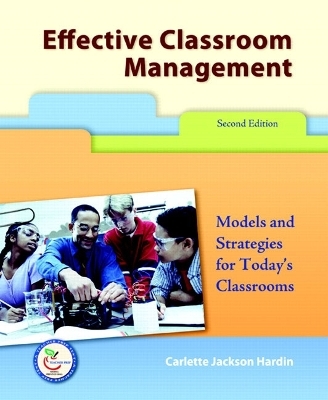
Effective Classroom Management
Pearson (Verlag)
9780131998087 (ISBN)
- Titel erscheint in neuer Auflage
- Artikel merken
In the second edition, the practical orientation of the first edition has been retained while providing you with an updated view of classroom management models and research. The second edition includes:
Two, new, innovative models of classroom management: Character Education (Chapter 11) and Marvin Marshall’s Discipline without Stress® (Chapter 9)
New focus on students at risk and issues of classroom safety (Chapter 14)
Step-by-Step charts that summarize each model in an easy to reference format
Twenty new Tips from the Field, aligned with chapter content
Additional opportunities for you to develop artifacts for your portfolio
A Teacher Prep list on the inside front cover, listing at a glance the most practical tips and sample artifacts to use in your classroom
Table of Contents
Chapter 1: Changing Views of Classroom Management Introduction
Changing Views of Classroom Management
Classroom management as discipline
Classroom management as a system
Classroom management as instruction
Research on Effective Classroom Management
Summary of research findings
Critical influences on Classroom Management
Rudolf Dreikurs
William Glasser
Haim Ginott
Developing a Personal Classroom Management Plan
Chapter Activities
Chapter References
Part One: Classroom Management as Discipline
Chapter 2: Behavioral Approaches to Classroom Management Introduction
Elements of Behavior Management
Consequences of Behavior
Positive reinforcement
Negative reinforcement
Punishment
Schedules of reinforcement -
Continuous
Intermittent
Types of Reinforcement
Primary reinforcement
Secondary reinforcement
Working with Individual Students
Behavior modification
Strengths and Weaknesses of Behavior Model
Behavioral Management In the Classroom
Summary
Summary of Key Terminology
Chapter Activities
Chapter References
Chapter 3: Lee and Marlene Canter — Assertive Discipline
Introduction
The Assertive Teacher
The Non-assertive Teacher
The Hostile Teacher
The Assertive Teacher Roadblocks to Discipline
The Assertive Plan
Steps in Developing the Plan
A Kindler, Gentler Canter
Strengths and Weaknesses of Assertive Discipline
Assertive Discipline in the Classroom
Summary
Summary of Key Terminology
Chapter Activities
Resources for Further Study
Chapter References
Chapter 4: Frederic Jones —Positive Discipline Introduction
Classroom Structure
Limit Setting
Step One: Eyes in the Back of Your Head
Step Two: Terminate Instruction
Step Three: Turn, Look, and Say the Students’ Names
Step Four: Walk to the Edge of the Student’s Desk
Step Five: Prompt
Step Six: Palms
Step Seven: Camping out in Front
Step Eight: Camping out from Behind
ResponsibilityTraining
Backup System
Summary of Four-Step Model
Fredisms
Strengths and Weaknesses of Positive Discipline
Positive Discipline in the Classroom
Summary
Summary of Key Terminology
Chapter Activities
Resources for Further Study
Chapter References
Chapter 5: Linda Albert, Jane Nelson, Lynn Lott, and H. Stephen Glenn — Logical Consequences Introduction
Goals of Misbehavior
Attention getting
Power seeking
Revenge seeking
Avoidance of Failure
Reacting to Student Behavior
Consequences of Misbehaviors
Helping Students Connect
Strengths and Weaknesses of Logical Consequences
Logical Consequences in the Classroom
Summary
Summary of Key Terminology
Chapter Activities
Resources for Further Study
Chapter References
Part Two: Classroom Management as a System
Chapter 6: Richard Curwin and Allen Mendler — Discipline with Dignity Introduction
Three Dimensional Plan
Prevention
Action
Resolution
As Tough as Necessary
Discipline with Dignity in the Classroom
Strengths and Weaknesses of Discipline with Dignity
Summary
Summary of Key Terminology
Chapter Activities
Resources for Further Study
Chapter References
Chapter 7: Carolyn Evertson — Classroom Organization and Management Program Introduction
Key Elements of COMP
Organizing the Classroom
Visibility
Accessibility
Distractibility
Planning and Teaching Rules and Procedures
Managing Student Work and Improving Student Accountability
Maintaining Good Student Behavior
Positive consequences
Corrective consequences
Negative Consequences
Intervention strategies
P anning and Organizing Instruction
Conducting Instruction and Maintaining the Momentum
Results of Research of Program
COMP in the Classroom
Strengths and Weaknesses COMP
Summary
Summary of Key Terminology
Chapter Activities
Resources for Further Study
Chapter References
Chapter 8: Alfie Kohn — Building Community Introduction
Looking at Student/Teacher Interactions
Eliminating the Use of Rewards and Praise
Alternatives to Punishment
Building a Classroom Community
Building Community in the Classroom
Strengths and Weaknesses of Building Community
Summary
Summary of Key Terminology
Chapter Activities
Resources for Further Study
Chapter References
Chapter 9: Marvin Marshall — Discipline without Stress®
Introduction
The Theory
Anarchy
Bullying
Cooperation/Conformity
Democracy
The Process
Teaching the Concepts
Checking for Understanding
Guided Choices
Eliminating Punishment
Promoting a Positive Classroom Environment
Evaluating Instruction
Conducting Class Meetings
Identifying Standards for Appropriate Behavior
Using Praise and Rewards Appropriately
Strengths and Weaknesses of Discipline without Stress®
Discipline without Stress® in the Classroom
Summary
Summary of Key Terminology
Chapter Activities
Resources for Further Study
Chapter References
Part Three: Classroom Management as Instruction
Chapter 10: Barbara Coloroso — Inner Discipline
Introduction
Three Types of Classrooms
The Jellyfish Classroom
The Brickwall Classroom
The Backbone Classroom
Discipline in a Backbone Classroom
Rules Setting in the Backbone Classroom
Problem Solving in a Backbone Classroom
Class Meetings in the Backbone Classroom
Inner Discipline in the Classroom
Strengths and Weaknesses of Inner Discipline
Summary
Summary of Key Terminology
Chapter Activities
Resources for Further Study
Chapter References
Chapter 11: Character Education
Introduction
Defining Character Education
Classroom Strategies
The Teacher Acts as a Caregiver, Model, and Mentor
The Teacher Creates a Caring, Moral Community in the Classroom
The Teacher Practices Moral Discipline
The Teacher Creates a Democratic Classroom Environment
The Teacher Teaches Values through the Curriculum
The Teacher Uses Cooperative Learning Strategies
The Teacher Helps Students Develop the “Conscience of Craft”
The Teacher Encourages Moral Reflection
The Teacher Teaches Conflict Resolution
The School Fosters Caring Beyond the Classroom
The School Creates a Positive Moral Culture within the School
The School Recruits Parents and the Community as Partners in Values Education
Nationally Recognized Character Education Programs
CHARACTER COUNTS!
The Character Education Partnership
Community of Caring
Character Education in the Classroom
Strengths and Weaknesses of Character Education
Summary
Summary of Key Terminology
Chapter Activities
Resources for Further Study
Chapter References
Chapter 12: Conflict Resolution and Peer Mediation
Introduction
Causes of Classroom Conflict
Responses to Conflict
The Conflict Resolution Process
Step 1: Set the stage
Step 2: Gather perspectives
Step 3: Identify interests
Step 4: Create options
Step 5: Evaluate options
Step 6: Generate agreement
Conflict Resolution in the Classroom
Strengths and Weaknesses of Conflict Resolution
Summary
Summary of Key Terminology
Chapter Activities
Resources for Further Study
Chapter References
Chapter 13: Forrest Gathercoal: Judicious Discipline
Introduction
The Bill of Rights
The First Amendment
The Fourth Amendment
The Fourteenth Amendment
Compelling State Interests
Property Loss and Damage
Threat to Health and Safety
Legitimate Educational Purpose
Serious Disruption of the Educational Process
Time Place, and Manner
Implementation
Developing Rules and Consequences
Judicious Discipline in the Classroom
Strengths and Weaknesses of Conflict Resolution
Summary
Summary of Key Terminology
Chapter Activities
Resources for Further Study
Chapter References
Part Four: Developing a Personal System
Chapter 14: Classroom Management with At-Risk Students Introduction
Classroom Management and Students with Disabilities
Classroom Management and Children at Risk
Poverty and Homelessness
Abused and Neglected Children
Children with Violent Tendencies
Children who are Bullies/Bullied
Chapter Activities
References
Chapter 15: Creating Your Own System Introduction
The Philosophy of the Teacher
The Personality of the Teacher
The Teaching Style of the Teacher
The Teacher’s Evaluation of the School Environment
The Teacher’s Experiences in the Classroom
Chapter Activities
Chapter References
| Erscheint lt. Verlag | 18.4.2007 |
|---|---|
| Sprache | englisch |
| Maße | 231 x 191 mm |
| Gewicht | 563 g |
| Themenwelt | Sozialwissenschaften ► Pädagogik |
| ISBN-13 | 9780131998087 / 9780131998087 |
| Zustand | Neuware |
| Informationen gemäß Produktsicherheitsverordnung (GPSR) | |
| Haben Sie eine Frage zum Produkt? |
aus dem Bereich