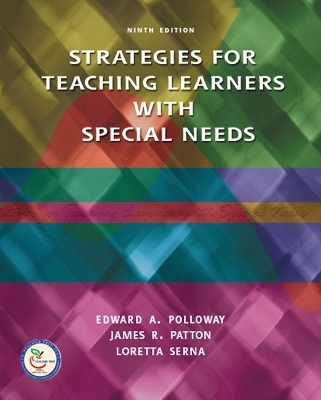
Strategies for Teaching Learners with Special Needs
Pearson (Verlag)
978-0-13-179155-8 (ISBN)
- Titel erscheint in neuer Auflage
- Artikel merken
I. TEACHING LEARNERS WITH SPECIAL NEEDS
1. Special Education in an Era of Inclusion and Standards
A New World Order
Target Populations and Associated Concerns
Critical Legislative and Federal Initiatives
Key Elements of Special Education in Schools Today
Effective Teaching
Special Education Teacher as Professional
2. Strategies for Collaboration
Consultation and Collaboration: Models and Skills
Collaboration with Students
Collaboration with Families
Collaboration with General Educators
Collaboration with Paraeducators
Collaboration with Other Personnel
3. Strategies for Curriculum Development, Effective Instruction, and Classroom Adaptations
Curriculum Development
Effective Instruction
Curricular and Instructional Adaptations
Technology
Making It Work
4. Strategies for Classroom Management and Behavior Support
School Factors Related to Successful Schools, Classrooms, and Students
Teacher Factors Related to Classroom Organization and Management
Students Factors Related to Classroom Management and Behavioral Support
II. CONTENT AREAS
5. Spoken Language
Communication, Language, Speech, and Language Literacy
Culture and Language Literacy
A Model of Language
Language Development
Language Disorders
Assessing Language
Teaching Spoken Language
Teaching with Technology
Making It Work
6. Reading: Introduction and Word Recognition
Reading Problems and Challenges
Reading in the Curriculum
Assessment
Word-Recognition Instruction: Elementary Level
Word-Recognition Instruction: Middle and Secondary Students
Teaching in the Classroom
Making It Work
7. Reading Comprehension
The Nature of Reading Comprehension
Assessing Reading Comprehension
General Instructional Approaches: Elementary Focus
Comprehension Strategies
Instructional Considerations: Middle and Secondary Level
Making It Work
8. Written Language
Written Language in the Curriculum
Handwriting
Spelling
Written Expression
Technology in the Classroom
Making It Work
9. Mathematics Instruction
National Initiatives
Assessment
Mathematics Instructional Considerations
Mathematics Instruction for Students at the Secondary Level
Technology in the Classroom
Making It Work
10. Science and Social Studies
Presenting Challenges for Students with Special Needs in Science and Social Studies
Teaching Science to Learners with Special Needs
Teaching Social Studies to Learners with Special Needs
Assessment in Science and Social Studies
Instructional Techniques in Science and Social Studies
Technology in the Classroom
Instructional Practices
11. Creative Arts: Visual Arts, Music, Dance, and Drama
Rationale for Creative Arts Instruction
General Instructional Guidelines
Instruction in the Visual Arts
Instruction in Music
Instruction in Dance and Creative Movement
Instruction in Creative Dramatics
Sources of Teaching Ideas
Technology in the Classroom
Making It Work
III. CRITICAL SKILLS
12. Study Skills
Study Skills Research
Types of Study Skills
Assessment of Study Skills
Teaching Study Skills
Implementing a Study Skills Program
Technology in the Classroom
Making It Work
13. Social Competence and Self-Determination Skills
History and Definitions
Assessment
Social Skills and Self-Determination Skills: Curricula and Instruction
Using Technology in Your Social or Self-Determination Skills Program
Establishing a Social or Self-Determination Skills Program
Making It Work
14. Functional Academics and Career Development
Functional Skills and Knowledge
Demands of Adulthood
Functional Academics
Occupational and Vocational Preparation
Assessing Functional Competence
Making It Work: Teaching Real-Life Content
15. Transitions Across the School Years
Transitions Along and Across the School Years
Early Childhood Transitions and Entry into Public Schools
Transition from Elementary to Secondary Education
Transition from School to Community
References
Author Index
Subject Index
| Erscheint lt. Verlag | 13.8.2007 |
|---|---|
| Sprache | englisch |
| Maße | 254 x 202 mm |
| Gewicht | 853 g |
| Themenwelt | Sozialwissenschaften ► Pädagogik ► Sonder-, Heil- und Förderpädagogik |
| ISBN-10 | 0-13-179155-9 / 0131791559 |
| ISBN-13 | 978-0-13-179155-8 / 9780131791558 |
| Zustand | Neuware |
| Informationen gemäß Produktsicherheitsverordnung (GPSR) | |
| Haben Sie eine Frage zum Produkt? |
aus dem Bereich