


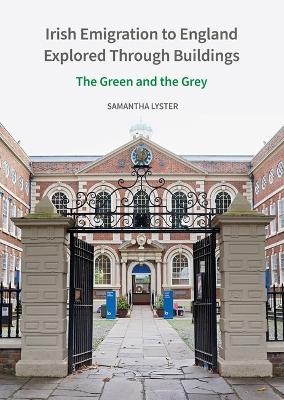
Irish Emigration to England Explored Through Buildings
The Green and the Grey
Seiten
2025
Historic England (Verlag)
978-1-83624-580-3 (ISBN)
Historic England (Verlag)
978-1-83624-580-3 (ISBN)
Buildings that housed the institutions and businesses that formed the support network for Irish people, many of them young and travelling alone. The themed chapters cover public and private buildings that reflect the various working and social lives of Irish people, including those that show the business acumen of migrants.
The book explores the symbiotic relationship between Irish migrants and the built environment in England. In doing so the book draws out fresh aspects of the migration story, how it was supported through the use of different types of buildings and also demonstrates the opportunities that emigration offered to Irish communities.
When emigrants travelled from Ireland to England their first connections with the country were not just with people, but also buildings. Buildings that housed the institutions and businesses that formed the support network for Irish people, many of them young and travelling alone.
The themed chapters cover public and private buildings that reflect the various working and social lives of Irish people, including those that show the business acumen of migrants. It also explores buildings that supported informal networks – churches, pubs and community centres.
And it documents buildings that demonstrate other sides to the standard migration narrative that it was only the poor and low or semi-skilled that migrated by looking at built heritage associated with Irish artists and workers in the creative industries.
The book explores the symbiotic relationship between Irish migrants and the built environment in England. In doing so the book draws out fresh aspects of the migration story, how it was supported through the use of different types of buildings and also demonstrates the opportunities that emigration offered to Irish communities.
When emigrants travelled from Ireland to England their first connections with the country were not just with people, but also buildings. Buildings that housed the institutions and businesses that formed the support network for Irish people, many of them young and travelling alone.
The themed chapters cover public and private buildings that reflect the various working and social lives of Irish people, including those that show the business acumen of migrants. It also explores buildings that supported informal networks – churches, pubs and community centres.
And it documents buildings that demonstrate other sides to the standard migration narrative that it was only the poor and low or semi-skilled that migrated by looking at built heritage associated with Irish artists and workers in the creative industries.
Samantha Lyster is a freelance journalist.
| Erscheinungsdatum | 29.11.2025 |
|---|---|
| Zusatzinfo | 72 Illustrations |
| Sprache | englisch |
| Maße | 170 x 240 mm |
| Themenwelt | Geisteswissenschaften ► Geschichte ► Regional- / Ländergeschichte |
| Geschichte ► Teilgebiete der Geschichte ► Kulturgeschichte | |
| Sozialwissenschaften ► Ethnologie | |
| Sozialwissenschaften ► Soziologie | |
| Technik ► Architektur | |
| ISBN-10 | 1-83624-580-7 / 1836245807 |
| ISBN-13 | 978-1-83624-580-3 / 9781836245803 |
| Zustand | Neuware |
| Informationen gemäß Produktsicherheitsverordnung (GPSR) | |
| Haben Sie eine Frage zum Produkt? |
Mehr entdecken
aus dem Bereich



aus dem Bereich
Die Revolution des Gemeinen Mannes
Buch | Softcover (2024)
C.H.Beck (Verlag)
CHF 16,80
Eine Geschichte des Geschmacks
Buch | Hardcover (2025)
C.H.Beck (Verlag)
CHF 49,95


