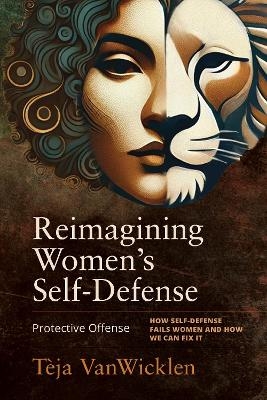
Reimagining Women's Self-Defense
YMAA Publication Center (Verlag)
978-1-59439-996-1 (ISBN)
- Noch nicht erschienen (ca. März 2026)
- Portofrei ab CHF 40
- Auch auf Rechnung
- Artikel merken
Two-thousand-years ago, when the martial arts were evolving, women’s empowerment and freedom of movement weren’t high on the agenda. Yet women are still learning ancient self-defense concepts originally designed by and for men.
Reimagining Women’s Self-Defense is a daring reexamination of protective training for instructors, safety professionals, and seasoned martial artists looking to broaden their understanding of self-defense for women and vulnerable populations. The book discusses how to break down the criminal process; recognize tells and tricks of emotionally abusive people and violent criminals; and respond early if engaged by multiple assailants. It considers weapons–how they are used and how to use them-and covers important legal ramifications of protecting yourself physically. You will learn to vet a litany of self-defense techniques taking into account size, strength, skills, and lifestyle; include specific considerations of parenthood in your self-defense practice; and heal intelligently after a violent assault. Finally, you will come away with teaching tools and resources to help you pass the knowledge on to your students and loved ones.
Tèja VanWicklen navigates the unpredictable terrain of predators and their unsuspecting targets in the presence of perplexing, unanswered questions:
What is self-defense really?
Are some techniques better than others?
Should I rely on pepper spray?
What if my kids are with me when I’m attacked?
Reimagining Women’s Self-Defense rebrands self-defense as protective offense, addressing the shortcomings of a purely defensive mindset during a violent encounter and including others the "self" in "self-defense" leaves out. Protective offense is context-based and personal. It empowers women to discover their own answers and even their own questions.
Among other things expect to learn to:
Break down the process of violent crime
Stay off the criminal radar
Recognize signs, tells, and tricks of emotionally abusive people and violent criminals
Respond as early as possible to a confrontation by multiple attackers
Understand how weapons are used and what your options are if confronted by one
Learn ways to navigate confusion and shock
Vet a litany of self-defense techniques taking into account size, strength, skills, and lifestyle
Know which physical techniques to count on in a fight for your life and which NOT to
Grasp some of the most important legal ramifications of physically protecting yourself against violence
Heal intelligently after a violent encounter
Include specific considerations of parenthood in your self-defense practice
Evaluate self-defense courses and instructors so you can make educated decisions for your family
Come away with teaching tools and resources to help you pass the knowledge on to your students and loved ones
Help engage and encourage others to reimagine women's self-defense training so it benefits us all
Tèja VanWicklen is a writer focused on reimagining self-defense for women, parents, and vulnerable populations, and a consultant specializing in realistic violence depiction for filmmakers. Teja has studied multiple martial arts, edged-weapons, firearms, wilderness survival, biomechanics, and emergency medicine. She has been a personal trainer, filmmaker, and manager of an international stunt team. Teja has trained with elite military operators and been featured in magazines and video. As a neglected, neurodivergent child raised around drugs and violence, and having endured a problematic pregnancy, Teja navigates the unpredictable terrain of predators and their unsuspecting targets. Reimagining Women’s Self-Defense is her first book. Tèja VanWicklen resides in East Village NYC, New York. Rory Miller is a writer and teacher living peacefully in the Pacific Northwest. He has served for seventeen years in corrections as an officer and sergeant working maximum security, booking and mental health; leading a tactical team; and teaching subjects ranging from Defensive Tactics and Use of Force to First Aid and Crisis Communications with the Mentally Ill. For fourteen months he was an advisor to the Iraqi Corrections System working in Baghdad and Kurdish Sulaymaniyah. Somewhere in the midst of that he received a BS degree in Psychology; served in the National Guard as a Combat Medic (91A/B); earned college varsities in judo and fencing and received a mokuroku in jujutsu. He has drunk chichu with reformed cannibals and 18-year-old scotch with generals...and loves long sword fights on the beach.
Foreword by Rory Miller
Introduction
Why This Book?
Who Is This Book For?
What to Expect
How to Use This Book
PART 1: PARADIGM SHIFT
Chapter 1: Protective Offense
Shortcomings of Martial-Arts–Based Women’s Self-Defense Training
Protective Offense: the New Self-Defense
Suggested Practices
PART 2: SET YOUR MIND
Chapter 2: Me, Myself, and Conflict
Zen and the Art of Conflict
The Three-Headed Monster
Flip the Script
Mind-Setting Part 1
Awareness Part 1: Pay Attention!
Recap
Suggested Practices
Chapter 3: Where Wolf?
Acceptance and Pragmatism
Common Ground
Scary People
Concepts and Models
Social vs. Asocial Violence
Recap
Suggested Practices
Chapter 4: Prey or Privilege
Mind-Setting Part 2
Twelve Traits of Protective Offense
Recap
Suggested Practices
PART 3: THE SELF-DEFENSE CONTINUUM
Chapter 5: The Self-Defense Continuum—Overview
Recap
Suggested Practices
Chapter 6: The Self-Defense Continuum, Stage 1—Decide to Recognize Intent
Awareness Part 2: You See But You Do Not Observe
Nonverbal Deception
Verbal Deception
Devious Tactics
Wanting
The Safe Category
Setting Boundaries
Recap
Suggested Practice
Chapter 7: The Self-Defense Continuum, Stage 2—Deter the Interview
On the Fringe
Marc MacYoung’s Five Interview Strategies
More Devious Tactics
Deter by De-escalation
Peyton Quinn’s Rules of Escalation-Avoidance
Recap
Suggested Practice
Chapter 8: The Self-Defense Continuum, Stage 3—Disrupt Positioning
Marc MacYoung’s Five Positioning Strategies
Nonviolent Disruption at the Positioning Stage
Make Like a Tree
Voices Carry
Recap
Suggested Practices
Chapter 9: The Self-Defense Continuum, Stage 4—Disengage the Attack
The Unfair Fight
The Grand Dilemma
Deep Self-Trust
Willing and Able
Self-Defense Law 101
The Three Fs (and Then Some)
Fight Theory
Seven Rules of Disengagement
Weapons
Basic Protective Techniques and Concepts
Recap
Suggested Practices
Chapter 10: The Self-Defense Continuum, Stage 5—Debrief After the Reaction
Mental Models and a PTSD-Resistant Mindset
The Early Debrief
Mid- to Long-Term Debrief
Intelligent Healing
Recap
Suggested Practices
Chapter 11: Continuing Education
Martial Arts, Self-Defense, and Other Alternatives to Investigate in Your Search for Protective Offense
Reading Nook
Playtime
Parent Playtime
Play Doctor
A Final Word on Continuing Your Education
Chapter 12: Reimagining Women’s Self-Defense
The Ten Principles of Protective Offense
Acknowledgements
Bibliography
Endnotes
About the Author
| Erscheint lt. Verlag | 19.3.2026 |
|---|---|
| Vorwort | Rory Miller |
| Zusatzinfo | Illustrations |
| Verlagsort | Rolindale, MA |
| Sprache | englisch |
| Maße | 152 x 228 mm |
| Themenwelt | Sachbuch/Ratgeber ► Gesundheit / Leben / Psychologie |
| Sachbuch/Ratgeber ► Sport ► Kampfsport / Selbstverteidigung | |
| Sozialwissenschaften ► Soziologie | |
| ISBN-10 | 1-59439-996-4 / 1594399964 |
| ISBN-13 | 978-1-59439-996-1 / 9781594399961 |
| Zustand | Neuware |
| Informationen gemäß Produktsicherheitsverordnung (GPSR) | |
| Haben Sie eine Frage zum Produkt? |
aus dem Bereich