


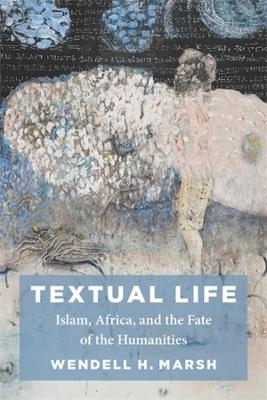
Textual Life
Islam, Africa, and the Fate of the Humanities
Seiten
2025
Columbia University Press (Verlag)
978-0-231-21070-6 (ISBN)
Columbia University Press (Verlag)
978-0-231-21070-6 (ISBN)
The Senegalese Muslim scholar Shaykh Musa Kamara wrote a monumental history of West Africa in a time when colonial discourses asserted that Africans lacked both writing and history. Textual Life considers Kamara’s story as a parable about the fate of the humanities amid epistemic and technological change.
Textual Life is a groundbreaking book that recasts the role of knowledge in the making of a colonial and postcolonial nation. It makes a case for a new literary and intellectual-historical approach to Islam in Africa.
The Senegalese Muslim scholar Shaykh Musa Kamara (1864–1945) wrote History of the Blacks, a monumental history of West Africa, in a time when colonial discourses asserted that Africans lacked both writing and history. He sought to publish a bilingual Arabic and French edition of the book by working with humanists in colonial institutions, but the project was ultimately undermined by the disregard of the French state.
Textual Life considers Kamara’s story as a parable about the fate of the humanities amid epistemic and technological change. Wendell H. Marsh argues that Kamara’s scholarship reflected what he calls the textual attitude, an orientation to the world mediated by reading. Colonial humanists shared this attitude even while upholding racial and religious hierarchies, and they took an interest in African texts and traditions. The bureaucrats and technocrats who succeeded them, however, disdained such dialogue—for reasons that bear a striking resemblance to the algorithmic antihumanism that is ascendant today.
Drawing on Kamara’s body of work, colonial archival documents, and postcolonial knowledge production within Senegal, Textual Life offers a decolonial vision of the humanities. By engaging with African and Muslim intellectual resources, Marsh shows how thinkers like Kamara who were subjected to colonialism can help us find a future after empire.
Textual Life is a groundbreaking book that recasts the role of knowledge in the making of a colonial and postcolonial nation. It makes a case for a new literary and intellectual-historical approach to Islam in Africa.
The Senegalese Muslim scholar Shaykh Musa Kamara (1864–1945) wrote History of the Blacks, a monumental history of West Africa, in a time when colonial discourses asserted that Africans lacked both writing and history. He sought to publish a bilingual Arabic and French edition of the book by working with humanists in colonial institutions, but the project was ultimately undermined by the disregard of the French state.
Textual Life considers Kamara’s story as a parable about the fate of the humanities amid epistemic and technological change. Wendell H. Marsh argues that Kamara’s scholarship reflected what he calls the textual attitude, an orientation to the world mediated by reading. Colonial humanists shared this attitude even while upholding racial and religious hierarchies, and they took an interest in African texts and traditions. The bureaucrats and technocrats who succeeded them, however, disdained such dialogue—for reasons that bear a striking resemblance to the algorithmic antihumanism that is ascendant today.
Drawing on Kamara’s body of work, colonial archival documents, and postcolonial knowledge production within Senegal, Textual Life offers a decolonial vision of the humanities. By engaging with African and Muslim intellectual resources, Marsh shows how thinkers like Kamara who were subjected to colonialism can help us find a future after empire.
Wendell H. Marsh is an associate professor of African literature and philosophy at Mohammad VI Polytechnic University in Ben Guérir, Morocco.
Overture: Philology as the Love of Study
Introduction: Deaths of Philology
1. Beginnings: The Text, the World, and the Sufi
2. A Degree of Prophecy
3. Islam Noir: Surveillance Ethnography and the Politics of Representation
4. A Monumental Text in an Orientalist Season
5. The Pitfalls of National Literature
6. The Secular-Religious Afterlife of Shaykh Musa Kamara
Coda: Long Live Philology! Or, Remembering the Future of the Humanities
Notes
Acknowledgments
Index
| Erscheinungsdatum | 08.08.2025 |
|---|---|
| Reihe/Serie | Black Lives in the Diaspora: Past / Present / Future |
| Verlagsort | New York |
| Sprache | englisch |
| Maße | 152 x 229 mm |
| Themenwelt | Geisteswissenschaften ► Geschichte ► Regional- / Ländergeschichte |
| Sozialwissenschaften ► Ethnologie | |
| Sozialwissenschaften ► Soziologie ► Spezielle Soziologien | |
| ISBN-10 | 0-231-21070-1 / 0231210701 |
| ISBN-13 | 978-0-231-21070-6 / 9780231210706 |
| Zustand | Neuware |
| Informationen gemäß Produktsicherheitsverordnung (GPSR) | |
| Haben Sie eine Frage zum Produkt? |
Mehr entdecken
aus dem Bereich


aus dem Bereich
die Geschichte meiner Urgroßmutter
Buch | Hardcover (2025)
C.H.Beck (Verlag)
CHF 32,15
Träume und Macht : eine Biografie
Buch | Hardcover (2025)
C.H.Beck (Verlag)
CHF 61,60


