


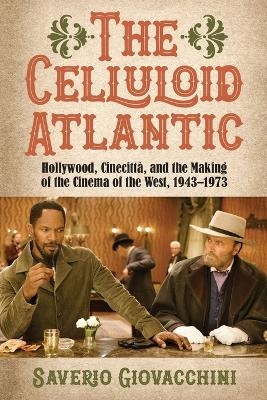
The Celluloid Atlantic
Hollywood, Cinecittà, and the Making of the Cinema of the West, 1943–1973
Seiten
2025
State University of New York Press (Verlag)
979-8-8558-0057-9 (ISBN)
State University of New York Press (Verlag)
979-8-8558-0057-9 (ISBN)
Offers a fresh look at American and Italian cinema in the postwar period.
The Celluloid Atlantic changes the way we look at American and Italian cinema in the postwar period. In the thirty years following World War II, American and Italian film industries came to be an integrated, transnational unit rather than two separate, nation-based entities. Written in jargon-free prose and based on previously unexplored archival sources, this book revisits the history of Neorealism, World War II combat cinema, the "Western all'Italiana," and the career of John Kitzmiller, the African American star who made Italy his home and was the first person of color to win the Best Actor Award at the Cannes Film Festival. The Celluloid Atlantic makes the trailblazing argument that culturally hybrid genres like the so-called spaghetti Western were less the exceptions than the norm. Giovacchini argues that the waning of the Celluloid Atlantic in the early 1970s was due to the economic policies of the first Nixon administration, specifically its important, but largely neglected, Revenue Act of 1971, as well as to the ideological debates between Europeans and Americans that intensified during the American intervention in Vietnam.
The Celluloid Atlantic changes the way we look at American and Italian cinema in the postwar period. In the thirty years following World War II, American and Italian film industries came to be an integrated, transnational unit rather than two separate, nation-based entities. Written in jargon-free prose and based on previously unexplored archival sources, this book revisits the history of Neorealism, World War II combat cinema, the "Western all'Italiana," and the career of John Kitzmiller, the African American star who made Italy his home and was the first person of color to win the Best Actor Award at the Cannes Film Festival. The Celluloid Atlantic makes the trailblazing argument that culturally hybrid genres like the so-called spaghetti Western were less the exceptions than the norm. Giovacchini argues that the waning of the Celluloid Atlantic in the early 1970s was due to the economic policies of the first Nixon administration, specifically its important, but largely neglected, Revenue Act of 1971, as well as to the ideological debates between Europeans and Americans that intensified during the American intervention in Vietnam.
Saverio Giovacchini is Associate Professor of History at the University of Maryland, College Park. He is the author of Hollywood Modernism, Film and Politics in the Age of the New Deal and the coeditor, with Robert Sklar, of Global Neorealism: The Transnational History of a Film Style.
List of Illustrations
Acknowledgments
Introduction: Frozen Contrasts
1. Atlantic Showmen
2. The Celluloid Atlantic between Fascism and the Cold War
3. Atlantic Soldiers
4. Race and Atlantic Exceptionalisms: The Atlantic Journey of John Kitzmiller
5. The Spaghetti Western as Atlantic Genre
6. A Cinema of Camouflage: Spaghetti Sensibility and the Postcolonial World
7. The Last Dance of the Celluloid Atlantic
Conclusion
Notes
Bibliography
Index
| Erscheinungsdatum | 25.07.2025 |
|---|---|
| Reihe/Serie | SUNY series, Horizons of Cinema |
| Zusatzinfo | 26 Illustrations, black and white |
| Verlagsort | Albany, NY |
| Sprache | englisch |
| Maße | 152 x 229 mm |
| Gewicht | 544 g |
| Themenwelt | Kunst / Musik / Theater ► Film / TV |
| Sozialwissenschaften ► Kommunikation / Medien ► Medienwissenschaft | |
| ISBN-13 | 979-8-8558-0057-9 / 9798855800579 |
| Zustand | Neuware |
| Informationen gemäß Produktsicherheitsverordnung (GPSR) | |
| Haben Sie eine Frage zum Produkt? |
Mehr entdecken
aus dem Bereich



aus dem Bereich


