


Hollywood's Others
Love and Limitation in the Star System
Seiten
2025
Columbia University Press (Verlag)
978-0-231-22091-0 (ISBN)
Columbia University Press (Verlag)
978-0-231-22091-0 (ISBN)
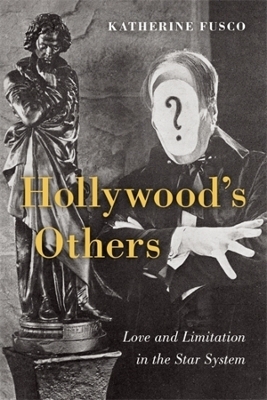
We tend to think about movie stars as either glamorous or relatable. But in the 1920s and 1930s, when the Hollywood star system was taking shape, a number of unusual stars appeared on the silver screen, representing groups from which the American mainstream typically sought to avert its eyes. What did it mean for a white entertainment columnist to empathize with an ambiguously gendered Black child star? Or for boys to idolize Lon Chaney, famous for portraying characters with disabilities?
Hollywood’s Others explores the affective ties between white, non-disabled audiences and the fascinatingly different stars with whom they identified—but only up to a point. Katherine Fusco argues that stardom in this era at once offered ways for viewers to connect across group boundaries while also policing the limits of empathy. Examining fan magazines alongside film performances, she traces the intense audience attachment to atypical celebrities and the ways the film industry sought to manage it. Fusco considers Shirley Temple’s career in light of child labor laws and changing notions of childhood; shows how white viewers responded to Black music in depictions of the antebellum South; and analyzes the gender politics of conspiracy theories around celebrity suicides. Shedding light on marginalized stardoms and the anxieties they provoked, Hollywood’s Others challenges common notions about film’s capacity to build empathy.
Hollywood’s Others explores the affective ties between white, non-disabled audiences and the fascinatingly different stars with whom they identified—but only up to a point. Katherine Fusco argues that stardom in this era at once offered ways for viewers to connect across group boundaries while also policing the limits of empathy. Examining fan magazines alongside film performances, she traces the intense audience attachment to atypical celebrities and the ways the film industry sought to manage it. Fusco considers Shirley Temple’s career in light of child labor laws and changing notions of childhood; shows how white viewers responded to Black music in depictions of the antebellum South; and analyzes the gender politics of conspiracy theories around celebrity suicides. Shedding light on marginalized stardoms and the anxieties they provoked, Hollywood’s Others challenges common notions about film’s capacity to build empathy.
Katherine Fusco is associate professor of English at the University of Nevada, Reno. She is the author of Silent Film and U.S. Naturalist Literature: Time, Narrative, and Modernity (2016) and coauthor of Kelly Reichardt: Emergency and the Everyday (with Nicole Seymour, 2017).
Acknowledgments
Introduction
Part I. The Babies
1. Sexing Farina: Our Gang’s “Little Fellow” and Other Fantasies of Black Childhood
2. Forgetting Shirley Temple: Amnesia, Technology, and the Abstracted Child
Part II. The Nobodies
3. “Feast Your Eyes, Glut Your Soul”: Feeling with Lon Chaney
4. Unreal Remembrance: Black Stars and Their White Audiences
Part III. The Unhappy
5. Unhappy Victims: The Unreadability of Star Suicides
Conclusion
Notes
Selected Bibliography
Index
| Erscheinungsdatum | 19.07.2025 |
|---|---|
| Zusatzinfo | 15 b&w illustrations |
| Verlagsort | New York |
| Sprache | englisch |
| Maße | 152 x 229 mm |
| Themenwelt | Kunst / Musik / Theater ► Film / TV |
| Sozialwissenschaften ► Ethnologie | |
| Sozialwissenschaften ► Kommunikation / Medien ► Medienwissenschaft | |
| Sozialwissenschaften ► Soziologie ► Gender Studies | |
| ISBN-10 | 0-231-22091-X / 023122091X |
| ISBN-13 | 978-0-231-22091-0 / 9780231220910 |
| Zustand | Neuware |
| Informationen gemäß Produktsicherheitsverordnung (GPSR) | |
| Haben Sie eine Frage zum Produkt? |
Mehr entdecken
aus dem Bereich



aus dem Bereich


