


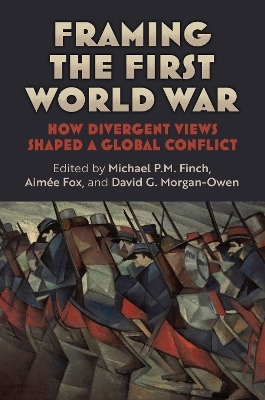
Framing the First World War
How Divergent Views Shaped a Global Conflict
Seiten
2025
University Press of Kansas (Verlag)
978-0-7006-4056-0 (ISBN)
University Press of Kansas (Verlag)
978-0-7006-4056-0 (ISBN)
This innovative approach to the history of World War I looks at ways in which military actors saw and perceived war, and how that exerted a significant influence over the decisions they made and the actions they took.
The character of the conflict that erupted in 1914 defied the expectations of many political leaders and military analysts. Despite the mountains of books and articles published on World War I, there has been surprisingly little systematic or comparative research on how military commanders and politicians framed and interpreted the conflict - or, indeed, on how they understood war itself - and how that understanding shaped their decision-making.
Wars are fought by organizations and people who have disparate visions of the world they live in and the conflict they are fighting. In Framing the First World War, a team of leading scholars explore the gulf between imagined warfare and the realities of battle. By doing so, they investigate how the military forces that contested the First World War framed the conflict they were involved in and how those perspectives shaped and influenced the ways in which they sought to understand, conduct, and respond to the war. They use the notion of 'frames' and the concept of 'framing' to enable us to engage directly with the complexity and diversity of the conflict, which was fought for different reasons and in different ways, incorporating a range of issues with implications for the conduct of the war. Improving our appreciation of how commanders saw the world around them and their views on the war they were conducting opens up valuable new approaches for understanding debates over the higher direction of the conflict and the civil-military relations that underpinned them. The contributors to Framing the First World War work towards a fuller historical appraisal of how military figures understood the war, moving beyond a purely military analysis to incorporate broader cultural and social topics, including education, medicine, politics, and law.
The character of the conflict that erupted in 1914 defied the expectations of many political leaders and military analysts. Despite the mountains of books and articles published on World War I, there has been surprisingly little systematic or comparative research on how military commanders and politicians framed and interpreted the conflict - or, indeed, on how they understood war itself - and how that understanding shaped their decision-making.
Wars are fought by organizations and people who have disparate visions of the world they live in and the conflict they are fighting. In Framing the First World War, a team of leading scholars explore the gulf between imagined warfare and the realities of battle. By doing so, they investigate how the military forces that contested the First World War framed the conflict they were involved in and how those perspectives shaped and influenced the ways in which they sought to understand, conduct, and respond to the war. They use the notion of 'frames' and the concept of 'framing' to enable us to engage directly with the complexity and diversity of the conflict, which was fought for different reasons and in different ways, incorporating a range of issues with implications for the conduct of the war. Improving our appreciation of how commanders saw the world around them and their views on the war they were conducting opens up valuable new approaches for understanding debates over the higher direction of the conflict and the civil-military relations that underpinned them. The contributors to Framing the First World War work towards a fuller historical appraisal of how military figures understood the war, moving beyond a purely military analysis to incorporate broader cultural and social topics, including education, medicine, politics, and law.
Michael P. M. Finch is associate professor in the Centre for Future Defence and National Security, Deakin University. He is the author of Making Makers: The Past, the Present, and the Study of War. AimÉe Fox is a senior lecturer in Defence Studies at King’s College London. She is the author of Learning to Fight: Military Innovation and Change in the British Army, 1914–1918. David G. Morgan-Owen is a reader in the History of War at King’s College London. He is the author of The Fear of Invasion: Strategy, Politics, and British War Planning, 1880–1914.
| Erscheinungsdatum | 22.10.2025 |
|---|---|
| Reihe/Serie | Modern War Studies |
| Verlagsort | Kansas |
| Sprache | englisch |
| Maße | 152 x 229 mm |
| Themenwelt | Geschichte ► Allgemeine Geschichte ► Neuzeit (bis 1918) |
| Geschichte ► Teilgebiete der Geschichte ► Militärgeschichte | |
| Sozialwissenschaften ► Politik / Verwaltung | |
| ISBN-10 | 0-7006-4056-8 / 0700640568 |
| ISBN-13 | 978-0-7006-4056-0 / 9780700640560 |
| Zustand | Neuware |
| Informationen gemäß Produktsicherheitsverordnung (GPSR) | |
| Haben Sie eine Frage zum Produkt? |
Mehr entdecken
aus dem Bereich
aus dem Bereich
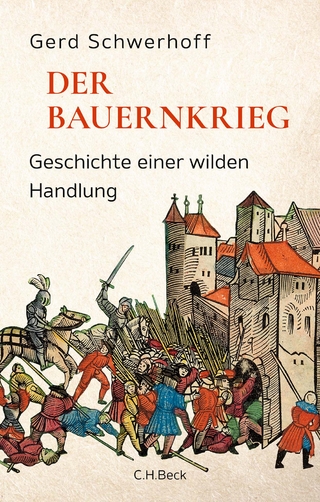
Geschichte einer wilden Handlung
Buch | Hardcover (2024)
C.H.Beck (Verlag)
CHF 47,60


