


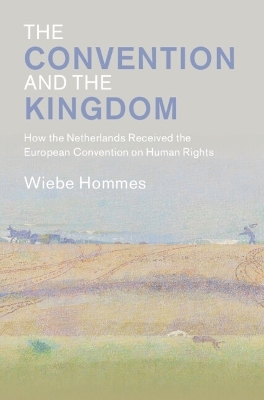
The Convention and the Kingdom
How the Netherlands Received the European Convention on Human Rights
Seiten
2025
Cambridge University Press (Verlag)
978-1-009-67681-6 (ISBN)
Cambridge University Press (Verlag)
978-1-009-67681-6 (ISBN)
From a slow start, the European Convention grew to be the one of the most influential treaties in history. Relevant for lawyers, historians and socio-legal scholars, this study breaks new ground as it uncovers new sources, actors and dimensions in the history of European human rights.
How and why did the European Convention turn from a neglected legal tool into one of the most important human rights documents in legal practice? This book argues this remarkable development wasn't merely the result of a top-down movement initiated by the European Court, but of a far more dynamic process in which the national and European spheres engaged in constant co-creation. Focusing on the Netherlands and uncovering little known archival sources, it lays bare how the Convention was received over time throughout the entire Kingdom. In doing so, it incorporates insight into how European human rights were perceived in Europe and beyond. A much more varied story comes to light in which contingency and interaction take centre stage, and which uncovers the choices that continue to shape the character of the Convention as we know it today.
How and why did the European Convention turn from a neglected legal tool into one of the most important human rights documents in legal practice? This book argues this remarkable development wasn't merely the result of a top-down movement initiated by the European Court, but of a far more dynamic process in which the national and European spheres engaged in constant co-creation. Focusing on the Netherlands and uncovering little known archival sources, it lays bare how the Convention was received over time throughout the entire Kingdom. In doing so, it incorporates insight into how European human rights were perceived in Europe and beyond. A much more varied story comes to light in which contingency and interaction take centre stage, and which uncovers the choices that continue to shape the character of the Convention as we know it today.
Wiebe Hommes is Assistant Professor in European Law and Legal History at the University of Amsterdam. His research revolves around the history of human rights and European integration, as well as the role of individuals in the creation of (international) law.
Introduction; 1. 1945–1954 Constructing the moral basis for European integration; 2. 1954–1962 The open beginning of the Convention; 3. 1962–1968 From European rights to human rights; 4: 1968–1979 European human rights in the age of activism; 5. 1979–1989 The defining decade: How the Convention became 'mainstream'; 6. 1989–2022 From permissive consensus to persistent critique.
| Erscheinungsdatum | 19.08.2025 |
|---|---|
| Reihe/Serie | Law in Context |
| Zusatzinfo | Worked examples or Exercises |
| Verlagsort | Cambridge |
| Sprache | englisch |
| Themenwelt | Recht / Steuern ► Allgemeines / Lexika |
| Recht / Steuern ► EU / Internationales Recht | |
| Sozialwissenschaften ► Politik / Verwaltung | |
| ISBN-10 | 1-009-67681-4 / 1009676814 |
| ISBN-13 | 978-1-009-67681-6 / 9781009676816 |
| Zustand | Neuware |
| Informationen gemäß Produktsicherheitsverordnung (GPSR) | |
| Haben Sie eine Frage zum Produkt? |
Mehr entdecken
aus dem Bereich

aus dem Bereich
Sammlung des Zivil-, Straf- und Verfahrensrechts, Rechtsstand: 6. …
Buch | Hardcover (2025)
C.H.Beck (Verlag)
CHF 53,20
Buch | Softcover (2023)
Franz Vahlen (Verlag)
CHF 27,70
Planung - Lernstrategie - Zeitmanagement
Buch | Softcover (2025)
Franz Vahlen (Verlag)
CHF 39,95


