


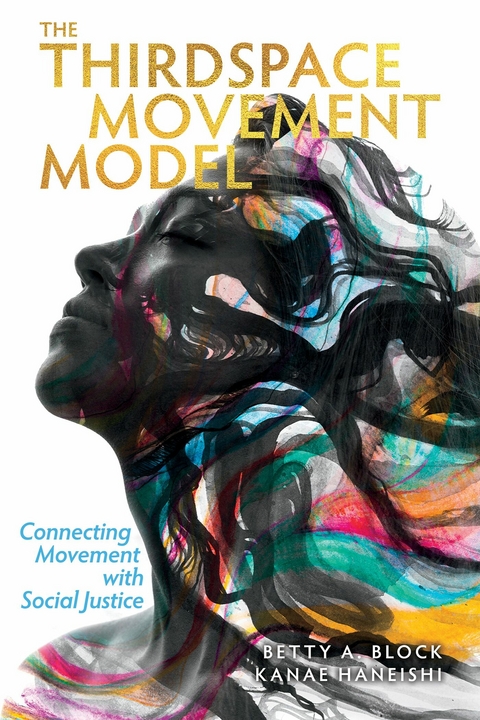
Thirdspace Movement Model (eBook)
400 Seiten
Bookbaby (Verlag)
979-8-3509-9761-3 (ISBN)
Dr. Kanae Haneishi is a Professor at Western Colorado University in Gunnison, CO. Her research focuses on promoting Justice, Equity, Diversity, and Inclusion (JEDI) through pedagogical strategies in physical education and coaching. As a Japanese immigrant and an Asian woman who speaks English as a second language, she is dedicated to advocating for minority groups in sport and physical activity worldwide. Dr. Haneishi is the Secretary General for WomenSport International (WSI) and serves on the Social Justice/Cultural Diversity Committee for the National Association for Kinesiology in Higher Education (NAKHE), where she is also a Board member. She is the Vice Chair of the DEIJ+ committee at Western Colorado University and represented the University at the 2023 NCAA Inclusion Forum. In collaboration with Drs. Betty Block, M. Esther Prados-Megías, and Emilia Zarco, she developed the Thirdspace Movement Model, an innovative curriculum model in physical education that incorporates social justice principles with movement activities. This project has received several grants, including the NAKHE Hellison Interdisciplinary Research Grant. Prior to her current role, Dr. Haneishi was the head women's soccer coach and a senior lecturer at Mount Holyoke College in South Hadley, MA, for 13 years. She was the first Japanese head soccer coach at any NCAA level and taught yoga during her tenure. Her achievements have been recognized with awards, including the University Teacher of the Year and the Equity, Diversity, and Inclusion (EDI) Champion Award from the Society of Health and Physical Educators (SHAPE) Colorado.
Scholars from around the world reevaluated their crafts and came to the same conclusion: There is a way to build spaces that can lead to a socially just world through the vehicle of movement. In Part I, you will be guided through physical space, the philosophical underpinnings of the model, and how to integrate both with your existing physical education curriculum. Brian Culp's chapter discusses marginalized populations, gives a detailed definition of terms, and calls readers to action. Part II begins with the original Quest article written by its research team. It explains the theories and concepts behind the model. The next chapter features Jennifer Walton-Fisette of Kent State University, who provides background and practical strategies for dealing with trauma in the classroom. Alison Murray and Kristy Howells meticulously lay out their ideas about teaching physical education, health, and well-being using multiple diverse spaces as the backdrop. They describe the national curricula for both countries. One of our original team members, Esther Prados-Megias, presents her work on the conscious system for the movement technique, an innovative system developed by Fedora Aberastury. Next, Mayuki Kuno-Mizumura introduces us to the Japanese national physical education curriculum, the addition of martial arts and dance for every student, and ways that dance can lead to positive mind, body, spirit outcomes and harmony between students. In Part III, Betty A. Block introduces unique movement aspects of our work that combine psychological concepts with real-life practical movements. We revisit the basic developmental movement patterns that humans go through, give PETE students the opportunity to experience novel activities and reflect on their own movement journeys, and teach how the spaces and environments we inhabit can affect our relationships to ourselves and others. There are multiple opportunities to journal, engage in critical reflection, and put the work into their bodies. Part IV introduces Eastern philosophies and movements that lead to self-awareness, bodily awareness, and deeper connections with strategies for implementation. In this part, you will be introduced to Chakras, Tai Chi, Japanese Yoga, and the principles behind them. Part V consists of a sample Thirdspace unit. This nine-day introduction to Thirdspace can be built upon in any aspect of other units throughout the year after being taught. Also included in this part is a sports unit that integrates the Thirdspace Movement Model. Kanae Haneishi, the author of this chapter, is a former Japan National Soccer Team member and a PETE professor. She provides readers with sample activities that can be integrated into a soccer unit. The Thirdspace Movement Model is meant to be integrated into your curriculum rather than replace it. The activities in this textbook are suggested activities and there are many ways to present or adapt them to meet your objectives. It is the responsibility of each educator to develop Thirdspace movement activities and critical reflection questions that are age- and situationally appropriate. Use your professional judgment and design the program that fits best for you. The Thirdspace is a place where everyone is valued, recognized, and truly matters, and that means the teacher, too!
To the Instructor and Students
For Instructors
The authors have provided the following instructional materials for instructors to use in planning and preparation:
- Chapter quizzes
- Key Concepts for every chapter
- Practical Applications and video links
- Reflection/Journaling prompts for students
- Discussion questions at the end of every chapter
- Definition of terms section
- PowerPoint slides for all graphics
For Students
The authors have created a textbook that is affordable and easily navigated. Since it is an electronic book, you will be able to easily link to videos and articles as well as hop from section to section. The content in this textbook draws from Western and Eastern movement forms that will help you make connections with yourself and others. We suggest that you use the following while studying:
- Use the reflection/journaling prompts to receive the full benefits of the Thirdspace experience. Be honest with yourself and write or type your responses in a journal. You will be asked to share your responses when you feel comfortable doing so. Everyone will learn from processing each other’s responses based on your own lived experiences.
- Take note of the key concepts at the beginning of each chapter. Knowing them will help you focus your reading.
- Answer the discussion questions that we provided at the end of each chapter. Doing so will help you absorb the material better.
- There are plenty of practical applications and video links in Part III and Part IV. To get the full effect of Thirdspace, you will need to put your whole body into the learning process! We think you will find them to be relaxing and informative, plus you will want to experience what your students will someday experience too.
- We understand that leading the critical dialogue portion of this work can be overwhelming for some; therefore, we have provided elementary, middle, and high school questions for you in Part V.
- Most pedagogy professors will ask you to write unit plans. We have provided examples for you in Part V. The Thirdspace movement model is designed to work for diverse populations. Select the activities and discussion questions that will fit well with the goals and objectives that you have for the students you are teaching. Feel free to modify them based on student ability, interests, and needs.
- The videos that we provide are beginner videos. You can find intermediate and advanced videos of the same topics easily on YouTube if you want to explore topics more deeply.
Contributing Scholars
We searched around the world and asked some of the most forward-thinking scholars to bring their work to the Thirdspace model. We think you will find their research, theories, and approaches to be relevant and innovative. Their work contributes to the cause of promoting spaces where everyone can learn about their best self and the best in others.
We are honored to have the following scholars as contributors to the Thirdspace model textbook and are grateful to them for sharing their ideas in this book.
Dr. Brian Culp is a professor of health and physical activity leadership in the WellStar College of Health and Human Services at Kennesaw State University. An adventurer and lifelong learner, Dr. Culp’s research has incorporated topics related to spatiality, inclusion, culturally relevant teaching and learning, youth development, physical literacy, sport, and community health. In 2020, he delivered the Dudley Allen Sargent Commemorative Lecture for the National Association for Kinesiology in Higher Education, where he overviewed spatial justice and considerations for the investigation of Thirdspace in a variety of settings for movement. Dr. Culp is a Fellow of the National Association of Kinesiology in Higher Education, (NAKHE) the North American Society for Health, Physical Education, Recreation and Sport (SHAPE America) and has been a Fulbright Scholar and visiting research chair in Montreal, Canada.
Dr. Jennifer L. Walton-Fisette is a professor of Physical Education Teacher Education in the School of Teaching, Learning and Curriculum Studies, and is the Director of Educator Preparation for the College of EHHS, Kent State University. She has more than 50 refereed journal publications, 4 books, 10 book chapters, and over 80 state, national, and international conference presentations, in the areas of curriculum, teaching, and learning; trauma-informed practices, and social justice issues related to physical education. Her current scholarship centers on social justice, equity, and policy issues across movement spaces at the higher education and PreK-12 levels.
Dr. Alison M Murray from University of Stirling Initial Teacher Education Health and Wellbeing Lead, Scotland, UK, has enjoyed a fulfilling international career as a coach and physical educator. Operating in the UK, Mexico and USA, Alison’s insights transcended cultural boundaries through their unifying vision to facilitate equitable access for all to educational opportunities. As an athlete Alison has attained national titles and records in senior pole vault competition, and now is a masters world champion. Alison has supported and led physical education teacher education programs across the Southwest of the US and England, currently leading on health & wellbeing at the University of Stirling. Through the stellar work of the Association for Physical Education, Alison served on England’s National Physical Education Task Force. As a member of the Cross-Party Parliamentary Group on a Fit and Healthy Childhood, she continues her policy advocacy by contributing to specialist collaborative work outputs. With the Children’s Alliance Alison fulfills the roles of Ambassador and Co-Chair of the Physical Activity Working Group. Alison’s research line threads motor competence and agency to wellbeing: https://orcid.org/0000-0001-9998-7666
Dr. Pamela F Murray is a senior lecturer in Leadership & Organizational Behavior, Worcester Business School, University of Worcester, UK. With a background in sports participation and coaching, Pamela’s endeavors have facilitated community recreation opportunities and elite performance enhancement. Pamela’s contributions seek to acknowledge every person’s value and talent and help prepare them for meaningful life engagements. Pamela is a keen member of the Cross-Party Parliamentary Group on a Fit and Healthy Childhood and creates bespoke development interventions [e.g. https://www.henley.ac.uk/people/dr-pamela-murray] Efficacious means to fortify children and young people’s wellbeing and self-leadership capabilities are found in her blog pieces:- ‘Enabling purpose-driven ethical leadership via the Platinum Leadership Award at the University of Worcester’; ‘Interested in PhD study?- How care-experienced individuals define and achieve career success’; ‘Appointment of new Ambassadors of the Children’s Alliance’; and ‘Working for all Children and Young People with the Children’s Alliance’ (with whom she is a Co-Chair of the Physical Activity Working Group): https://irwbresearch.wp.worc.ac.uk/ As a past and current British Inline Speed Skating Champion, Pamela enjoys competitive challenges. Please see Pamela’s work: Worcester Research and Publications https://eprints.worc.ac.uk
Dr. Kristy Howells, Reader in Children’s Health, Sport Pedagogy and Physical Education, Canterbury Christ Church University, UK, is based within Sport, Exercise, and Rehabilitation Sciences, her research expertise is in the fields of children’s health, physical activity interventions, physical activity, physical development, mental health, physical education as well as public health, health education and nutrition. She links theory and practice together to help inform policy and practice within Early Years, Primary, as well initial teacher education and Sport and Exercise Sciences. She chairs the Early Years Special Interest for the International Association of Physical Education in Higher Education. She is a member of the Cross Party Parliamentary Fit and Healthy Childhood Group and is an ambassador for the Children’s Alliance. She also works as an Early Years consultant for the Association of Physical Education. She lives and breathes sport, especially everything wheels related having achieved success at national, international and world level in para and able-bodied Masters cycling, as well as success in national level para-triathlon and indoor lightweight rowing.
DNuzhat Uthmani is a lecturer in Education, University of Stirling, Scotland, UK. Nuzhat has experience of teaching across all stages of primary school and early years, as well as working with secondary school students on anti-racism initiatives. As a specialist in global citizenship and antiracist education, Nuzhat is one of the leading advocates for positive change inequalities-based education in Scotland and is a board member of the Scottish Government’s Antiracism in Education Programme and founder of Global Citizenship Education in Scotland, a platform to help teachers and educators embed interdisciplinary learning across all aspects of the curriculum. As a lecturer in the...
| Erscheint lt. Verlag | 24.4.2025 |
|---|---|
| Sprache | englisch |
| Themenwelt | Sozialwissenschaften ► Pädagogik |
| ISBN-13 | 979-8-3509-9761-3 / 9798350997613 |
| Informationen gemäß Produktsicherheitsverordnung (GPSR) | |
| Haben Sie eine Frage zum Produkt? |
 EPUB (Ohne DRM)
Größe: 23,3 MB
Digital Rights Management: ohne DRM
Dieses eBook enthält kein DRM oder Kopierschutz. Eine Weitergabe an Dritte ist jedoch rechtlich nicht zulässig, weil Sie beim Kauf nur die Rechte an der persönlichen Nutzung erwerben.
Dateiformat: EPUB (Electronic Publication)
EPUB ist ein offener Standard für eBooks und eignet sich besonders zur Darstellung von Belletristik und Sachbüchern. Der Fließtext wird dynamisch an die Display- und Schriftgröße angepasst. Auch für mobile Lesegeräte ist EPUB daher gut geeignet.
Systemvoraussetzungen:
PC/Mac: Mit einem PC oder Mac können Sie dieses eBook lesen. Sie benötigen dafür die kostenlose Software Adobe Digital Editions.
eReader: Dieses eBook kann mit (fast) allen eBook-Readern gelesen werden. Mit dem amazon-Kindle ist es aber nicht kompatibel.
Smartphone/Tablet: Egal ob Apple oder Android, dieses eBook können Sie lesen. Sie benötigen dafür eine kostenlose App.
Geräteliste und zusätzliche Hinweise
Buying eBooks from abroad
For tax law reasons we can sell eBooks just within Germany and Switzerland. Regrettably we cannot fulfill eBook-orders from other countries.
aus dem Bereich


