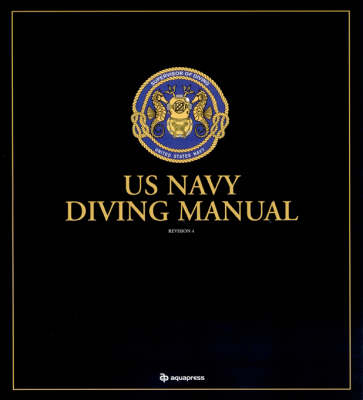
US Navy Diving Manual
AquaPress (Verlag)
978-1-905492-00-8 (ISBN)
- Titel ist leider vergriffen;
keine Neuauflage - Artikel merken
For twenty years the "US Navy Diving Manual" has been the ultimate reference source for the diver. AquaPress are pleased to announce the publication of the 5th version of the "US Navy Diving Manual". "The US Navy Diving Manual" is now available for the first time as a complete book. Potential readers may feel challenged by the sheer size of the work. At 968 A4 pages this book is unsurpassed in technical detail and depth. As the ultimate diving reference work this book contains everything you ever wanted to know about diving and many aspects that you could never imagine! The manual is however surprisingly easy to read. One of the reasons for this is that the manual is actually made up of five individual books or volumes.The volumes are as follows: Volume 1: Diving Principles and Policies; Volume 2: Air Diving Operations; Volume 3: Mixed Gas Surface Supplied Diving Operations; Volume 4: Closed Circuit and Semiclosed Circuit Diving Operations; and, Volume 5: Diving Medicine and Recompression Chamber Operations. These volumes mean that despite the books size the individual volumes make for user friendly reading.
Each section has been extensively researched and is widely regarded as the technical standard for diving information and procedures. The manual is easily referenced and used internationally by recreational, commercial, and military divers because of its authoritative and approved procedures. This 5th Revision contains the most up to date decompression tables, and techniques for avoiding decompression sickness. This manual is a must for all serious divers.
CONTENTS - 1 History of Diving - Introduction, Surface-Supplied Diving, Scuba Diving, Mixed-Gas Diving, Submarine Salvage and Rescue Salvage Diving, Open-Sea Deep Diving, Records Summary; 2 Underwater Physics - Introduction, Physics Matter Measurement Energy, Light Energy in Diving, Mechanical Energy in Diving, Heat Energy in Diving, Pressure in Diving, Gases in Diving, Gas Laws, Gas Mixtures; 3 Underwater Physiology - Introduction, The Nervous System, The Circulatory System, The Respiratory System, Respiratory Problems in Diving, Breathholding & Unconsciousness, Hyperventilation, Effects of Baratrauma and Pressure on the Human Body, Pulmonary Overinflation Syndromes, Indirect Effects of Pressure, Physiological Hazards from Munitions, Thermal Problems and other Physiological Problems in Diving; 4 Dive Systems - Introduction, General Information, Diver's Breathing Gas Purity Standards, Diver's Air Sampling Program, Diving Compressors, Diving Gauges, Compressed Gas Handling and Storage; 5 Dive Program Administration - Introduction, Objectives of the Record Keeping and Reporting System, Record Keeping and Reporting Documents, Command Smooth Diving Log, Recompression Chamber Log, Diver's Personal Dive Log, Diving Mishap/Casualty Reporting, Equipment Failure or Deficiency Reporting, U.S. Navy Dive Reporting System (DRS), Accident/Incident Equipment Investigation Requirements, Reporting Criteria Actions Required1A Safe Diving Distances from Transmitting Sonar, Introduction, Background Action, Sonar Diving Distances, Worksheets with Directions for Use, Guidance for Diver Exposure to Low-Frequency Sonar (160-320 Hz), Guidance for Diver Exposure to Ultrasonic Sonar (250 KHz and Greater), References, Telephone Numbers, List of Acronyms; 6 Operational Planning - Introduction, General Planning Considerations, Define Mission Objective, Identify Operational Tasks, Collect and Analyze Data, Identify Environmental & Operational Hazards, Select Diving Technique, Select Equipment & Supplies, Select and Assemble the Diving Team, OSHA Requirements for U.S. Navy Civilian Diving, Organize and Schedule Operations, Brief the Diving Team, Air Diving Equipment Reference Data; 7 Scuba Diving Operations - Introduction, Required Equipment for Scuba Operations, Optional Equipment for Scuba Operations, Air Supply Predive Procedures, Water Entry & Descent Underwater Procedures, Ascent Procedures, Postdive Procedures; 8 Surface-Supplied Air Diving Operations - Introduction, MK21 MOD 1MK20 MOD 0EXO BR MS Portable Surface-Supplied Diving Systems, Accessory Equipment for Surface-Supplied Diving, Surface Air Supply Systems, Diver Communications, Predive Procedures, Water Entry and Descent Underwater Procedures, Ascent Procedures, Surface Decompression Postdive Procedures; 9 Air Decompression - Introduction, Theory of Decompression, Air Decompression, Definitions, Dive Recording Table, Selection Ascent Procedures, Unlimited/No-Decompression Limits and Repetitive Group Desigantion Table for Unlimited/No-Decompression Air Dives, U.S. Navy Standard Air Decompression Table, Repetitive Dives,Surface Decompression, Exceptional Exposure Dives, Diving at High Altitudes, Ascent to Altitude After Diving/Flying After Diving; 10 Nitrogen-Oxygen Diving Operations - Introduction, Equivalent Air DepthOxygen Toxicity, Nitrox Diving Procedures, Nitrox Repetitive Diving, Nitrox Dive Charting, Fleet Training for Nitrox, Nitrox Diving Equipment, Equipment Cleanliness, Breathing Gas Purity, Nitrox Mixing, Nitrox Mixing Blending and Storage Systems; 11 Ice and Cold Water Diving Operations - Introduction, Operations Planning, Predive Procedures, Underwater Procedures, Operating Precautions, Emergency Procedures, Additional References; 12 Mixed Gas Diving Theory - Introduction, Boyle's Law, Charles'/Gay-Lussac's Law, The General Gas Law, Dalton's Law, Henry's Law; 13 Mixed Gas Opertional Planning - Introduction, Establish Operational Tasks, Select Diving Method and Equipment, Selecting and Assembling the Dive Team, Briefing the Dive Team, Final Preparations and Safety Precautions, Record Keeping, Mixed Gas Diving Equipment; 14 Surface Supplied Mixed Gas Diving Procedures - Introduction, Planning the Operation, Surface Supplied Helium Oxygen Descent and Ascent Procedures, Surface Supplied Helium Oxygen Emergency Procedures, Charting Surface Supplied Helium Oxygen Dives; 15 Saturation Diving - Introduction, Applications, Basic Components of a Saturation Dive System, U.S. Navy Saturation Facilities, Introduction, Operational Considerations, Selection of Storage Depth Records Logistics DDC and PTC Atmosphere Control, Gas Supply Requirements, Environmental Control, Fire Zone Considerations, Hygiene, Atmosphere Quality Control, Compression Phase Storage Depth, Deep Diving Systems (DDS) Emergency Procedures,Saturation Decompression Postdive Procedures; 16 Breathing Gas Mixing Procedures - Introduction, Mixing Procedures, Gas Analysis; 17 Closed-Circuit Mixed-Gas UBA Diving - Introduction Principles of Operation USN Closed-Circuit Mixed-Gas UBA Operational Planning Predive Procedures Water Entry and Descent Underwater Procedures Ascent Procedures Postdive Procedures Decompression Procedures Medical Aspects of Closed-Circuit Mixed-Gas UBA; 18 Closed-Circuit Oxygen UBA Diving - Introduction, Medical Aspects of Closed-Circuit Oxygen Diving MK 25 (Draeger LAR V UBA),Closed-Circuit Oxygen Exposure Limits,Operations Planning, Predive Procedures, Water Entry and Descent Underwater Procedures, Ascent Procedures, Post Dive Procedures and Dive Documentation; 19 Diving Disorders not Requiring Recompression Therapy - Introduction Breathing Gas Disorders Pulmonary Overinflation Syndromes Barotrauma Disorders of Higher Function and Consciousness Near Drowning Thermal Stress Operational Hazards Medications and Diving; 20 Diving Disorders Requiring Recompression Therapy - Introduction, Arterial Gas Embolism, Decompression Sickness; 21 Recompression Therapy - Introduction Prescribing and Modifying Treatments, Omitted Decompression Recompression, Treatments when no Recompression Chamber Is Available, Recompression Treatments When Chamber Is Available, Post-Treatment Considerations, Non-Standard Treatments, Recompression Treatment Abort Procedures, Emergency Medical Equipment; 22 Recompression Chamber Operation - Introduction, Description State of Readiness, Gas Supply Operation, Chamber Maintenance, Diver Candidate Pressure Test 5A Neurological Examination, Introduction, Initial Assessment of Diving Injuries, Neurological Assessment 5B First Aid, Introduction Cardiopulmonary Resucitation, Control of Massive Bleeding Shock 5C; 23 Dangerous Marine Animals - Introduction, Predatory Marine Animals, Venomous Marine Animals, Poisonous Marine Animals, References For Additional Information; Index.
| Erscheint lt. Verlag | 25.9.2006 |
|---|---|
| Verlagsort | Essex |
| Sprache | englisch |
| Maße | 290 x 318 mm |
| Themenwelt | Sachbuch/Ratgeber ► Sport ► Segeln / Tauchen / Wassersport |
| Sozialwissenschaften ► Politik / Verwaltung | |
| ISBN-10 | 1-905492-00-6 / 1905492006 |
| ISBN-13 | 978-1-905492-00-8 / 9781905492008 |
| Zustand | Neuware |
| Informationen gemäß Produktsicherheitsverordnung (GPSR) | |
| Haben Sie eine Frage zum Produkt? |
aus dem Bereich