


Domestic Nationalism
Muslim Women, Health, and Modernity in Indonesia
Seiten
2025
|
New edition
Stanford University Press (Verlag)
978-1-5036-3524-1 (ISBN)
Stanford University Press (Verlag)
978-1-5036-3524-1 (ISBN)
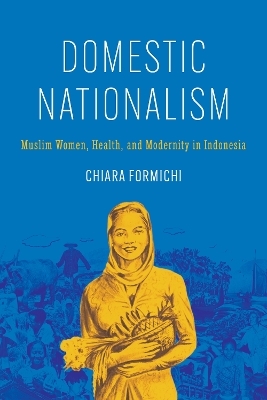
Chiara Formichi argues that Muslim women in Java and Sumatra, from the late 1910s to the 1950s, were central to Indonesia's progress as guardians and promoters of health and piety through gendered activities of care work. While sidelined in the Dutch colonial project of hygienic modernity, women's labor of social reproduction became increasingly visible during the Japanese Occupation and early years of independence. Women from all walks of life were called upon to fulfill domestic and motherly roles for the production and socialization of laborers, soldiers, and citizens. The medicalization of cleanliness, intersecting with multiple patriarchal orders, marginalized women's traditional influence and knowledge. However, leveraging the critical importance of infant care, cleanliness, and nutrition, women pushed against the boundaries imposed on them by the colonial and postcolonial state.
Largely absent from government archives, their words and acts are evident in vernacular magazines and visual sources drawn from official outreach, news and lifestyle media, and advertisements. Women writers rearticulated scientific mothering, nationalist maternalism, and Islamic ideals of motherhood to create a public voice through gendered care work. The framework of Domestic Nationalism proposes that as the modern Indonesian nation-state took shape capitalizing on the public function of mothering, so did homemaking become a crossroads of national and international approaches to development, blurring nonaligned self-reliance and global capitalist interests.
Largely absent from government archives, their words and acts are evident in vernacular magazines and visual sources drawn from official outreach, news and lifestyle media, and advertisements. Women writers rearticulated scientific mothering, nationalist maternalism, and Islamic ideals of motherhood to create a public voice through gendered care work. The framework of Domestic Nationalism proposes that as the modern Indonesian nation-state took shape capitalizing on the public function of mothering, so did homemaking become a crossroads of national and international approaches to development, blurring nonaligned self-reliance and global capitalist interests.
Chiara Formichi is the H. Stanley Krusen Professor of World Religions and Asian studies at Cornell University. She is the author of Islam and Asia: A History (2020).
| Erscheinungsdatum | 17.10.2025 |
|---|---|
| Zusatzinfo | 30 halftones |
| Verlagsort | Palo Alto |
| Sprache | englisch |
| Maße | 152 x 229 mm |
| Themenwelt | Geisteswissenschaften ► Geschichte ► Regional- / Ländergeschichte |
| Geschichte ► Teilgebiete der Geschichte ► Kulturgeschichte | |
| Sozialwissenschaften ► Soziologie ► Gender Studies | |
| ISBN-10 | 1-5036-3524-4 / 1503635244 |
| ISBN-13 | 978-1-5036-3524-1 / 9781503635241 |
| Zustand | Neuware |
| Informationen gemäß Produktsicherheitsverordnung (GPSR) | |
| Haben Sie eine Frage zum Produkt? |
Mehr entdecken
aus dem Bereich



aus dem Bereich
Die Revolution des Gemeinen Mannes
Buch | Softcover (2024)
C.H.Beck (Verlag)
CHF 16,80
Eine Geschichte des Geschmacks
Buch | Hardcover (2025)
C.H.Beck (Verlag)
CHF 49,95
vom Mittelalter bis zur Gegenwart
Buch | Softcover (2024)
C.H.Beck (Verlag)
CHF 16,80


