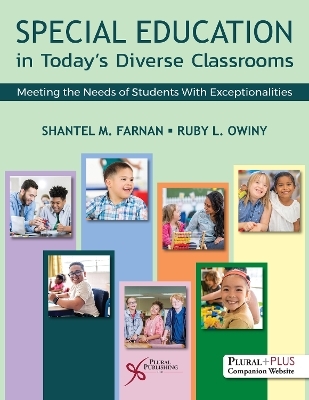
Special Education in Today's Diverse Classrooms
Plural Publishing Inc (Verlag)
978-1-63550-750-8 (ISBN)
Education in Today's Diverse Classrooms: Meeting the Needs of Students with
Exceptionalities is an introductory-level textbook designed for all
pre-service teachers to learn about meeting the needs of students with
exceptionalities in inclusive environments.
Special Education in Today's Diverse Classrooms: Meeting the Needs of Students with Exceptionalities is an introductory-level textbook designed for all pre-service teachers to learn about meeting the needs of students with exceptionalities in inclusive environments. Along with descriptions of each IDEA disability category, the book presents high-leverage practices (HLPs) and evidence-based strategies that are practical and applicable to any instructional environment. Through the lens of HLPs, this text emphasizes universal design for learning (UDL), tiered supports, culturally inclusive pedagogies and practices (CIPP), and evidence-based practices (EBPs).
This textbook bridges the gap between research, knowledge about disabilities, and a practical approach to educating students, offering a comprehensive framework for educators navigating the diverse needs of students with exceptionalities. By placing a strong emphasis on CIPP and EBPs as they relate to HLPs, it equips readers with tools to create meaningful and equitable learning experiences. The unique structure, enriched by authentic vignettes and aligned with professional standards, ensures the practical application of frameworks such as UDL and multi-tiered systems of support. Additionally, the book underscores the importance of family engagement, making it a vital resource for fostering collaboration in education. The content aligns with the Council for Exceptional Children (CEC) standards ensuring its relevance and utility for professional educator preparation.
Through its innovative approach, this text inspires educators to not only meet students' needs but also celebrate their individuality, preparing them to succeed in dynamic, inclusive school and classroom environments.
Key Features
Real-life vignettes from individuals with disabilities, their families, and educators offer authentic perspectives that go beyond case studies
Links to resources to increase exposure and knowledge about specific topics, designed to enrich understanding and application of inclusive practices
Includes coverage of concepts such as trauma, neurodiversity, social and emotional learning, assistive technology, and new instructional technologies
With inclusive language and culturally inclusive pedagogies and practices, the book prepares future educators to foster trust and promote equity in their classrooms
Focus on application to the classroom through questions and activities at the end of each chapter
Color graphics, visual frameworks (e.g., UDL models), and instructional charts enhance comprehension and engagement
The text comes with a robust package of online ancillary materials for instructors and students
PluralPlus AncillariesFor instructors: Test Bank, Syllabus, and PowerPoint Slides with Lecture Notes, Case Studies, and Class Activities
For students: Quizzes, eFlashcards, and Videos
Shantel M. Farnan, EdD, is Associate Professor and Coordinator of Special Education programs at Northwest Missouri State University, Maryville, Missouri. She is beginning her 30th year in education, including experience in special education (preschool through postsecondary) as a teacher, special education director, and now professor. She has been the recipient of several awards connected to education, including the Dean's Award for Teaching, Award for Excellence for Community Leadership as CEC Student Group Advisor, Excellence in Agility and Innovation as Graduate Education Coordinator, and the Alumni Association Distinguished Faculty Award. Farnan has been active in state and national special education organizations, serving on the boards of the Missouri Council of Administrators of Special Education (MO-CASE), Missouri Council for Exceptional Children (MO-CEC), Teacher Education Division (TED), and Small Special Education Programs Caucus (SSEPC). Of particular honor to Farnan was being elected TED's first Special Interest Group and Caucus Liaison. She was honored to receive the Nasim Dil Service Award for Outstanding Service to Teacher Education in Small Special Education Programs in 2023. The courses Farnan teaches are in the areas of introduction to special education, methods of special education, leadership in special education, and special education practicum. Her research and scholarly interests are focused on collaboration, high-leverage practices, profession-based learning, collaborative scholarship, and diverse field experiences. She has enjoyed teaching on these important topics and publishing many manuscripts focused on them as well. In her free time, Farnan enjoys spending time with family and friends, traveling, reading, hiking, and being involved in community activities and organizations, including as a "Big" in the Big Sisters, Big Brothers organization with her husband Darren. She is proud to have her son, Brady, recently graduated from her alma mater and her daughter, Maggie, pursuing a degree in special education. Ruby L. Owiny, PhD, is Associate Professor at Minnesota State University, Mankato. She has nearly 30 years of experience in education, including elementary education (K-5), special education (K-12), educational consultant, and parent advocate. Prior to her current position, Owiny was Associate Professor and Director of the Division of Education at Trinity International University. She is the founder and CEO of Pamoja Special Education Advocacy, which partners with schools and families to ensure high-quality special education services are provided to eligible students. Owiny also serves as an educational consultant for 2Teach Global, a position in which she has presented professional development around the United States. Additionally, she presents internationally, supporting schools in Bolivia, Guatemala, and Tanzania. She has been the recipient of awards and nominations related to her teaching, scholarship, and service, including a nomination from students for the Dr. Duane Orr Teacher of the Year Award, the Regent's Prize for Excellence in Scholarship, and the Nasim Dil Service Award for Outstanding Service to Teacher Education in Small Special Education Programs. Owiny has been active in state, national, and international organizations serving students with disabilities. She served on the Universal Design for Learning in Higher Education (UDL-HE) steering committee for the inaugural UDL-HE Digicon in 2019. She has served in several roles in the Small Special Education Programs Caucus (SSEPC) of the Teacher Education Division (TED) of the Council for Exceptional Children (CEC), including chair of the caucus. Owiny also served on the TED board in a number of capacities with her most recent position being president of the organization in 2021. Owiny currently serves on the board for CEC as a member-at-large and as president of the board for Alakira Maasai Economic Support Initiative, which serves the Maasai in Tanzania to improve educational outcomes for children, supports economic empowerment, and works toward improved medical care, with an emphasis on prenatal and postpartum care for mothers and infants. Owiny teaches courses in the areas of introduction to special education, methods of teaching students with disabilities, and classroom and behavior management, and supervises student teachers during their special education placement. Her research and scholarly interests focus on inclusion, including high- leverage and evidence-based practices, Universal Design for Learning, co-teaching and collaboration, and embedding specially designed instruction in the inclusive general education classroom. In her free time, Owiny enjoys spending time with her family and her dog, Nova. She loves to travel, read, snowshoe, hike, bike, kayak, and camp. She also enjoys Hallmark movies and binge-watching Netflix movies and series. She especially enjoys being a basketball, winter guard, lacrosse, and band mom for her three children. Her title of chauffeur gives her lots of car time to hear her children and their friends laughing and talking about things important to them. Finally, Owiny and her husband enjoy being involved in their local faith community, hosting teens frequently and leading a community group of adults.
Contents
Introduction
Acknowledgments
About the Editors
Contributors
Reviewers
Chapter 1. Inclusive Education: Students With Exceptionalities, the Law, and the Individualized Education Program
Shantel M. Farnan
Learning Outcomes
Chapter Glossary
Questions to Prompt Your Thinking
Introduction
History of Special Education
Key People Shaping Special Education
Evolution of Special Education
What Is Special Education?
Key Legislation and Litigation
Education for All Handicapped Children Act (Public Law 94-142)
Individuals With Disabilities Education Act
Section 504
Litigation
Students With Exceptionalities
Special Education Process
Individualized Education Program
Services and Continuum of Placements
Inclusive Language and Education
Chapter Summary
Application to the Classroom
Chapter 2. Foundations of Inclusion
Ruby L. Owiny
Learning Outcomes
Chapter Glossary
Questions to Prompt Your Thinking
Introduction
Individualized Education Plan
What Are the Student's Unique Academic and Functional Needs That Must Be Addressed in the Individualized Education Program?
What Annual Goals Must Be Included in the Individualized Education Program to Address the Student's Needs?
How Will the Progress Toward the Individualized Education Program Goals Be Monitored?
What Services Will Be Provided to the Student to Reach the Identified Goals?
Providing a Free Appropriate Public Education
Frameworks to Promote Quality Inclusion
Evidence-Based Tiered Frameworks
Response to Intervention
Positive Behavioral Interventions and Supports
Multi-Tiered Systems of Support
Universal Design for Learning
Universally Designed Curriculum
Differentiation and Universal Design for Learning
Culturally Inclusive Practices and Pedagogy
High-Leverage Practices
Addressing Individualized Education Program Needs
Chapter Summary
Application to the Classroom
Chapter 3. Collaborating With School Professionals for Student Success
Shantel M. Farnan and Tamara G. Lynn
Alyce's Story
Learning Outcomes
Chapter Glossary
Questions to Prompt Your Thinking
Introduction
High-Leverage Practice 1 Defined
High-Leverage Practice 1 in the School System
Collaborative Culture
Collaborative Roles
Role Perceptions
Types of Collaborative Teams
General Education Teachers, Special Education Teachers, and Paraprofessionals
Purposes of Collaborative Teams
Performing as an Effective Collaborator
The Benefits of Collaboration
Application to Alyce
Consultation and Teams
The Consultation Process
Co-teaching
Teaching Approaches
A Deeper Understanding of Giftedness and Twice Exceptional
Definition of Gifted and Talented
Definition of Twice Exceptional
Causes
Characteristics
Process for Identification of Giftedness and Twice Exceptional
Chapter Summary
Application to the Classroom
Chapter 4. Fostering Effective Home-School Partnerships to Support Student Learning
Shantel M. Farnan and Sarah Jin Wong
Oliver and His Family's Journey
Learning Outcomes
Chapter Glossary
Questions to Prompt Your Thinking
Introduction
High-Leverage Practices 2 and 3 Defined
High-Leverage Practices 2 and 3 in Practice
Family as a System
Impact of Disability
Fostering Trust With Families
Communicating With Families
Facilitating Meetings
Asset-Based Approach
Application to Oliver
Valuing Family and Building Trust
Respectful and Meaningful Communication
Facilitating Effective Meetings
Championing Self-Determination and Advocacy
A Deeper Understanding of Intellectual Disability
Individuals With Disabilities Education Act Definition
Causes
Characteristics
Intellectual Functioning
Adaptive Behavior
Conceptual
Practical
Social
Communication
Process for Identification of Intellectual Disability
Chapter Summary
Application to the Classroom
Chapter 5. Understanding Students' Strengths and Needs Through Multiple Sources and Assessment
Shantel M. Farnan and Adam M. Moore
Hazel's Story
Learning Outcomes
Chapter Glossary
Questions to Prompt Your Thinking
Introduction
High-Leverage Practice 4 Defined
High-Leverage Practice 4 in the Classroom
Assessment Provisions Under the Individuals With Disabilities Education Act
Child Find
Evaluation Timeline
Data Sources Used to Determine Student Progress
Review of Existing Data
Eligibility Within Special Education
Role of General Education Teacher
Role of Special Education Teacher
Application to Hazel
A Deeper Understanding of Developmental Delays
Individuals With Disabilities Education Act Definition of Developmental Delays
Causes
Characteristics
Process for Identification of Developmental Delay
Chapter Summary
Application to the Classroom
Chapter 6. Involving Collaborators in Assessment
Shantel M. Farnan
Scott's Story
Learning Outcomes
Chapter Glossary
Questions to Prompt Your Thinking
Introduction
High-Leverage Practice 5 Defined
High-Leverage Practice 5 in the School System
Involvement of Partners in the Assessment Process
Purposes of Assessment
Interpretation of Assessment Results
Assessment Results for Present Level of Academic Achievement and Functional Performance
Importance of Communication and Collaboration
Development of Culturally Inclusive Pedagogy and Practices and Transition Plans
Application to Scott
A Deeper Understanding of Traumatic Brain Injury
Individuals With Disabilities Education Act Definition
Causes
Characteristics
Process for Identification of Traumatic Brain Injury
Chapter Summary
Application to the Classroom
Chapter 7. Data-Driven Planning
Shantel M. Farnan and Adam M. Moore
Grace's Story
Learning Outcomes
Chapter Glossary
Questions to Prompt Your Thinking
Introduction
High-Leverage Practice 6 Defined
High-Leverage Practice 6 in the Classroom
Selecting Appropriate Interventions, Instruction, and Support Through Multi-Tiered System of Support Data
Ongoing Data Collection and Assessment
Curriculum-Based Measures
Progress Monitoring
Data-Driven Planning and Adjustments
Formative Assessments
Collecting Behavioral and Functional Data
Universal Design for Learning, High-Leverage Practice 6, and Data Collection
Application to Grace
A Deeper Understanding of Multiple Disabilities
Individuals With Disabilities Education Act Definition of Multiple Disabilities
Causes
Characteristics
Process for Identification of Multiple Disabilities
Alternate Assessments
Chapter Summary
Application to the Classroom
Chapter 8. Establishing Safe, Positive, and Culturally Sustaining Classroom Environments
Ruby L. Owiny and Jennifer D. Walker
Sophia's Story
Learning Outcomes
Chapter Glossary
Questions to Prompt Your Thinking
Introduction
High-Leverage Practices 7, 8/22, and 9 Defined
High-Leverage Practice 7 in the Classroom
High-Leverage Practice 8/22 in the Classroom
High-Leverage Practice 9 in the Classroom
Trauma
Application to Sophia
Expectations, Routines, and Procedure Development
Behavior-Specific Praise
Correction Procedures
Opportunities to Respond
Climate of Respect
Social Skills Instruction
A Deeper Understanding of Other Health Impairment
Individuals With Disabilities Education Act Definition
Characteristics
Early Signs and Symptoms
Attention Deficit Hyperactivity Disorder
Epilepsy
Asthma
Causes
Attention Deficit Hyperactivity Disorder
Epilepsy
Asthma
Process for Identification of Other Health Impairment
Attention Deficit Hyperactivity Disorder
Epilepsy
Asthma
Chapter Summary
Application to the Classroom
Chapter 9. Conducting Functional Behavior Assessments to Increase Positive Behaviors
Ruby L. Owiny and Kathleen A. Boothe
Eligrace's Story
Learning Outcomes
Chapter Glossary
Questions to Prompt Your Thinking
Introduction
High-Leverage Practice 10 Defined
High-Leverage Practice 10 in the Classroom
Role of the General Educator
Role of the Special Educator
Application to Eligrace: Conducting a Functional Behavioral Assessment
Define the Target Behavior
Collect Data
Indirect Data Collection Methods
Direct Data Collection Methods
Develop a Hypothesis Statement
Writing a Behavior Support Plan
Identify an Appropriate Replacement or Desired Behavior
Identify Appropriate Interventions
Create Observable and Measurable Goals
Teach the Plan to the Student
A Deeper Understanding of Emotional Disturbance
Individuals With Disabilities Education Act Definition
Causes
Characteristics
Behavioral
Academic
Process for Identification of Emotional Disturbance
Positive Behavior Intervention and Supports
Chapter Summary
Application to the Classroom
Chapter 10. Designing Instruction Toward Specific Learning Goals
Ruby L. Owiny and Jody R. Siker
Starry and Maisie's Story
Learning Outcomes
Chapter Glossary
Questions to Prompt Your Thinking
Introduction
High-Leverage Practices 11 and 12 Defined
High-Leverage Practices 11 and 12 in the Classroom
Disability Identity and Inclusion
Perception of Competence
Welcome Into the School Community
Access to Grade-Level Curriculum
Appropriate Accommodations and Services
Specifically Designed Instruction
Designing Instruction Around Goals
Assessing Instruction
Executive Functioning Instruction
Culturally Inclusive Practices and Pedagogy
A Deeper Understanding of Deafness and Hearing Impairment
Individuals With Disabilities Education Act Definition
Causes
Characteristics
Early Signs and Symptoms
Infants and Toddlers
Preschool Through School Age
Process for Identification of Deafness and Hearing Impairment
Transition
Required Components
Chapter Summary
Application to the Classroom
Chapter 11. Adaptations and Using Technology to Meet Student Needs Growing Up With Blindness
Shantel M. Farnan and Mindy S. Ely
Ethan's Story
Learning Outcomes
Chapter Glossary
Questions to Prompt Your Thinking
Introduction
High-Leverage Practices 13 and 19 Defined
High-Leverage Practices 13 and 19 in the Classroom
Adaptations for the Classroom: Instruction, Materials, and Environment
Using Clear and Concise Vocabulary in Instruction
Making Images Accessible
Making Materials Accessible
Assistive and Instructional Technology
Lighting and Contrast
Specialized Instructional Needs in Reading Media
Reading Using Print Media
Reading Using Braille Media
Reading Using Auditory Media
The Role of Access Technology
Application to Ethan and Elissa
Benefits to All Students
A Deeper Understanding of Visual Impairment, Including Blindness and Deaf/Blindness
Individuals With Disabilities Education Act Definition
Causes
Characteristics
Process for Identification of Visual Impairment and Blindness
Individuals With Disabilities Education Act Definition of Deaf-Blindness
Chapter Summary
Application to the Classroom
Chapter 12. Implementing Strategies to Support Learning
Ruby L. Owiny and Shantel M. Farnan
Quinten's Story
Learning Outcomes
Chapter Glossary
Questions to Prompt Your Thinking
Introduction
High-Leverage Practice 14 Defined
High-Leverage Practice 14 in the Classroom
Application to Quinten
Self-Regulated Strategy Development
Comprehension Strategies
Vocabulary
Keyword Strategy
Graphic Organizers
Content Enhancement Routines
Memory Strategies
Mnemonics
Cue Cards
Task Analysis
A Deeper Understanding of Specific Learning Disabilities
Individuals With Disabilities Education Act Definition for Specific Learning Disabilities
Causes
Characteristics
Reading
Mathematics
Written Expression
Process for Identification of Specific Learning Disabilities
Discrepancy Model
Response to Intervention for Identification of Specific Learning Disabilities
Chapter Summary
Application to the Classroom
Chapter 13. Scaffolding Toward Independence, Maintenance, and Generalization
Shantel M. Farnan
Ben's Story
Learning Outcomes
Chapter Glossary
Questions to Prompt Your Thinking
Introduction
High-Leverage Practices 21 and 15 Defined
High-Leverage Practices 15 and 21 in the Classroom
Scaffolded Supports
Generalization
Maintenance
Application to Ben
A Deeper Understanding of Autism
Individuals With Disabilities Education Act Definition for Autism
Causes
Characteristics
Process for Identification of Autism
Chapter Summary
Application to the Classroom
Chapter 14. Making Instructional Decisions for Student Success
Ruby L. Owiny
Kylee's Story
Learning Outcomes
Chapter Glossary
Questions to Prompt Your Thinking
Introduction
High-Leverage Practice 16 Defined
High-Leverage Practice 17 Defined
High-Leverage Practice 20 Defined
High-Leverage Practices 16, 17, and 20 in the Classroom
Application to Kylee
Collaboration Between General Education and Special Education Staff
Universal Design for Learning and Differentiation
Other High-Leverage Practices at Work
Accommodations
A Deeper Understanding of Speech or Language Impairment
Individuals With Disabilities Education Act Definition
Causes
Characteristics
Early Signs and Symptoms
Educational Impact
Process for Identification of Speech-Language Impairment
Chapter Summary
Application to the Classroom
Chapter 15. Engaging Students in Active Learning
Ruby L. Owiny
Willow's Story
Learning Outcomes
Chapter Glossary
Questions to Prompt Your Thinking
Introduction
High-Leverage Practice 18 Defined
High-Leverage Practice 18 in the Classroom
Opportunities to Respond to Increase Engagement
Turn-and-Talk
Think-Pair-Share
Guided Notes
Response Cards
Choral Responding
Application to Willow
A Deeper Understanding of Orthopedic Impairment
Individuals With Disabilities Education Act Definition
Characteristics
Cerebral Palsy
Spina Bifida
Muscular Dystrophy
Causes
Cerebral Palsy
Spina Bifida
Muscular Dystrophy
Process for Identification of Orthopedic Impairment
Chapter Summary
Application to the Classroom
Glossary
References
Index
| Erscheinungsdatum | 27.09.2025 |
|---|---|
| Verlagsort | San Diego |
| Sprache | englisch |
| Maße | 216 x 279 mm |
| Themenwelt | Sozialwissenschaften ► Pädagogik ► Sonder-, Heil- und Förderpädagogik |
| ISBN-10 | 1-63550-750-2 / 1635507502 |
| ISBN-13 | 978-1-63550-750-8 / 9781635507508 |
| Zustand | Neuware |
| Informationen gemäß Produktsicherheitsverordnung (GPSR) | |
| Haben Sie eine Frage zum Produkt? |
aus dem Bereich