


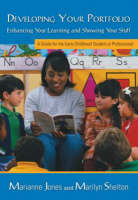
Developing Your Portfolio – Enhancing Your Learning and Showing Your Stuff
Routledge (Verlag)
978-0-415-95118-0 (ISBN)
- Titel erscheint in neuer Auflage
- Artikel merken
Portfolios aren’t just for documenting the work of young children—they can also be powerful resources for early childhood educators’ professional training and development. From evaluating one’s classroom practice to showcasing skills and accomplishments, professional portfolios are a comprehensive record of a career in its entirety. In this book, Marianne Jones and Marilyn Shelton guide both practicing and pre-serve instructors through the process of showcasing their own teaching skills. The authors present numerous examples taken from successful portfolios, provide helpful tips and strategies, combine theory and practice for developing portfolios, and walk readers step-by-step through the creation process. This essential guide will accessibly and effectively guide early childhood educators through the recording of their emerging abilities.
Marilyn Shelton, Ph.D., is Associate Professor in the Kremen School of Education and Human Development, Department of Literacy and Early Education at CSU Fresno. She studies developmentally appropriate uses of computers with young children and issues of diversity, anti-bias, and peace education. Dr. Shelton has recently edited four training guides for the California Association for the Education of Young Children's Nonviolence in the lives of Children Project. Dr. Marianne Jones, Ed.D. is Assistant Professor in the Department of Child, Family, and Consumer Sciences at CSU Fresno. She is part of an interdisciplinary research team investigating child care and welfare reform. She has taught and directed private, public, and non-profit child care centers in Los Angeles and Fresno, directed a children's services agency, taught at the community college and university levels, and worked as a child advocate at the local, state and national levels.
Introduction Chapter 1: Human Development and Constructivism Why Start a Book about Portfolios with Human Development and Constructivism? Constructivism Constructivism: What It Is Where Constructivism Comes From The Other Side of Human Development Why Our Teaching Practices in Adult Learning Environments Often Don't Reflect Our Constructivist Beliefs How Constructivism Applies to Adult Learners Implications for the Adult Learning Environment A Final Note Chapter 2: How Portfolios Reflect Constructivism Constructivism and Portfolios Our Journey to Portfolios: A Constructivist Story What Are Portfolios? Characteristics of Portfolios Benefits of Portfolio Development Challenging Aspects of Portfolio Development A Final Note Chapter 3: Portfolio Orientation: Purpose, Type, and Audience Purpose, Type, Context, and Audience: What's the Difference? A Closer Look at Purpose Relationships: Purpose, Type, Context, and Audience Purpose 1: To Facilitate and Chart Development Purpose 2: To Provide a Basis for Evaluation Purpose 3: To Highlight Performance and Capabilities A Final Note Chapter 4: Philosophy: The Unifying Element of Portfolios Your Educational Philosophy Philosophy: A Quick Refresher Philosophy as a Construct Philosophy in the Context of Education Why Go to the Trouble to Consider Philosophy? Philosophy Statement: The Unifying Element of Portfolios Just what is a Philosophy Statement? What Does a Philosophy Statement Do and Why is It Important? The Philosophy-Theory Connections Dispositions: Getting into the Right Frame of Mind Philosophy Statement Essentials A Final Note Chapter 5: Reflection: The Defining Feature of Portfolios Why Reflection Is the Defining Feature of Portfolios Prerequisites for Reflection Reflection in Practice Reflection and Learning Frames Becoming Accomplished in Written Reflection Anatomy of a Reflection Tools for Reflection A Final Note Chapter 6: Building a Portfolio The What and How of Selecting and Utilizing Evidence What Is Evidence? General Guidelines for Selecting and Utilizing Evidence Characteristics of Portfolio Types that Influence your Choices of Evidence Assessment: Formative and Summative Looks at Portfolios Rubrics Checklists Peer and Instructor Feedback Critiques A Final Note Chapter 7: Structure, Design, and Construction of Electronic and Print Portfolios Electronic or Print Format: That Is the First Question Structuring Portfolios Portfolio Features for Print or Electronic Portfolios Release for Photographs Design Tips Special Design Tips for PowerPoint Users Using PowerPoint to Create an Electronic Portfolio Scanning Documents for Inclusion in the Portfolio Gentle Reminders A Final Note References
| Erscheint lt. Verlag | 27.10.2005 |
|---|---|
| Zusatzinfo | 4 Halftones, black and white; 10 Tables, black and white; 55 Illustrations, black and white |
| Verlagsort | London |
| Sprache | englisch |
| Maße | 210 x 280 mm |
| Gewicht | 318 g |
| Themenwelt | Sozialwissenschaften ► Pädagogik ► Vorschulpädagogik |
| Sozialwissenschaften ► Soziologie | |
| ISBN-10 | 0-415-95118-6 / 0415951186 |
| ISBN-13 | 978-0-415-95118-0 / 9780415951180 |
| Zustand | Neuware |
| Informationen gemäß Produktsicherheitsverordnung (GPSR) | |
| Haben Sie eine Frage zum Produkt? |
aus dem Bereich


