


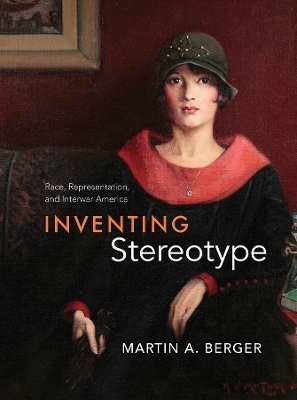
Inventing Stereotype
Race, Representation, and Interwar America
Seiten
2025
University of Chicago Press (Verlag)
978-0-226-84367-4 (ISBN)
University of Chicago Press (Verlag)
978-0-226-84367-4 (ISBN)
Berger excavates the lineage of stereotype as a concept, illustrating how perception of stereotypes in works of literature and fine art shifts relative to representational norms.
Upending a century of scholarly and popular thinking about stereotype, Martin A. Berger traces our current understanding of it to the 1920s, when American journalist and public intellectual Walter Lippmann borrowed the term from printmaking techniques and defined it as a shared mental picture that simplified a person, event, group, or thing so it could be easily grasped. Berger uncovers stereotype’s intellectual debts to philosophy, psychology, political science, and, in particular, art history and interwar racial theories.
Inventing Stereotype analyzes a series of plays, novels, and paintings from the 1920s and 1930s that sparked fierce debate about whether they employed racial stereotypes in the depiction of Black, Jewish, and other characters. Through careful attention to audience responses—parsed by race, political leanings, religion, and class—the book illustrates how artistic depictions are categorized as either stereotyped or not, relative to current representational norms, rather than to their success in conveying the authentic identities of individuals or racial groups.
Upending a century of scholarly and popular thinking about stereotype, Martin A. Berger traces our current understanding of it to the 1920s, when American journalist and public intellectual Walter Lippmann borrowed the term from printmaking techniques and defined it as a shared mental picture that simplified a person, event, group, or thing so it could be easily grasped. Berger uncovers stereotype’s intellectual debts to philosophy, psychology, political science, and, in particular, art history and interwar racial theories.
Inventing Stereotype analyzes a series of plays, novels, and paintings from the 1920s and 1930s that sparked fierce debate about whether they employed racial stereotypes in the depiction of Black, Jewish, and other characters. Through careful attention to audience responses—parsed by race, political leanings, religion, and class—the book illustrates how artistic depictions are categorized as either stereotyped or not, relative to current representational norms, rather than to their success in conveying the authentic identities of individuals or racial groups.
Martin A. Berger is provost and senior vice president of academic affairs at the School of the Art Institute of Chicago. Berger is the author of Man Made: Thomas Eakins and the Construction of Gilded Age Manhood, Sight Unseen: Whiteness and American Visual Culture, Seeing through Race: A Reinterpretation of Civil Rights Photography, and the exhibition catalog Freedom Now! Forgotten Photographs of the Civil Rights Struggle.
Introduction: The Relativism of Stereotypes
1. The World Outside and the Pictures in Our Heads
2. Stereotyping Stereotype
3. Hunting for Stereotypes
4. Stereotyped After the Fact
Afterword: Engaging with Our Past
Acknowledgments
Notes
Index
| Erscheinungsdatum | 23.10.2025 |
|---|---|
| Zusatzinfo | 24 color plates |
| Sprache | englisch |
| Maße | 152 x 203 mm |
| Gewicht | 426 g |
| Themenwelt | Kunst / Musik / Theater ► Kunstgeschichte / Kunststile |
| Sozialwissenschaften ► Ethnologie | |
| Sozialwissenschaften ► Soziologie | |
| ISBN-10 | 0-226-84367-X / 022684367X |
| ISBN-13 | 978-0-226-84367-4 / 9780226843674 |
| Zustand | Neuware |
| Informationen gemäß Produktsicherheitsverordnung (GPSR) | |
| Haben Sie eine Frage zum Produkt? |
Mehr entdecken
aus dem Bereich



aus dem Bereich
kleine Kulturgeschichte einer brillanten Allianz
Buch | Softcover (2025)
Iudicium (Verlag)
CHF 33,90


