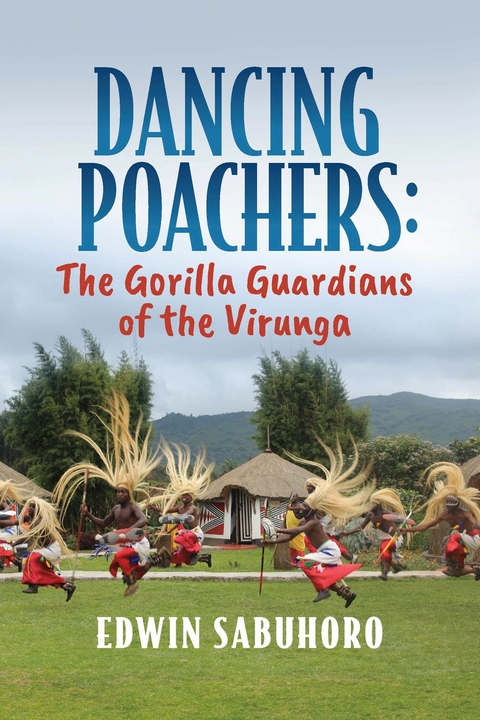
Dancing Poachers: The Gorilla Guardians of the Virunga (eBook)
156 Seiten
Bookbaby (Verlag)
979-8-3509-8588-7 (ISBN)
Dr. Edwin Sabuhoro, an Assistant Professor in the Department of Recreation, Park, and Tourism Management and African Studies at Penn State University, has dedicated over two decades to working closely with indigenous communities in the Virunga-Mountain Gorilla Landscape. His groundbreaking efforts in developing integrated conservation and community development programs have significantly improved the lives of indigenous communities, as well as the mountain gorillas and their habitat. In 2008, Dr. Sabuhoro was honored with the International Union for Conservation of Nature (IUCN) Young Conservationist of the Year Award, highlighting his unwavering commitment to protecting and preserving the Mountain Gorillas and their habitat. His contributions were further acknowledged in 2015 when he received the United Nations-GRASP-Ian Redmond Conservation Award. The following year, Dr. Sabuhoro was presented with the eChievement Award, recognizing his exceptional contributions to society. His exceptional leadership and dedication to his cause were also acknowledged when he was selected and invited by President Obama to participate in the 2010 Young African Leaders Forum. His work with Mountain Gorillas and indigenous communities garnered international attention. He was featured on CNN African Voices in 2015 and was recognized as a CNN Hero in the same year. He recently published his memoir 'Between Gorillas: My Mother, Her Dreams and Me.
This book, therefore, is about a captivating story of the community residing near the Volcanoes National Park in Rwanda. It is about a group of individuals who were once poachers but made a remarkable choice to embrace a different path - a path of dance instead of poaching. It is especially about an extraordinary journey of transformation from being poachers to becoming the protectors that the park desperately needed. As an eyewitness and active participant in this journey for the past two decades, I have had the privilege of witnessing their remarkable progress and contributing to their cause. In this book, you will uncover the untold stories of this resilient community. These are stories that have remained hidden, waiting to be shared with the world. One of the most remarkable stories in this book is the incredible rebound of the gorilla population. In 2010, these mountain gorillas were critically endangered, with a mere 480 individuals remaining in the Virunga. However, through the collective efforts of this village and its people, the gorilla population has surged to over 604 individuals today, and their numbers continue to grow. This is a testament to the unwavering dedication and commitment of the community to protect these endangered species. Moreover, this book sheds light on the profound realization that the villagers had - the realization that they could benefit from the presence of the gorillas. They discovered that a harmonious coexistence was possible, where both the gorillas and the people around them could thrive together in the Virunga mountains. It is a story of harmony, resilience, and the power of choice. This book is a testament to the triumph of the human spirit and the transformative power of compassion. It is a celebration of a community's journey from darkness to light, from destruction to preservation. Through its pages, you will witness the incredible dance of life, where the rhythm of the villagers' footsteps replaced the sound of gunshots, and where the protection of the gorillas became a shared mission. It's a captivating adventure as we explore the depths of this community's remarkable story and the enduring bond between humans and nature.
Prologue
The oral and written history of Africa reveals that Africans have long relied on the abundant natural resources that the continent offers. However, between the twelfth and sixteenth centuries, Africa experienced a significant movement of people from various kingdoms, as individuals sought improved livelihoods and access to valuable resources. This influx of migrants led to the establishment of new kingdoms, chiefdoms, and settlements in different regions across the continent. As time progressed, Africa’s trade and commerce flourished, particularly in the seventeenth century and up until 1880. During this period, the continent witnessed a surge in interactions with the outside world, primarily Europeans.
These interactions, in turn, triggered the infamous scramble and partition of Africa, as European powers vied for control over its vast resources. From the 1880s onwards, conquests, occupations, and the scramble and partition of Africa became prevalent. These events brought about significant changes in demographics, governance structures, and land ownership throughout the continent. Consequently, power struggles emerged, as African nations fought for their independence and political sovereignty. The impact of these historical developments cannot be overstated. They shaped the trajectory of Africa’s history, leaving a legacy that continues to influence the continent’s social, economic, and political landscape to this day.
In the year 1902, a remarkable discovery was made that would forever change our understanding of the natural world. It was during this time that Mountain Gorillas, majestic creatures of immense strength and beauty, were brought to the attention of the outside world. While the indigenous people living in the vicinity of the Virunga mountains were already familiar with these incredible animals, their existence remained unknown to the rest of the world. Similarly, the indigenous people themselves had limited knowledge of the outside world, unaware of the vastness and diversity that lay beyond their immediate surroundings.
Nestled amidst the breathtaking Virunga mountains, which span across three countries - the Democratic Republic of Congo (DRC), Uganda, and Rwanda - the Mountain Gorillas found their sanctuary. It is worth noting that there are also Mountain Gorillas residing outside the Virunga population, specifically in Uganda’s Bwindi Impenetrable National Park. The initial encounter with these magnificent creatures occurred when Captain Robert Von Beringe, a German army officer, embarked on a mission to visit the King of Rwanda, Yuhi V Musinga. During his journey, Captain Von Beringe encountered two large apes that were previously unknown to the scientific community. Recognizing the significance of this discovery, he shot and sent the gorillas to the National Museum in Berlin for further examination and documentation. As a tribute to his contribution, mountain gorillas were named Gorilla beringei beringe, a scientific name that forever immortalizes Captain Von Beringe’s role in their discovery.
Following this groundbreaking discovery, the Virunga massif faced numerous challenges, including population growth, deforestation, and the increasing demand for land and natural resources. In response to these threats, the area was designated as the Albert National Park, becoming the first national park in Africa. This designation aimed to safeguard the mountain gorillas and their fragile habitat. However, despite these protective measures, the Virunga massif continued to face intensive exploitation. Unfortunately, indigenous people became the target of blame and were perceived as threats to the gorillas and their habitat. Recognizing the need to protect these endangered species, the governments, parks, and their managers felt compelled to take action against the local communities living nearby. In order to achieve this, strict law enforcement measures were implemented, and rangers equipped with guns became the main tools in safeguarding the parks.
The approach taken by the authorities was to arrest and, if necessary, shoot on the spot anyone found trespassing inside the park. This was done with the understanding that the land now belonged to the government, and it was their responsibility to ensure its protection. However, in hindsight, it is evident that these measures led to a growing resentment among the local people towards the parks and the individuals mandated to manage them. It is important to acknowledge that these communities once lived in harmony with the wildlife, utilizing the resources they needed while responsibly owning and using the land. However, they found themselves displaced and marginalized because of these conservation efforts. This was particularly true for those who resided within the forest, such as the Batwa people, who were abruptly forced out of their ancestral homes without any form of compensation. Consequently, these indigenous communities were left to fend for themselves, without any land to settle on or the rights to utilize the resources that were once an integral part of their culture and sustenance. The park, which was once their ancestral home, had now become a place where only tourists and those with financial means were allowed to access and enjoy.
The enforcement of new rules and laws meant that those who did not adhere to them were subjected to various penalties, including being rounded up, arrested, fined, or even sentenced to imprisonment. These individuals, who were once an integral part of the ecosystem, were now labeled as poachers, forever altering their identity and way of life. The world’s attention and concern shifted towards the gorillas and their habitat, leaving the local communities feeling neglected and overlooked. Since then, unintended consequences arose from the efforts to protect the gorillas and their habitat. While the conservation initiatives were well-intentioned, they inadvertently marginalized and displaced the indigenous communities who had coexisted with the wildlife for generations.
In the years that followed, as the three countries gained their independence, the Virunga massif was divided into three separate parks: Virunga National Park (VNP) in the Democratic Republic of Congo, Volcanoes National Park (PNV) in Rwanda, and Mgahinga Gorilla National Park (MGNP) in Uganda. This division allowed each country to focus on the conservation efforts within their respective territories, ensuring the long-term survival of the mountain gorillas. However, despite efforts to protect mountain gorillas and their habitat, the threats they faced did not diminish; in fact, they intensified over time. The gorillas and their habitat continued to be subjected to various pressures. On one hand, indigenous communities relied on the park’s resources for their livelihoods, engaging in activities like harvesting and grazing their cattle. On the other hand, governments targeted the gorillas’ incredible land, which is abundant in volcanic soil, for agricultural purposes. This included cultivating crops like Irish potatoes, which are in high demand in the region, as well as growing pyrethrum, a cash crop that served as an effective insect repellent. These factors contributed to the ongoing challenges faced by mountain gorillas and their fragile ecosystem.
The significance of the mountain gorillas and the urgent need for their conservation was further highlighted by the work of two prominent individuals. In 1959, George Schaller, an American mammalogist and conservationist, began observing and studying the behavior of mountain gorillas. His groundbreaking research led to the publication of two influential books that shed light on the unique characteristics and challenges faced by these magnificent creatures. Building upon Schaller’s work, Dian Fossey, an American primatologist and conservationist, dedicated her life to the protection and preservation of mountain gorillas. In 1967, she established the Karisoke Research Center, a hub for monitoring gorillas, conducting vital research, and implementing crucial conservation measures. Fossey’s unwavering commitment to the survival of mountain gorillas continues to this day, leaving an indelible mark on the field of primatology and wildlife conservation.
However, due to political instabilities that caused parts of the population to flee following a wave of killings, the parks became a target for resource access including taking land for agriculture in particular pyrethrum growing. This led to a significant decline in gorilla numbers, with the population falling from 270 individuals in 1970 to 242 individuals in 1981. The illegal activities, poaching, and illegal access to other resources in the park, led to the reduction in gorilla numbers and raised concerns among scientists who predicted that mountain gorillas would go extinct. Fortunately, there was a concerted effort by the local and international community to address the situation.
In 1989, thanks to the lifelong work of conservationists such as Dian Fossey, the gorilla population bounced back to 620 individuals in the Virunga. However, the park faced new challenges during the 1990 war and the 1994 Genocide against the Tutsi. The park was used as a refugee route and settlement, becoming a source of needed resources. Consequently, poaching increased tremendously, further impacting the gorillas and their habitats. The gorilla habitat itself was also targeted for land encroachment, with hectares of land being taken for agriculture.
In the years between 2000 and 2010, countries like Rwanda took proactive measures to protect the...
| Erscheint lt. Verlag | 24.1.2025 |
|---|---|
| Sprache | englisch |
| Themenwelt | Sozialwissenschaften ► Politik / Verwaltung |
| ISBN-13 | 979-8-3509-8588-7 / 9798350985887 |
| Informationen gemäß Produktsicherheitsverordnung (GPSR) | |
| Haben Sie eine Frage zum Produkt? |
 EPUB (Ohne DRM)
Größe: 33,8 MB
Digital Rights Management: ohne DRM
Dieses eBook enthält kein DRM oder Kopierschutz. Eine Weitergabe an Dritte ist jedoch rechtlich nicht zulässig, weil Sie beim Kauf nur die Rechte an der persönlichen Nutzung erwerben.
Dateiformat: EPUB (Electronic Publication)
EPUB ist ein offener Standard für eBooks und eignet sich besonders zur Darstellung von Belletristik und Sachbüchern. Der Fließtext wird dynamisch an die Display- und Schriftgröße angepasst. Auch für mobile Lesegeräte ist EPUB daher gut geeignet.
Systemvoraussetzungen:
PC/Mac: Mit einem PC oder Mac können Sie dieses eBook lesen. Sie benötigen dafür die kostenlose Software Adobe Digital Editions.
eReader: Dieses eBook kann mit (fast) allen eBook-Readern gelesen werden. Mit dem amazon-Kindle ist es aber nicht kompatibel.
Smartphone/Tablet: Egal ob Apple oder Android, dieses eBook können Sie lesen. Sie benötigen dafür eine kostenlose App.
Geräteliste und zusätzliche Hinweise
Buying eBooks from abroad
For tax law reasons we can sell eBooks just within Germany and Switzerland. Regrettably we cannot fulfill eBook-orders from other countries.
aus dem Bereich