Amazigh Cinema
University of Regina Press (Verlag)
978-1-77940-043-7 (ISBN)
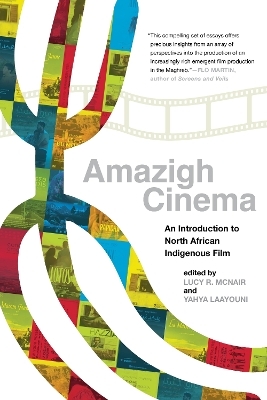
Amazigh Cinema: An Introduction to North African Indigenous Film examines the emergence and history of Amazigh visual media and actively contributes to decolonizing the study of Amazigh artistic expression. An exploration of film from across the Amazigh homelands produced by and about Imazighen (Indigenous peoples of North Africa historically referred to as “Berbers”), the book underscores the importance of cinema in shaping the contemporary Amazigh identity against a backdrop of historical oppression. The chapters in this volume trace connections between oral performance, amateur video, and feature films produced for global audiences. These works expose a tension between the pull of nostalgia and push for change as filmmakers use their cameras to re-establish a sense of presence in a shifting landscape. Resisting the commodification of traditional Amazigh expression for the viewer, these filmmakers use new tools to craft narratives of Amazigh life and create a space for all audiences to witness Indigenous lives and their strategies—and celebration—of survival.
Lucy R. McNair is a literary translator of French and Professor of English at LaGuardia Community College, City University of New York. Her translations include the classic Algerian coming-of-age novel, The Poor Man’s Son, by Amazigh writer Mouloud Feraoun, the memoir To Hell and Back by Samira Bellil, plus many critical studies, creative essays, and poems by North African writers. She co-curates the New York Forum of Amazigh Film. Yahya Laayouni is Associate Professor of Arabic Studies and French at the Commonwealth University of Pennsylvania. He is an Amazigh native of Morocco and co-organizer of the New York Forum of Amazigh Film. His work on Amazigh Indigenous and Franco-Maghrebi cinema has appeared in the Journal of Religion and Film, The Bloomsbury Handbook of Muslim Popular Culture, and Jaddaliya.
Acknowledgements
Preface by Kevin Dwyer
An Amazigh Folktale: “Zadraqa, the Ruling Bird”
retold by Fadma Tainsirt
Ancient Modes, Modern Means: An Introduction to Contemporary Amazigh Cinema
by Lucy R. McNair and Yahya Laayouni
Theorizing Amazigh Cinema
by Daniela Merolla
Women through the Male Gaze in Amazigh Film from Algeria
by Fazia Aïtel
Moroccan Amazigh-Speaking Cinema: From Amateurism to Professionalism
by Mohamed El Bouayadi
Towards a New Amazigh Activist Film in Tunisia
by Soubeika Bahri
Widening the Scope: Conceptualizing the Indigenous Media in the Amazigh-YouTubea
by Brahim El Guabli
Tinghir-Jerusalem: Echoes from the Mellah as Road “Memory Film”
by Sheila Petty and Brahim Benbouazza
The Dynamics of the Gaze in Mohamed El Badaoui’s Solei-Man
by Said Chemlal
“Do I Have To Be a Woman?”: Renegotiating the Feminine in Narjiss Nejjar’s Dry Eyes
by Keziah M. Poole
Global Trajectories, Localized Stories: Amazigh Filmmaking through the Eyes of Selected Filmmakers
by Habiba Boumlik
Through the Festival Lens
by Lucy R. McNair and Yahya Laayouni
Contributors
Bibliography
Index
| Erscheinungsdatum | 29.01.2025 |
|---|---|
| Reihe/Serie | Indigenous Voices in World Arts and Cultural Expressions |
| Zusatzinfo | 4 Maps; 13 Halftones, black and white |
| Verlagsort | Regina |
| Sprache | englisch |
| Maße | 153 x 229 mm |
| Gewicht | 600 g |
| Themenwelt | Kunst / Musik / Theater ► Film / TV |
| Kunst / Musik / Theater ► Kunstgeschichte / Kunststile | |
| Sozialwissenschaften ► Ethnologie | |
| Sozialwissenschaften ► Kommunikation / Medien ► Medienwissenschaft | |
| Sozialwissenschaften ► Soziologie | |
| ISBN-10 | 1-77940-043-8 / 1779400438 |
| ISBN-13 | 978-1-77940-043-7 / 9781779400437 |
| Zustand | Neuware |
| Informationen gemäß Produktsicherheitsverordnung (GPSR) | |
| Haben Sie eine Frage zum Produkt? |
aus dem Bereich