


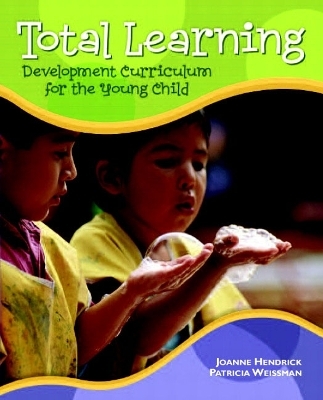
Total Learning
Pearson (Verlag)
978-0-13-222566-3 (ISBN)
- Titel erscheint in neuer Auflage
- Artikel merken
This text is based on primarily a constructivist philosophy and advocates designing curriculum that uses children’s emerging interests within a flexible and thoughtful teacher-guided plan. The developmental approach emphasizes that learning should be integrated. The text addresses curriculum through discussion of the five selves: physical, emotional, social, creative, and cognitive. The authors emphasize play, cross-cultural sensitivity, and encouraging competence in young children. The clear writing and practical examples ensure easy reading. The concise writing style, relevant examples, and practical suggestions are hallmarks of this text. Present-day emergent curriculum programs are explored in new “Emergent Curriculum in Action” features. Well-developed tables organize pertinent information. The excellent theoretical base and conceptual framework for curriculum provide understanding that will stay with students forever. The text encourages students to respond to the needs of children, but also explains how to identify goals and objectives, incorporate them into curriculum that meets individual needs, and use developmentally appropriate assessment methods.
Joanne Hendrick is professor emerita of early childhood education from the University of Oklahoma. In addition to raising four children of her own, her practical experience includes working with children at Stanford Speech and Hearing Clinic, directing a parent-child workshop, working in Head Start, and chairing the early childhood areas at Santa Barbara City College and the University of Oklahoma. She holds an undergraduate degree from Stanford University in disorders of speech and hearing, and graduate degrees from the University of California in counseling and early childhood education. She is past president of the California Association for the Education of Young Children. Her current interests include gardening, photography, traveling to exotic places, writing about young children, and enjoying her 10 grandchildren. Patricia Weissman began her early childhood career as a family care provider for two infants. Having found her calling, she studied early childhood education in the master's program at San Francisco State University and received a doctorate of education from the University of San Francisco. During the past 25 years, she has worked as an infant caregiver, a preprimary teacher, a center director, a Child Development Associate(CDA) advisor, a professor of early childhood education, and a research associate in early childhood development at the Merrill-Palmer Institute of Wayne State University. She was the founding editor of the journal Innovations in Early Education: The International Reggio Exchange. Dr. Weissman also designed and consulted on the production of the Public Broadcasting Service video series titled The Whole Child: A Caregiver's Guide to the First Five Years.
PART I Building a Secure Foundation for Learning Chapter 1 The Purpose of Curriculum
Chapter 2 Including Families in the Life of the School
Chapter 3 Play: The Integrative Force in Learning
PART II Planning for Total Learning
Chapter 4 Designing the Supportive Environment
Chapter 5 Creating Supportive Curriculum Plans and Schedules
Chapter 6 Getting to Know the Children by Keeping Track of What They’re Learning
Chapter 7 Planning with Individual Children in Mind: Using Behavioral Objectives in the School
PART III Helping Young Children Relish Life and Develop Healthy Bodies
Chapter 8 Keeping Children Safe and Well Fed
Chapter 9 Developing Physical Competence
Chapter 10 Helping Children Understand and Value Life
PART IV Fostering Emotional Health in Young Children
Chapter 11 Achieving Emotional Competence
PART V Developing Social Competence and Healthy Self-Identities
Chapter 12 Getting Along Together: Achieving Competence in Interpersonal Relations
Chapter 13 Who am I? Who are You?: Coming to Terms with Multicultural, Gender, and Disability Issues
PART VI Encouraging Children to Be Creative
Chapter 14 Freeing Children to be Creative
PART VII Fostering the Use of Language
Chapter 15 Developing Verbal Competence
Chapter 16 Taking the First Steps on the Road to Literacy
PART VIII Supporting Children's Cognitive Development
Chapter 17 Helping Children Learn to Think for Themselves: Using the Emergent Approach
Chapter 18 Helping Children Develop Mental Abilities and Academic Competence: Using the Conventional Approach
Appendix A: Chart of Normal Development: Infancy to 6 Years of Age
Appendix B: What Are Some Good Toys and Play Materials for Young Children
Appendix C: Summary of Communicable Diseases
Appendix D: 10 Quick Ways to Analyze Children's Books for Racism and Sexism
Appendix E: Educational Organizations, Journals, and Newsletters Associated with Early Childhood Education
References
| Erscheint lt. Verlag | 19.9.2006 |
|---|---|
| Sprache | englisch |
| Maße | 253 x 252 mm |
| Gewicht | 748 g |
| Themenwelt | Sozialwissenschaften ► Pädagogik |
| ISBN-10 | 0-13-222566-2 / 0132225662 |
| ISBN-13 | 978-0-13-222566-3 / 9780132225663 |
| Zustand | Neuware |
| Informationen gemäß Produktsicherheitsverordnung (GPSR) | |
| Haben Sie eine Frage zum Produkt? |
aus dem Bereich


