Virtual Dig: A Simulated Archaeological Excavation of a Middle Paleolithic Site in France, with Student CD-ROM (Win-PC only)
McGraw-Hill Professional
978-0-07-282476-6 (ISBN)
- Titel ist leider vergriffen;
keine Neuauflage - Artikel merken
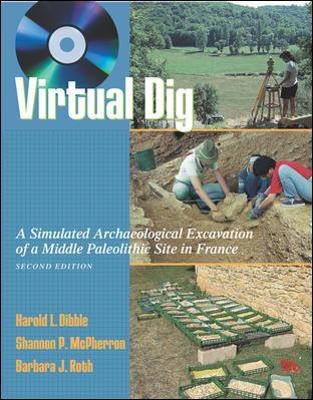
This combination of workbook and CD-ROM (Win PC only) functions as a "virtual field school" that gives students the opportunity to carry out an excavation using real data. Based on excavations at the Middle Paleolithic site of Combe-Capelle in France, the exercises included in Virtual Dig ask students to access the CD's database to analyze and interpret findings.
Barbara Roth is currently an Associate Professor of Anthropology at Oregon State University. She received her Ph.D. in Anthropology from the University of Arizona in 1989. Her research interests include prehistoric hunter-gathers and lithic technology. She excavated at the French Middle Paleolithic sites of La Quina and Combe Capelle, and analyzed lithics from Combe Capelle with Harold Dibble.
PART I INTRODUCTION AND BACKGROUND1 Overview of Virtual Dig Installing and Running the Virtual Dig Software A Word about the Data Used in the Virtual Dig2 Background to the Middle PaleolithicThe Middle PaleolithicDating and EnvironmentNeandertals Mousterian Stone Tools Life in the Middle Paleolithic Suggested Reading 3 Combe-Capelle Suggested Reading
PART II SETUP4 Research DesignWhat Is a Research Design?Formulating a Research DesignWriting a Research DesignResearch Design at Combe-CapelleSuggested ReadingsExercise: Defining Your Research Questions for Your Virtual Project5 Unit Definition and PlacementSite GridExcavation UnitsUnit PlacementUnit Definition and Placement at Combe-CapelleOverview of the Unit Definition ScreenSuggested ReadingsExercise: Learning the Unit Definition Screen Exercise: Virtual Project6 Excavation Methods and Artifact RecoveryExcavation MethodsExcavation ToolsExercise: Learning the Methods ScreenExercise: Virtual Project7 Mapping and ProveniencingDatumsMethods for Recording ProvenienceRecording Provenience during ExcavationScreeningArtifact Recovery and Proveniencing at Combe-CapelleSuggested ReadingsExercise: Virtual Project8 PersonnelField and Lab CrewSpecialistsBudget Considerations in Planning PersonnelPersonnel at Combe-CapelleExercise: Virtual Project9 Living Expenses, Equipment, and SuppliesLiving ConditionsEquipment and SuppliesHandling Logistics at Combe-CapelleExercise: Living ExpensesExercise: Virtual Project10 Developing a Field BudgetExercise: Virtual ProjectFinal Exercise for Setting Up Your Virtual Project
PART III EXCAVATION11 Overview of ExcavationThe Day-to-Day Routine during an ExcavationStratigraphyExcavation Strategies for Recording StrataExcavation at Combe-CapelleSuggested Readings12 Excavation in Virtual DigEquipping Your Virtual ProjectUsing the Interactive Excavation ScreenExercise: Automatic ExcavationExercise:Automatic ExcavationExercise: Interactive Excavation13 Field Documentation and MappingField DocumentationDatabasesArchiving and Curating Field RecordsField Documentation at Combe-CapelleExercise: Site NotebookExercise: MappingExercise: Excavation of Your Virtual Project
PART IV LITHICS LAB14 Flintknapping:The Making of Stone ToolsTerminology and Flake LandmarksFlaking TechniquesLithic AnalysisSuggested ReadingsExercise 14.1: Flintknapping Primer15 Basics of Lithic Analysis I: Lithic MeasurementsSuggested ReadingsExercise: Lithic Measurements16 Basics of Lithic Analysis II: Lithic AttributesCommon Lithic AttributesOther Lithic Attributes in the Combe-Capelle DataAnalyzing Lithic AttributesExercise:Lithic Attributes17 Basics of Lithic Analysis III: Lithic TypologyThe Typology of Francois BordesBordian Graphs and IndicesTypology at Combe-CapelleExercise: Learning the Bordian TypologyExercise: Learning the Bordian Type Lists and Cumulative GraphsExercise: Making ScrapersPART V ANALYSIS
18 Overview of Archaeological AnalysisDay-to-Day Practices in a LabAnalysis at Combe-Capelle19 Analyzing Lithic Data with Virtual DigStatistics, Tables, and GraphsAnalyzing Type Counts and Typological IndicesExercise: Character VariablesExercise: Numeric Data20 Evaluating Taphonomy and Site FormationDamageSize DistributionsArtifact OrientationExercises: Site TaphonomySuggested Reading21 Writing a Site Report
| Erscheint lt. Verlag | 16.7.2002 |
|---|---|
| Sprache | englisch |
| Maße | 213 x 277 mm |
| Gewicht | 397 g |
| Themenwelt | Sozialwissenschaften ► Ethnologie |
| Sozialwissenschaften ► Soziologie | |
| ISBN-10 | 0-07-282476-X / 007282476X |
| ISBN-13 | 978-0-07-282476-6 / 9780072824766 |
| Zustand | Neuware |
| Informationen gemäß Produktsicherheitsverordnung (GPSR) | |
| Haben Sie eine Frage zum Produkt? |
aus dem Bereich