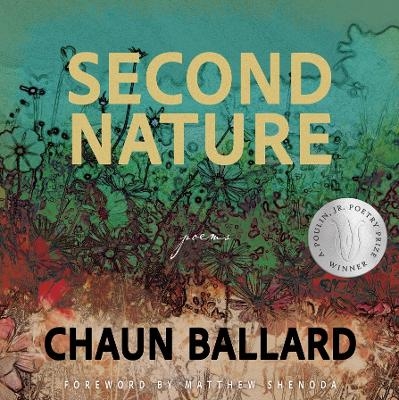
Second Nature
BOA Editions, Limited (Verlag)
978-1-960145-52-9 (ISBN)
A. Poulin, Jr. Poetry Prize
Chaun Ballard’s gripping debut collection weaves childhood experiences,
historical events, and family stories into a living tapestry of memory that
celebrates the landscape of Black America, both rural and urban.
Riddled with the ghostly voices of family and
friends, Second Nature is fearless in
its wrestling with America’s fractured past and troubled present. In these
poems, W.E.B. DuBois and Fredrick Douglass have a conversation, Michael Brown
meditates on the nature of the cosmos, Johnnie Taylor’s guitar sings in
sonnets, and the road Walt Whitman set out upon comes alive for a new
generation.
Through innovative re-imaginings of the
sonnet, the pastoral, and the contrapuntal, Ballard engages with popular
culture while examining the intricacies of all that is wedded together—form and
content, mothers and fathers, grandmothers and grandfathers, husband and wife,
and a nation long dependent on created binaries that serve to maintain
structures of oppression.
Interspersed with quotations and inspired by
the rich legacy of poets who came before him—including poet Matthew Shenoda
who provides an insightful Foreword to the collection—Second Nature is
a testament to interconnectedness, a love letter to the deep roots that we come
from, and a reminder of the myriad ways in which one’s identity is shaped by
community and country.
Chaun Ballard is a doctoral student of poetry at the University of Nebraska-Lincoln. He is the author of the chapbook Flight (Tupelo Press), which received the 2018 Sunken Garden Poetry Prize. Ballard's poems have appeared in The Atlantic, Narrative Magazine, Oxford Poetry, Poetry Northwest, The Missouri Review, The New York Times, and other literary magazines. Ballard lives in Lincoln, NE.
I.
A Poem Ending with a Strambotto wherein I Include an Extra Line That Is Myself or A Poem in which I
Name the Flower
Landscape
The Ghost of Johnnie Taylor Encourages the Lone Offspring of a Robin to Jump and Reminds Himself That
the First Love to Break His Heart Wasn’t a Woman at All
Today
Possible Titles for a Love Poem
You Tellin’ Me if My Grandmomma Was in the NBA Right Now She Would Be Okay?
Turnkey Sonnet #14: Trope of the Perfect Entertainer Getting His Flowers or My Attempt to Record Black
Geographies into Song
One Side of an Interview with the Ghost of Johnnie Taylor Given by the Queen of a Humblebee Hive above
His Grave
My Father Falls in Love for a Third Time and My Bill Is Five Hundred Dollas
Emmitt Smith Is Looking for a Wife so My Mother Writes Him a Letter
Yes, We Wept at the Green Light and Held Up Traffic or What Is Love? Baby, Don’t Hurt Me
The Ghost of My Grandmother Looks Out over a Baseball Diamond and Tells Her Daughter about a Man
Coming Home
Yes, I Beat Jason’s High-Yellah Ass for Making Fun of My Pronunciation and Emancipation Was Really Not
That Long Ago
My Father and I Drive to St. Louis for His Mother’s Funeral and the Wildflowers
II.
Second Nature
Blues Sonnet on What I Don’t Have to Tell You in the Absence of Porches
The Ghost of Johnnie Taylor, the Philosopher of Soul, Tells the City How He and Sam Cooke Left the
Country, but the Country Never Left Them
Surely, I Am Able to Write Poems Celebrating Grass and How the Blue in the Sky Can Flow Green or Red—
Poems about Nature and Landscape but Whenever I Begin the Trees Wave Their Knotted Branches
Epithalamium or I Attempt to Write the Poem That Whitman Did Not Write or Our Knees Bent in the Photo
Just before We Jump the Broom
The Ghost of Johnnie Taylor Reflects on “Who’s Making Love” and Believes Every Spring to Be a Metaphor
for the Muse
I Will Not Escape without Leaving a Trail of Stars; Therefore, I Will Tell You How Spectacular You Are
Under All This Light or I Want to Write a Song for You That I Will Not Complete Which Ends in Its Own
Refrain or A Poem on How I Want
Turnkey Sonnet #9: Trope of the Sexual Superman and How He Got His Rep or
The Ghosts of Frederick Douglass and W.E.B. Du Bois Collaborate to Write in Defense of Juxtaposition
[John] Adams’ Argument for the Defense: 3 – 4 December 1770 | The Ghost of Crispus Attucks Stands
Outside the Old State House and Speaks for Himself
Using the Laws of Motion to Explain Ferguson
Working Title
Squire—The Outlaw! July 19, 1837 | The Legend of Bras-Coupé Speaks on the Creation of Frankenstein; or, the
Modern Prometheus
My Black Ash in the Sun Is Not a Phoenix
Self-Portrait as Yes and Amen
And Someone Said, Those Poems Are Valid and Important and Good, but It’s Hard to Constantly Be Fighting for an
Inch; for That to Be One’s Sole Mode of Artistic Expression
After Shut Up and Dribble, a Three-Man Weave
A One-Sided Conversation with Whitman Using His Words or A Sonnet Written on the Topic of Silence
III.
Anti-Pastoral
If You Were to Ask Me the State of My Country, I Would Say
Surely, I Am Able to Write Poems Celebrating Grass and How the Blue in the Sky Can Flow Green or Red—
Poems about Nature and Landscape but Whenever I Begin the Trees Wave Their Knotted Branches
Ars Poetica or American Pastoral as Opening Scene for a Micro-Documentary after Flipping the Script and
Keeping the Darkness for Ourselves
And Someone Said, Those Poems Are Valid and Important and Good, but It’s Hard to Constantly Be Fighting for an
Inch; for That to Be One’s Sole Mode of Artistic Expression
Poem of Remorse Ending in Reparations
The Ghost of Johnnie Taylor Kicks Game to a Paper Birch about the Economics of a Recording Contract
Signed on What Is Otherwise a Piece of Wood
Ars Poetica or Self-Portrait Beginning with a Haiku before Shaking the Polaroid into Image and Keeping the
Darkness for Ourselves
If I’m Talkin’ Nature
Epithalamium or I Attempt to Write the Poem That Whitman Did Not Write or Our Knees Bent in the Photo
Just Before We Jump the Broom
Michael Brown as My Father or Michael Brown as My Grandfather or Michael Brown as My Father and My
Grandfather or All Three as an Old Man
Interview with a Field Guitar’s Twelve Strings Speaking on Themselves and When Johnnie Made It
the key: Johnnie Taylor’s Ghost Writer Speaks
Q & A
Notes
Acknowledgments
About the Author
| Erscheinungsdatum | 21.04.2025 |
|---|---|
| Vorwort | Matthew Shenoda |
| Zusatzinfo | Illustrations |
| Verlagsort | Rochester |
| Sprache | englisch |
| Maße | 177 x 228 mm |
| Themenwelt | Literatur ► Lyrik / Dramatik ► Lyrik / Gedichte |
| Sozialwissenschaften ► Ethnologie | |
| Sozialwissenschaften ► Soziologie | |
| ISBN-10 | 1-960145-52-5 / 1960145525 |
| ISBN-13 | 978-1-960145-52-9 / 9781960145529 |
| Zustand | Neuware |
| Informationen gemäß Produktsicherheitsverordnung (GPSR) | |
| Haben Sie eine Frage zum Produkt? |
aus dem Bereich