


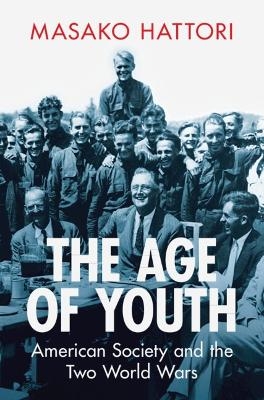
The Age of Youth
American Society and the Two World Wars
Seiten
2025
Cambridge University Press (Verlag)
978-1-009-30336-1 (ISBN)
Cambridge University Press (Verlag)
978-1-009-30336-1 (ISBN)
Reveals how national security goals shaped US ideas about youth and education in the first half of the twentieth century, during both wartime and peacetime. It will interest students and scholars of US military history, politics, the history of education, and foreign relations.
The Age of Youth tackles the complicated relationship between youth, national security, and education from World War I to World War II. It reveals how the United States created a time-specific political and social category of youth that relied on the expectation that military-age men should devote themselves to the future of their country. Analyzing policies from the Reserve Officers' Training Corps, the New Deal, wartime military training programs, and those governing the post-World War II occupation of Japan, Masako Hattori demonstrates that the priorities of national security conditioned young people's access to education in the US in the first half of the twentieth century, in both wartime and peacetime, and explores how the evolving link between youth, education, and national security shaped and reshaped the cultural concept of “youth” in American society.
The Age of Youth tackles the complicated relationship between youth, national security, and education from World War I to World War II. It reveals how the United States created a time-specific political and social category of youth that relied on the expectation that military-age men should devote themselves to the future of their country. Analyzing policies from the Reserve Officers' Training Corps, the New Deal, wartime military training programs, and those governing the post-World War II occupation of Japan, Masako Hattori demonstrates that the priorities of national security conditioned young people's access to education in the US in the first half of the twentieth century, in both wartime and peacetime, and explores how the evolving link between youth, education, and national security shaped and reshaped the cultural concept of “youth” in American society.
Masako Hattori is Assistant Professor in the Department of History at the National University of Singapore.
Introduction; 1. Uncle Sam's Khaki university and the first world war; 2. Educational institutions and military training in the 1920s and the 1930s; 3. The great depression, national security, and the redefinition of youth; 4. Conscripting youth for World War II; 5. Reimagining youth during wartime; 6. Youth in US- occupied Japan; Conclusion; Index.
| Erscheinungsdatum | 15.04.2025 |
|---|---|
| Reihe/Serie | Military, War, and Society in Modern American History |
| Zusatzinfo | Worked examples or Exercises |
| Verlagsort | Cambridge |
| Sprache | englisch |
| Themenwelt | Geschichte ► Allgemeine Geschichte ► Neuzeit (bis 1918) |
| Geschichte ► Allgemeine Geschichte ► 1918 bis 1945 | |
| Geisteswissenschaften ► Geschichte ► Regional- / Ländergeschichte | |
| Geschichte ► Teilgebiete der Geschichte ► Militärgeschichte | |
| Sozialwissenschaften ► Soziologie | |
| ISBN-10 | 1-009-30336-8 / 1009303368 |
| ISBN-13 | 978-1-009-30336-1 / 9781009303361 |
| Zustand | Neuware |
| Informationen gemäß Produktsicherheitsverordnung (GPSR) | |
| Haben Sie eine Frage zum Produkt? |
Mehr entdecken
aus dem Bereich
aus dem Bereich
Geschichte einer wilden Handlung
Buch | Hardcover (2024)
C.H.Beck (Verlag)
CHF 47,60


