


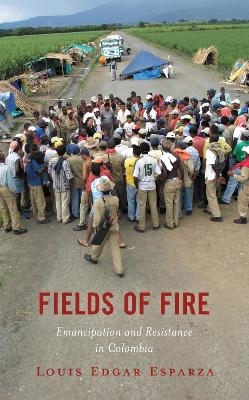
Fields of Fire
Emancipation and Resistance in Colombia
Seiten
2024
Lexington Books (Verlag)
9781666927047 (ISBN)
Lexington Books (Verlag)
9781666927047 (ISBN)
This book identifies the concept of the emancipatory network as a coordination of loose, discrete, and differentiated actors to explain how activists surmount overwhelming odds.
Fields of Fire: Emancipation and Resistance in Colombia identifies the concept of the emancipatory network as a coordination of loose, discrete, and differentiated actors to explain how activists successfully practice high-risk activism. Illustrating that previous studies on high-risk activism come to contradictory conclusions, Louis Edgar Esparza argues that networks rather than individual characteristics are associated with mobilization. The book features unique ethnographic material of a Colombian sugarcane worker strike and includes interviews with workers and human rights activists in Valle del Cauca and Bogotá that reveal different forms of knowledge that activists bring to a social movement. It argues that the combination of these different forms of knowledge bolsters the movement’s resiliency in the face of repression. The book provides a counterfactual chapter, illustrating a lack of mobilization where the emancipatory network is absent. Ultimately, it integrates English and Spanish-language social movement literatures, revealing important theoretical insights, and is detailed with data from various sources to outline the state context of social movement action.
Fields of Fire: Emancipation and Resistance in Colombia identifies the concept of the emancipatory network as a coordination of loose, discrete, and differentiated actors to explain how activists successfully practice high-risk activism. Illustrating that previous studies on high-risk activism come to contradictory conclusions, Louis Edgar Esparza argues that networks rather than individual characteristics are associated with mobilization. The book features unique ethnographic material of a Colombian sugarcane worker strike and includes interviews with workers and human rights activists in Valle del Cauca and Bogotá that reveal different forms of knowledge that activists bring to a social movement. It argues that the combination of these different forms of knowledge bolsters the movement’s resiliency in the face of repression. The book provides a counterfactual chapter, illustrating a lack of mobilization where the emancipatory network is absent. Ultimately, it integrates English and Spanish-language social movement literatures, revealing important theoretical insights, and is detailed with data from various sources to outline the state context of social movement action.
Louis Edgar Esparza is professor of sociology at California State University-Los Angeles.
Table of Contents
List of Figures
Acknowledgements
Introduction
Chapter 1 Risk
Chapter 2 Emancipatory Networks
Chapter 3 Humiliation
Chapter 4 Leadership
Chapter 5 Bogotá
Chapter 6 Conclusion
Appendix A
References
About the author
| Erscheinungsdatum | 21.03.2024 |
|---|---|
| Zusatzinfo | 20 b/w illustrations; 6 tables; |
| Sprache | englisch |
| Maße | 150 x 228 mm |
| Gewicht | 286 g |
| Themenwelt | Sozialwissenschaften ► Ethnologie |
| Sozialwissenschaften ► Politik / Verwaltung | |
| Sozialwissenschaften ► Soziologie ► Makrosoziologie | |
| ISBN-13 | 9781666927047 / 9781666927047 |
| Zustand | Neuware |
| Informationen gemäß Produktsicherheitsverordnung (GPSR) | |
| Haben Sie eine Frage zum Produkt? |
Mehr entdecken
aus dem Bereich



aus dem Bereich
wie Sie unvergessliche Events und transformative Meetings gestalten
Buch | Softcover (2025)
Vahlen (Verlag)
CHF 34,85


