


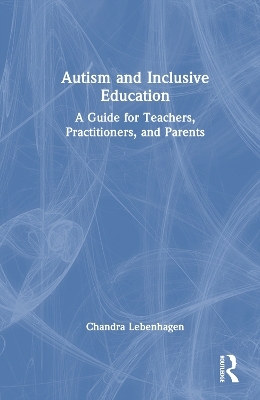
Autism and Inclusive Education
A Guide for Teachers, Practitioners and Parents
Seiten
2024
Routledge (Verlag)
978-1-032-68796-4 (ISBN)
Routledge (Verlag)
978-1-032-68796-4 (ISBN)
This handbook provides educators and school practitioners with a practical resource to successfully support speaking and non-speaking autistic students in K-12 school settings.
This handbook provides educators and school practitioners with a practical resource to successfully support speaking and non-speaking autistic students in K–12 school settings.
Each chapter discusses an approach founded on current research on the self-reported school priorities of autistic students, which historically have been overlooked in research and education. Incorporating the views and experiences of autistic students promotes the use of human-rights-centered pedagogies and ensures that evidence-based practices are both ethical and effective in supporting the learning and well-being success of autistic students. The informative content challenges assumptions of normative ability and highlights opportunities where evidence-based practices to support autistic students can be used alongside inclusive best practices to improve the educational experiences of all students.
This handbook's flexible and easy-to-use design can be used in its entirety or as a reference tool for school practitioners, teachers, and parents.
This handbook provides educators and school practitioners with a practical resource to successfully support speaking and non-speaking autistic students in K–12 school settings.
Each chapter discusses an approach founded on current research on the self-reported school priorities of autistic students, which historically have been overlooked in research and education. Incorporating the views and experiences of autistic students promotes the use of human-rights-centered pedagogies and ensures that evidence-based practices are both ethical and effective in supporting the learning and well-being success of autistic students. The informative content challenges assumptions of normative ability and highlights opportunities where evidence-based practices to support autistic students can be used alongside inclusive best practices to improve the educational experiences of all students.
This handbook's flexible and easy-to-use design can be used in its entirety or as a reference tool for school practitioners, teachers, and parents.
Chandra Lebenhagen is a lecturer at several Canadian universities, where she teaches graduate courses in inclusive education, autism, and evidence-based practices to support students with disabilities in K–12 settings. Her research focuses on ethics, critical disability, inclusive education, and evidence-based practices.
Acknowledgments Contributors 1. Introduction 2. The Self-Reported School Priorities of Autistic Students 3. Evidence-Based Practices to Support Autistic Children and Youth 4. Communication 5. Connection 6. Classroom Environment 7. Curriculum 8. Collaboration 9. Re-Conceptualising Problem Behaviour 10. The Future of Inclusive Education Index
| Erscheinungsdatum | 10.07.2024 |
|---|---|
| Zusatzinfo | 2 Tables, black and white; 1 Halftones, black and white; 1 Illustrations, black and white |
| Verlagsort | London |
| Sprache | englisch |
| Maße | 152 x 229 mm |
| Gewicht | 570 g |
| Themenwelt | Medizin / Pharmazie ► Medizinische Fachgebiete ► Psychiatrie / Psychotherapie |
| Sozialwissenschaften ► Pädagogik ► Didaktik | |
| Sozialwissenschaften ► Pädagogik ► Sonder-, Heil- und Förderpädagogik | |
| ISBN-10 | 1-032-68796-7 / 1032687967 |
| ISBN-13 | 978-1-032-68796-4 / 9781032687964 |
| Zustand | Neuware |
| Informationen gemäß Produktsicherheitsverordnung (GPSR) | |
| Haben Sie eine Frage zum Produkt? |
Mehr entdecken
aus dem Bereich


aus dem Bereich
Buch | Softcover (2025)
Urban & Fischer in Elsevier (Verlag)
CHF 57,35
Zwischen Normvariante, Persönlichkeitsstörung und …
Buch | Softcover (2022)
Kohlhammer (Verlag)
CHF 49,95


