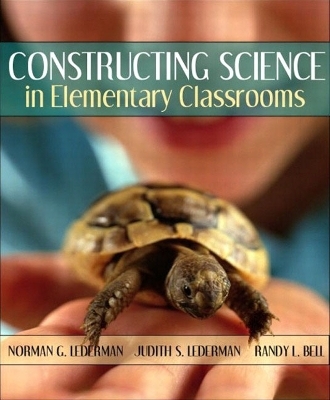
Constructing Science in Elementary Classrooms, MyLabSchool Edition
Pearson
978-0-205-46467-8 (ISBN)
- Titel ist leider vergriffen;
keine Neuauflage - Artikel merken
Most chapters begin with “Introduction” and most chapters conclude with “Summary” and “Suggested Readings.”
Preface.
Acknowledgements.
I. GOALS OF SCIENCE INSTRUCTION.
1. What Is Science?
What Is Science?
Science and the Characteristics of Scientific Knowledge.
Is There a Single Scientific Method?
How Objective Is Science?
A Few Words About Teaching the Nature of Science.
2. Why Teach Science?
Why Require Science for All Students?
What Is Science Literacy?
Contemporary Reform Efforts in Science Education.
Common Themes in the Reforms.
Specific Comparisons Between the Science Reforms.
A Few Words About the Teaching of Science Inquiry.
II. SETTING THE STAGE.
3. Creating a Positive Physical and Emotional Environment.
Arranging the Classroom.
Whole Group Instruction.
Small Group Instruction.
Beyond the Classroom.
4. Instructional Planning.
Instructional Objectives.
The Lesson Plan.
Important Planning Considerations.
5. Measurement, Assessment, and Evaluation of Student Learning.
Conceptualizing Assessment, Measurement, and Evaluation.
Developing Assessment Items: Do They Match Your Instructional Objectives?
Developing Assessment Items: The Traditional Approach.
Are All Assessment Items Equal?
Summary of Traditional Assessment Approaches.
Developing Assessment Items: An Alternative Approach.
How Are Alternative Assessments Evaluated?
Evaluations: Making Judgments from Assessments and Measures.
Evaluation: Determination of Grades.
6. Curriculum and Materials Evaluation and Gathering Instructional Resources.
What's Important to You?
Project 2061 Curriculum Evaluation Criteria: A Summary.
Evaluating Curriculum Materials.
Making Sense of the Analysis.
Revising Curriculum Materials Based on Your Analysis.
Doing and Knowing: A Return to Criterion I.
Finding and Selecting Instructional Materials.
Resource Card File.
Gathering Supplies for Science Learning.
III. THE TEACHING CYCLE.
7. Life Science.
What Is Life?
Form and Function.
Life Cycles.
Environmental Science.
8. Physical Science.
Properties of Matter.
Forces and Motion.
Energy.
Physical and Chemical Change.
9. Earth and Space Science.
The Universe: Stars and Constellations.
The Solar System: Daytime Astronomy.
The Earth: Rocks and the Rock Cycle.
Forces of Nature: Weather.
10. Transcendent Themes.
Teaching Transcendent Themes.
Models.
Lessons from Previous Chapters Modified to Teach Models.
Lessons from Previous Chapters Modified to Teach Systems.
APPENDICES.
A. ERIC Tutorial.
B. Item Analysis.
C. Professional Development.
| Erscheint lt. Verlag | 15.2.2005 |
|---|---|
| Sprache | englisch |
| Maße | 191 x 232 mm |
| Gewicht | 658 g |
| Themenwelt | Sozialwissenschaften ► Pädagogik ► Allgemeines / Lexika |
| Sozialwissenschaften ► Pädagogik ► Bildungstheorie | |
| Sozialwissenschaften ► Pädagogik ► Schulpädagogik / Grundschule | |
| ISBN-10 | 0-205-46467-X / 020546467X |
| ISBN-13 | 978-0-205-46467-8 / 9780205464678 |
| Zustand | Neuware |
| Informationen gemäß Produktsicherheitsverordnung (GPSR) | |
| Haben Sie eine Frage zum Produkt? |
aus dem Bereich