


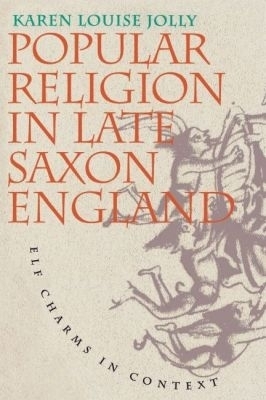
Popular Religion in Late Saxon England
Elf Charms in Context
Seiten
1996
|
Second Edition
The University of North Carolina Press (Verlag)
978-0-8078-4565-3 (ISBN)
The University of North Carolina Press (Verlag)
978-0-8078-4565-3 (ISBN)
This work traces the cultural intermingling of Christian liturgy and indigenous Germanic customs and argues that elf charms and similar practices represent the successful Christianization of native folklore.
In tenth- and 11th-century England, Anglo-Saxon Christians retained an old folk belief in elves as extremely dangerous creatures capable of harming unwary humans. To ward off the afflictions caused by these invisible beings, Christian priests modified traditional elf charms by adding liturgical chants to herbal remedies. In this text Karen Jolly traces this cultural intermingling of Christian liturgy and indigenous Germanic customs and argues that elf charms and similar practices represent the successful Christianization of native folklore. Jolly describes a dual process of conversion in which Anglo-Saxon culture became Christianized but at the same time left its own distinct imprint on Christianity. Illuminating the creative aspects of this dynamic relationship, she identifies liturgical folk medicine as a middle ground between popular and elite, pagan and Christian, magic and miracle. Her analysis, drawing on the model of popular religion to redefine folklore and magic, reveals the richness and diversity of late Saxon Christianity.
In tenth- and 11th-century England, Anglo-Saxon Christians retained an old folk belief in elves as extremely dangerous creatures capable of harming unwary humans. To ward off the afflictions caused by these invisible beings, Christian priests modified traditional elf charms by adding liturgical chants to herbal remedies. In this text Karen Jolly traces this cultural intermingling of Christian liturgy and indigenous Germanic customs and argues that elf charms and similar practices represent the successful Christianization of native folklore. Jolly describes a dual process of conversion in which Anglo-Saxon culture became Christianized but at the same time left its own distinct imprint on Christianity. Illuminating the creative aspects of this dynamic relationship, she identifies liturgical folk medicine as a middle ground between popular and elite, pagan and Christian, magic and miracle. Her analysis, drawing on the model of popular religion to redefine folklore and magic, reveals the richness and diversity of late Saxon Christianity.
Karen Louise Jolly is associate professor of history and a member of the associate graduate faculty at the University of Hawai`i at Manoa.
| Verlagsort | Chapel Hill |
|---|---|
| Sprache | englisch |
| Maße | 158 x 230 mm |
| Gewicht | 394 g |
| Themenwelt | Geschichte ► Allgemeine Geschichte ► Mittelalter |
| Geisteswissenschaften ► Geschichte ► Regional- / Ländergeschichte | |
| Geschichte ► Teilgebiete der Geschichte ► Kulturgeschichte | |
| Religion / Theologie ► Christentum ► Kirchengeschichte | |
| Sozialwissenschaften ► Soziologie | |
| ISBN-10 | 0-8078-4565-5 / 0807845655 |
| ISBN-13 | 978-0-8078-4565-3 / 9780807845653 |
| Zustand | Neuware |
| Informationen gemäß Produktsicherheitsverordnung (GPSR) | |
| Haben Sie eine Frage zum Produkt? |
Mehr entdecken
aus dem Bereich

aus dem Bereich
Geschichte einer Augsburger Familie (1367-1650)
Buch | Softcover (2024)
Kohlhammer (Verlag)
CHF 47,60


