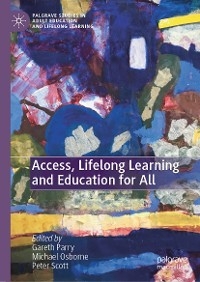
Access, Lifelong Learning and Education for All (eBook)
352 Seiten
Springer International Publishing (Verlag)
978-3-031-12342-9 (ISBN)
This book examines access, lifelong learning and education for all, which have been policy preoccupations in all countries for more than half a century, but have been overlaid and pushed aside by the development of mass higher education. The authors examine what has been achieved, what lessons have been learnt and what still remains to be done, addressing matters of equity, agency, community, mobility and hierarchy.
Gareth Parry is Professor Emeritus at the University of Sheffield, UK, where he was Director of the Centre for the Study of Higher Education.
Michael Osborne is Professor in Adult and Lifelong Learning at the University of Glasgow, UK, where he is Director of the Centre for Research and Development in Adult and Lifelong Learning.
Peter Scott is Emeritus Professor of Higher Education Studies at the Institute of Education, University College London, UK, and was Scotland's Commissioner of Fair Access.
Foreword 6
Contents 8
Contributors 10
List of Figures 12
1 Introduction 13
Access Beyond Elites 19
Alternative Pathways 24
Learning in Community Settings 27
References 30
Part I Access Beyond Elites 32
2 Access, Equity and Widening Participation 33
Introduction 33
Unequal Access 37
Strategies and Policies 44
New Institutions 46
Free Higher Education 47
Targeted Student Support 48
Contextual Admissions 50
Targets and Quotas 51
Wider Perspectives 52
Grounding Access, Participation and Inclusion: Principles and Discourses 54
References 58
3 Human Capital Theory and Its Discontents 61
Introduction 61
Varieties of Human Capital Theory 63
Critiques of Human Capital Theory 65
Human Capital Theory Adopted as Government Policy 68
Alternatives to Instrumental Theories of Education 72
A Broader Conception of Human Beings and Motivation 74
Three Roles of Post-Secondary Education Programmes 76
Conclusion 80
References 82
4 Adult and Lifelong Learning Epistemologies in Africa 90
Introduction 90
Presenting Africa 91
Methodology 92
Adult and lifelong learning in Africa 93
Highlighting the Differences Among the Epistemologies 97
African Traditional Education and Modern Adult and Lifelong Learning 97
Anglophone African Adult and Lifelong Learning and Francophone African Adult and Lifelong Learning 100
The Three Epistemologies and Sustainable Development 106
Recommendations 108
Conclusion 109
References 110
5 Widening Access to Higher Education: Changing Demographics, Overcoming Old Barriers and the Role of Lifelong Learning 113
Introduction 113
People on the Move: Migrants and Refugees 116
Germany 119
Ireland 121
Increasing Longevity, Ageing Populations and Changing Life Course Patterns 124
Higher Education—Some Responses 127
Concluding Reflections 131
Note 134
References 134
Part II Alternative Pathways 139
6 Beyond the Segmentation Between Vocational Training and Higher Education: New Qualification Pathways in Germany 140
Introduction 140
The German Education Schism (Bildungsschisma) 141
The Expansion of Higher Education in Germany 144
New Pathways and Institutions Beyond the Education Schism 147
New Vocational-Oriented School Pathways to Higher Education Entrance Qualification 148
Establishment of Dual Qualification Programmes at the Upper Secondary School Level 148
More Frequent Access to Vocational Training for School Leavers with a University Entrance Entitlement 149
Accreditation of Vocational Competencies on Courses of Study 150
Consecutive Qualification Pathways 151
Academisation of Vocational Qualification Provisions and ‘Vocationalisation’ of Academic Studies 152
Permeability and Linkage: New Access Paths and Study Opportunities 154
Opening up Access to Higher Education for Vocationally Qualified Persons 154
Hybrid and Dual Study Programmes 157
Conclusions 161
Note 162
References 162
7 Community Colleges in the United States: Navigating Multiple Missions During Uncertain Times 166
Conceptualisations of the Community College 167
Defining ‘Community College’ 167
Credentials Offered 168
Funding and Governance 169
Scholarly Perspectives on Community Colleges 170
The Multiple Missions of Community Colleges 171
Open-Access Mission 171
Academic Preparation Mission 172
Workforce Development Mission 174
Community Service Mission 175
Community Colleges’ Relationships with Four-Year Institutions 177
Challenges Facing Community Colleges in Uncertain Times 180
Conclusion and Future Prospects for Community Colleges 182
References 184
8 The Alternative Route Revisited 193
Three Episodes, Three Guises 194
Birth of the Alternative Route 195
A Hierarchy of Colleges 197
The Further Education Ladder 199
The Technician and Craft Routes 201
Criticisms and Legacies 203
Reaffirmation and Retreat 206
The Rise of General Further Education Colleges 208
A Self-Styled Movement 209
Into a New Further Education Sector 212
Return of the Technical Track 214
Route Marking 216
Route Building 217
Concluding Observations 219
References 221
9 Higher Level Vocational Qualifications as Pathways to Work and Further Study 224
Introduction 224
Contrasting Policy Contexts 225
Common and Contrasting Terminology 227
Examining Scottish Policy: Managing HVQs as Part of a System 228
Higher National qualifications—The Domain of Colleges 229
The Role of HNC/Ds in Supporting Progression to Degree Level Study 230
The Dual Agenda for HNC/Ds 233
The Future of Articulation and Higher Vocational Education 234
Examining English Policy: Shaking up HVQs Within a Quasi-Market 235
Enter Foundation Degrees 235
Enter Higher and Degree Apprenticeships 238
Planning for Higher Technical Qualifications, Some of Which Are Already Here 239
What Does Experience Show Us? 241
Conclusion 244
References 246
Part III Learning in Community Settings 253
10 Partial Inclusions: Smart Cities, Labour Market and Educational Opportunities in India 254
Introduction 254
Pursuing Lifelong Learning 259
Researching the Smart Cities Mission 261
Smart City Skill Development Courses 263
Quality of Training at ITCs 265
Smart Cities Hackathon 267
Citizen Engagement 269
Conclusion 271
References 273
11 Community Learning Centres in the Asia Region: Popular Education and Community Transformation 277
Introduction 277
Taking Care with Words 278
What is a Community? 280
The Modern International Stage 281
The Global South 284
CLCs in the Asian Setting 285
Of-By-For Principle 286
CLCs for Community Development 289
The Case of Timor-Leste 291
Strengths and Weaknesses 293
Learning, Support, and Control 295
References 297
12 Learning Outside the Academy: Conceptual Debates and Research Challenges 300
Introduction 300
Informal Learning Revisited 303
Reframing Debate and Action Beyond ‘Formal, Non-Formal or Informal’ Learning 305
The Significance of the Spatial ‘Turn’ 307
Spaces of Learning and Activity 308
Workplaces as Learning Spaces: Conceptual Issues 310
New Spaces—New Capabilities 311
Learning Across Contexts: Interdependencies and Educative Potential 312
Research Approaches 315
Complexity Theories and Social Ecological Approaches 318
Conclusions 319
References 320
13 Relations in Learning and Research: The Case of the Centre for Research in Lifelong Learning 326
The Policy Background 327
The Emergence of the CRLL 332
The Permissiveness of Lifelong Learning 333
The CRLL and Learning Relations 336
Looking Back and Looking Forward 342
References 346
Index 350
| Erscheint lt. Verlag | 23.3.2023 |
|---|---|
| Reihe/Serie | Palgrave Studies in Adult Education and Lifelong Learning | Palgrave Studies in Adult Education and Lifelong Learning |
| Zusatzinfo | XI, 352 p. 7 illus., 1 illus. in color. |
| Sprache | englisch |
| Themenwelt | Sozialwissenschaften ► Pädagogik ► Erwachsenenbildung |
| Schlagworte | community transformation • higher education • Lifelong Learning • Social Inclusion • Vocational Training |
| ISBN-10 | 3-031-12342-5 / 3031123425 |
| ISBN-13 | 978-3-031-12342-9 / 9783031123429 |
| Informationen gemäß Produktsicherheitsverordnung (GPSR) | |
| Haben Sie eine Frage zum Produkt? |
 PDF (Wasserzeichen)
DRM: Digitales Wasserzeichen
Dieses eBook enthält ein digitales Wasserzeichen und ist damit für Sie personalisiert. Bei einer missbräuchlichen Weitergabe des eBooks an Dritte ist eine Rückverfolgung an die Quelle möglich.
Dateiformat: PDF (Portable Document Format)
Mit einem festen Seitenlayout eignet sich die PDF besonders für Fachbücher mit Spalten, Tabellen und Abbildungen. Eine PDF kann auf fast allen Geräten angezeigt werden, ist aber für kleine Displays (Smartphone, eReader) nur eingeschränkt geeignet.
Systemvoraussetzungen:
PC/Mac: Mit einem PC oder Mac können Sie dieses eBook lesen. Sie benötigen dafür einen PDF-Viewer - z.B. den Adobe Reader oder Adobe Digital Editions.
eReader: Dieses eBook kann mit (fast) allen eBook-Readern gelesen werden. Mit dem amazon-Kindle ist es aber nicht kompatibel.
Smartphone/Tablet: Egal ob Apple oder Android, dieses eBook können Sie lesen. Sie benötigen dafür einen PDF-Viewer - z.B. die kostenlose Adobe Digital Editions-App.
Buying eBooks from abroad
For tax law reasons we can sell eBooks just within Germany and Switzerland. Regrettably we cannot fulfill eBook-orders from other countries.
aus dem Bereich