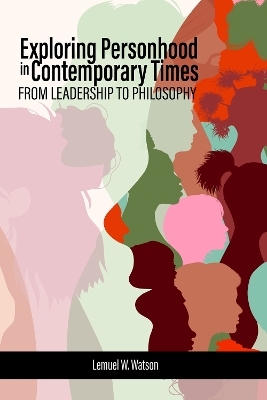
Exploring Personhood in Contemporary Times
Information Age Publishing (Verlag)
979-8-88730-130-3 (ISBN)
- Titel nicht im Sortiment
- Artikel merken
With the dawn of research into leader-behaviors, scholars differentiated between being task-oriented, which is important, and also being people-oriented. People matter. And we tend to guard against leader attitudes that treat persons as objects, as passive or inert, as instruments, as so much clay to be shaped and molded. Hannah Arendt (1958) rejected the idea that leadership is like work, in which a craftsman picks up the raw materials and the requisite tools in order to create a product according to an image in his head. No, she said, leadership is social action in which we all participate, each with his or her unique and creative spontaneity, collaborating in an erratic cascade toward the future. Leadership is something people do together. And to achieve that vision, we must acknowledge each other as persons and not as figures in a ledger or pieces on a chessboard. This volume is intended as a call to be curious about what we take for granted as individuals, educators, and leaders. In essence to ask ourselves the more difficult questions about who we are as we recognize our need for others within a community? What does it mean to be a person and to recognize another’s personhood? Nathan Harter (2021) draws us into a space to dialogue with ourselves about the notion of personhood as leaders. “So, what does it mean to be a person? And what does it mean to treat someone as a person? What does anyone owe another person?” (p. 4). In what way then do leaders contend with such questions as they are becoming; becoming better leaders, becoming better individuals, becoming their sacred selves.
A person-centered ethic would be universal in scope, yet adapted to local conditions that many leaders must deal with on a daily basis. Nearly every religion already addresses both what it means to become a person and what one owes a person ethically, regardless of race, ethnicity, nationality, or other affiliation. Regardless if organizations deal directly with the notion of personhood, leaders deal with the workplace challenges of which the human bring him or her entire self to the unit. Hence, a comprehensive and integrate context forces us to revisit our assumptions about who exactly is a person and what they might deserve. This volume would bring those voices into conversation. In addition, we intend to complicate the question by extending similar questions into emerging areas of increasing relevance in a technological age that crosses geographic boundaries, such as online presences, corporate entities, and the prospects of Artificial Intelligence. If anything, an expanded interdisciplinary and global context makes this volume relevant and timely for leaders and leadership studies across multiple fields of study and professions.
Preference: Exploring Personhood in Contemporary Times: From Leadership to Philosophy; Lemuel W. Watson.
Foreword: On the Concept of Personhood; Jude Chudi Okpala.
Chapter 1. Questions About a Person-Centered Leadership; Nathan Harter.
Chapter 2. The Intersubjectivity of Personhood and Leadership: I am Who I am, Because We are Who We are; Stacey K. Guenther.
Chapter 3. Private Bodies, Public Lives: Learning From and Leading Through the Outbreak Narrative; Rachel Wagner.
Chapter 4. Person-Centered Curriculum Leadership; Daniel J. Castner.
Chapter 5. Dignity, Personhood, and Inclusive Decision-Making; John W. Kyle.
Chapter 6. Leadership, Personhood, and Race; Brian Buckley.
Chapter 7. An African Conception of Leadership and Personhood; Matthew Pierlott.
Chapter 8. What About Our Personhood? COVID-19 and the Elusive Search for Work-Life Balance; Bethany Huxford Davis.
Chapter 9. Personhood Within The Tragic Gap: Between Reality and Possibility; Zachary C. Wooten.
Chapter 10. Personhood: The Duchenne Smile; Robin L. Murphey.
Chapter 11. St. Augustine's Search for Self; David A. Salomon.
Chapter 12. Becoming a Relevant Leader via Self-Appropriation; Alejandro Rodriguez.
Chapter 13. Hans Jonas on Responsibility in the Modern Age; Moriah Poliakoff.
Chapter 14. Reflections to Consider for Personhood: A Personal Narrative on Leadership; Sharon L. Holmes.
Biographies.
| Erscheinungsdatum | 10.03.2023 |
|---|---|
| Sprache | englisch |
| Maße | 156 x 234 mm |
| Gewicht | 289 g |
| Themenwelt | Geisteswissenschaften ► Philosophie |
| Geisteswissenschaften ► Psychologie ► Sozialpsychologie | |
| Sozialwissenschaften ► Pädagogik | |
| ISBN-13 | 979-8-88730-130-3 / 9798887301303 |
| Zustand | Neuware |
| Informationen gemäß Produktsicherheitsverordnung (GPSR) | |
| Haben Sie eine Frage zum Produkt? |
aus dem Bereich