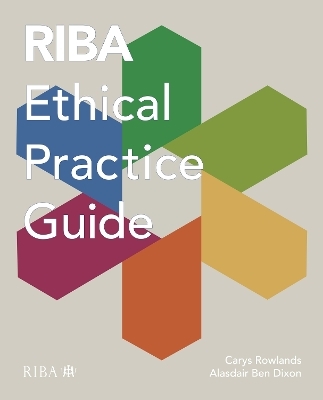
RIBA Ethical Practice Guide
RIBA Publishing (Verlag)
978-1-914124-72-3 (ISBN)
The climate and biodiversity emergency, the Grenfell Tower tragedy, and rising inequality all serve as reminders of the ethical responsibilities of the architect, and the importance of ethical decision-making. Ethical practice is a core competence for architects, which means it is vital that students and professionals develop a fundamental awareness and understanding of ethics.
This guide is designed to improve the industry’s grasp of ethical practice as it relates to the wider world, society, clients, the workplace, the profession, and the individual.
Aimed at architects, but relevant to built environment practitioners more generally, each chapter introduces an ethical duty, setting out the relevant legal, regulatory, and professional context before exploring the detailed subject matter and key principles. It includes an ethical dilemma for each duty and views and experiences from across the profession.
Also delving into issues such as equity, diversity and inclusion, social value, wellbeing, and integrity, it does not seek out ‘right’ or ‘wrong’ answers. Rather it encourages reflection on core values and possible consequences to encourage balanced and reasoned positions.
While ethical practice is invaluable in itself, it is also critical for establishing trust with clients, improving transparency and enhancing reputation. It can act as a magnet for the attraction and retention of high-quality staff. Contributing positively to the avoidance of disputes, it can also provide a level of accountability that is beneficial both to the industry and wider society.
Including contributions from: Neal Shasore, Farhana Yamin, Justin Bere, Jan Kattein, Darius Jenner Pullinger, Virginia Newman, Dhruv Sookhoo and Ben Channon.
Carys Rowlands is a barrister (unregistered) and Head of Registration & CPD at RICS. She is former Head of Professional Standards at the RIBA. Carys’ work for the RIBA involved professional conduct issues, dispute resolution services, specialist accreditation, conservation and heritage, and ethics in architectural practice. Carys has written publications in collaboration with the UN Global Compact, including Ethics in Architectural Practice. She was the staff lead for the RIBA Ethics and Sustainable Development Commission and has delivered CPD on ethical practice for the RIBA and independently for universities and schools of architecture. Alasdair Dixon is a founding Partner of Collective Works, co-ordinator of the Architects Climate Action Network and a Trustee of Architecture for Humanity UK. He has long held a commitment to finding a better way for architects to balance the needs of the wider world with the needs of their clients & stakeholders. During his career he has advised on ethical issues within a large established practice, an architectural charity and in the day to day running of a small practice.
Intro: Ethics in practice
-
History &
definitions
-
Ethics not morals
-
Ethics and culture
-
Virtue Ethics / Social
Contract Ethics / Duty Ethics / Utilitarian Ethics
-
Defining behaviours -
Codes, Regulations, Sanctions and Best Practice
-
The Public Interest -
How it is defined and who is responsible
-
Professional ethics
-
Recognising an ethical
issue
-
Ethical processes and
techniques
-
Whistleblowing
-
The 6 duties
Chapter 1 – Duty to the Wider World
- Legal obligations
- The Codes of Conduct and Practice
- The
Climate and Biodiversity emergency
- Sustainable
and Regenerative design (mitigation / adaptation)
- Supply
Chains and Resource Use
- Rights
of Nature
- Whole
life performance
- Net
Zero
- Openness
& transparency
- Tools
& techniques
- Dilemma
– Challenging the brief
Chapter 2 – Duty to Society and the End User
- Legal
obligations (tort & company law)
- Building
Regs, Housing Standards and Planning Policy
- The Codes of Conduct and Practice
- Specification
- Health
and safety
- Bribery
& corruption
- Equity,
Diversity and Inclusion (including bias & discrimination)
- Stakeholder
Identification and Engagement
- Social
Value and Social Responsibility (including link to sustainable development and
including embedding throughout organisation)
- Regeneration
- Evidence-informed
design
- Inclusive
design and inclusive environments
- Wellbeing
- Accuracy
& truthfulness
- Rights
of Future Generations
- Tools
& techniques
- Dilemma
- Affordable housing provision
Chapter 3 – Duty to those Commissioning Services
- Legal obligations
- The Codes of Conduct and Practice
- The client relationship
- Conflicts of interest
- Competence and diligence
- Lay
clients
- Experienced
private clients
- Public
Sector clients
- Confidentiality
- Time,
cost, quality
- Communication
and complaints
- Stewardship
and aftercare
- Learning
and improvement
- Tools
& techniques
- Dilemma
- Client’s best interest
-
Chapter 4 – Duty to those in the workplace
- Legal
obligations
- The Codes of Conduct and Practice
- Company
culture
- Respecting
colleagues
- Managing
practice and work environment
- Training
and development
- Health,
safety and wellbeing
- Equity,
Diversity and Inclusion (including the RIBA EDI Policy Guide)
- Modern
Slavery
- Tools
& techniques
- Dilemma
– Workplace
Chapter 5 – Duty to the
Profession
- The
Codes of Conduct and Practice
- Reputation & Value
- Respecting
previous appointments
- Copyright
& Credit
- Whistleblowing
and disclosure
- Knowledge
sharing
- Research,
Data Ethics, POE & Building Performance
- Contributing
to and representing the profession
- Equity,
Diversity and Inclusion (including the RIBA Inclusion Charter)
- Tools
& techniques
- Dilemma
- A competition
Chapter 6 – Duty to Oneself
- The Codes of Conduct and Practice
- Principles
and values
- Competence
- Accountability
- Continuing
Professional Development
- Evaluation,
reflection and positionality
- Pro
Bono work
- Bribery
& corruption
- Tools
& techniques
- Dilemma
- A conflict of interest
Conclusion – Resolving Ethical
Issues
-
Core values
-
Decision making
-
Lifelong learning
-
Independence
-
Leadership
-
Advocacy
-
Resources and toolkits
-
Reviews and feedback
| Erscheinungsdatum | 11.07.2023 |
|---|---|
| Verlagsort | London |
| Sprache | englisch |
| Maße | 170 x 210 mm |
| Themenwelt | Sozialwissenschaften ► Soziologie |
| Technik ► Architektur | |
| ISBN-10 | 1-914124-72-3 / 1914124723 |
| ISBN-13 | 978-1-914124-72-3 / 9781914124723 |
| Zustand | Neuware |
| Informationen gemäß Produktsicherheitsverordnung (GPSR) | |
| Haben Sie eine Frage zum Produkt? |
aus dem Bereich