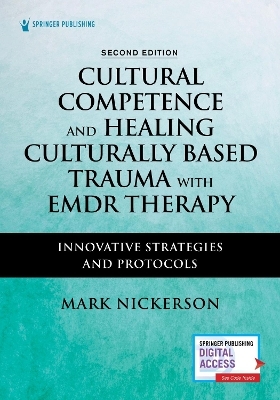
Cultural Competence and Healing Culturally Based Trauma with EMDR Therapy
Springer Publishing Co Inc (Verlag)
978-0-8261-6341-7 (ISBN)
Praise for the first edition:
This book is on the cutting edge—it shows us the vast potential of EMDR in healing culturally based traumas that persist today and the traumas that are endemic to our cultural histories. The topics targeted could not be timelier . . . Few works have the scope, breadth, and depth of information and practical tools provided to extend cultural competence that we see in [this book].
—Sandra S. Lee and Kimberly Molfetto (2017). Cultural Competence, Cultural Trauma, and Social Justice With EMDR [Review of Cultural Competence and Healing Culturally Based Trauma With EMDR Therapy: Innovative Strategies and Protocols]. PsycCRITIQUES, 62(43).
Now in its second edition, this groundbreaking text continues to offer guiding direction on the frontiers of culturally informed EMDR therapy and the treatment of culturally based trauma and adversity
Over twenty-five authors combine to address a diverse range of current and emerging topics. Ten new second edition chapters include a call for broader recognition of culturally based trauma and adversity within the trauma field, the core human need for connection and belonging, and strategies for clinician self-reflection in developing a culturally competent clinical practice that is multicultural inclusive, actively anti-oppressive, and grounded in cultural humility. Other new chapters offer considerations in working with Black, American Indian, Asian-American, and Latinx clients; immigration challenges; and social class identity.
Overall, this book provides graspable conceptual frameworks, useful language and terminology, in-depth knowledge about specific cultural populations, clinical examples, practical intervention protocols and strategies, research citations, and additional references. This text speaks not only to EMDR practitioners but has been recognized as a groundbreaking work for therapists in clinical practice. Purchase includes digital access for use on most mobile devices or computers.
New to the Second Edition:
Ten new chapters addressing timely topics
A framework for defining and depicting different themes of Culturally Based Trauma and Adversity (CBTA)
Specific considerations for working with Black, American Indian, Asian-American, Latinx clients, and other racial/ethnic populations
Exploration of social class related experiences and identities as well as additional coverage of challenges related to immigration and acculturation
Key Features:
Twenty-eight contributing authors with diverse professional and lived experiences
Best-practice methods for cultural competence integrated into EMDR therapy
Culturally attuned clinical assessment and case formulation
Innovative protocols and strategies for treating socially based trauma and adversity
Enriches the adaptive information processing model with research-based knowledge of social information processing
Specific chapters devoted to LGBTQIA+ issues and transgenerational cultural trauma including antisemitism
Strategies and a protocol for dismantling social prejudice and discrimination
Combines conceptual theory with practical application examples and methods
Mark Nickerson, LICSW, is a psychotherapist, clinical consultant, and trainer with a specialty in trauma treatment. He has more than 35 years of clinical experience and is based in Amherst, MA, US. Nickerson is a graduate of Wesleyan University and the University of Michigan School of Social Work. He is a former president of the EMDR International Association, where he has served on the Board for eight years. He is an EMDR trainer for the EMDR Institute and currently serves on the EMDR Council of Scholars: The Future of EMDR Project.
List of Contributors
Foreword
Acknowledgments
Introduction
SECTION I. ENHANCING CULTURAL COMPETENCE AND ADDRESSING CULTURALLY BASED TRAUMA AND ADVERSITY IN EMDR THERAPY
Chapter 1. Cultural Competence and EMDR Therapy
Chapter 2. Connection and Belonging: A Core Human Need—Implications Within EMDR Therapy
Chapter 3. Culturally Based Trauma and Adversity: Definition and Recognition
Chapter 4. The Work Starts with Us: Personal Reflection, Assessing Your Practice, and Setting Goals
Chapter 5. Opening the Door: Exploring Social and Cultural Experiences and Building Resources—EMDR Phases 1–2
Chapter 6. Healing and Resilience Building with EMDR Reprocessing: Target Selection and EMDR Phases 3–6
Chapter 7. Dismantling Prejudice with EMDR Therapy
SECTION II. MULTICULTURAL, INTERSETIONAL, AND ANTI-RACIST APPROACHES TO PSYCHOTHERAPY
Chapter 8. Strategies for Implementation of an Anti-Oppressive, Anti-racist, Intersectional Lens in EMDR Therapy with Black Clients
Chapter 9. EMDR Therapy and Consultation with an Intercultural Approach
SECTION III. RACE, ETHNICITY, AND SOCIAL CLASS
Chapter 10. Culturally Informed Recommendations for EMDR Therapy with American Indians
Chapter 11. Considerations When Working with Asian-Americans in EMDR Therapy
Chapter 12. Cultural and Treatment Considerations When Using EMDR Therapy with Latinx Clients
Chapter 13. The Transgenerational Impact of Anti-semitism
Chapter 14. Social Class as Cultural Identity and Its Unique Contributions in EMDR Intervention
SECTION IV. IMMIGRATION, REFUGEE/ASSYLUM SEEKERS AND ACCULTURATION
Chapter 15. Clinical Considerations When Treating Immigration-Based Trauma Within Latinx Clients Using EMDR Therapy
Chapter 16. Culturally Attuned EMDR Therapy with an Immigrant Woman Suffering from Social Anxiety
Chapter 17. The EMDR Approach Used as a Tool to Provide Psychological Help to Refugees and Asylum Seekers
SECTION V. LGBTQ ISSUES: SEX, GENDER, AND AFFECTIONAL ORIENTATIONS
Chapter 18. EMDR Therapy as Affirmative Care for Transgender and Nonbinary Clients
Chapter 19. EMDR Therapy with Lesbian/Gay/Bisexual Clients
Chapter 20. Sex, Gender, and Affectional Identities and Intersectionality: Expanding Application of Gender Diversity
SECTION VI. SPECIFIC CULTURES AND SOCIAL STIGMA
Chapter 21. Left Out and Left Behind: EMDR and the Cultural Construction of Intellectual Disability
Chapter 22. "People Like Me Don't Get Mentally Ill": Social Identity Theory, EMDR, and the Uniformed Services
Chapter 23. EMDR With Issues of Appearance, Aging, and Class
SECTION VII. INNOVATIVE EMDR PROTOCOLS
Chapter 24. Legacy Attuned EMDR Therapy: Toward a Coherent Narrative and Resilience
Chapter 25. EMDR in a Group Setting (GEMDR)
SECTION VIII. GLOBAL FRONTIERS OF EMDR INTERVENTION
Chapter 26. Learning EMDR in Uganda: An Experiment in Cross-Cultural Collaboration
Chapter 27. EMDR Therapy in Diverse Cultural Contexts
Index
| Erscheinungsdatum | 03.10.2022 |
|---|---|
| Zusatzinfo | 11 Illustrations |
| Verlagsort | New York |
| Sprache | englisch |
| Maße | 178 x 254 mm |
| Gewicht | 798 g |
| Themenwelt | Geisteswissenschaften ► Psychologie ► Biopsychologie / Neurowissenschaften |
| Geisteswissenschaften ► Psychologie ► Klinische Psychologie | |
| Medizin / Pharmazie ► Medizinische Fachgebiete ► Psychiatrie / Psychotherapie | |
| Medizin / Pharmazie ► Physiotherapie / Ergotherapie ► Rehabilitation | |
| Sozialwissenschaften ► Soziologie | |
| ISBN-10 | 0-8261-6341-6 / 0826163416 |
| ISBN-13 | 978-0-8261-6341-7 / 9780826163417 |
| Zustand | Neuware |
| Informationen gemäß Produktsicherheitsverordnung (GPSR) | |
| Haben Sie eine Frage zum Produkt? |
aus dem Bereich