The Reconstruction Desegregation Debate
Michigan State University Press (Verlag)
978-1-61186-450-2 (ISBN)
- Titel z.Zt. nicht lieferbar
- Versandkostenfrei
- Auch auf Rechnung
- Artikel merken
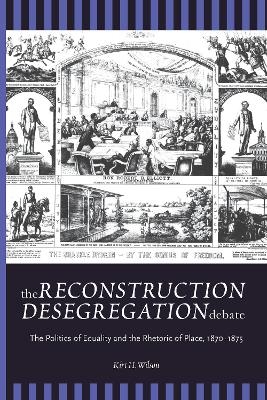
Kirt Wilson examines Reconstruction’s desegregation debate to explain how it represented an important movement in the evolution of U.S. race relations. He outlines how Congress fought to control the scope of black civil rights by contesting the definition of black equality, and the expediency and constitutionality of desegregation. Wilson explores how the debate over desegregation altered public memory about slavery and the Civil War, while simultaneously shaping a political culture that established the trajectory of race relations into the next century.
Chapter 1: THE SYMBOLIC MEANING OF SEGREGATION 1 Segregation before the Reconstruction Era 4 Reconstruction: The Politics of Equality and the Rhetoric of Place 10Chapter 2: THE LEGISLATIVE HISTORY OF THE 1875 CIVIL RIGHTS ACT 17 The Origins of National Desegregation 18 The Congressional Debates of 1874 23 The House Debate, 1874 The Senate Debate, 1874 The Fall Election of 1874 36 The Congressional Debates of 1875 37 The House Debate, 1875 The Senate Debate, 1875 The Civil Rights Act in the Post-Reconstruction Era 42Chapter 3: THE POLITICS OF EQUALITY IN CHARLES SUMNER'S PROPHETIC VISION 47 The Tumultuous Career of Charles Sumner 48 "The Crime against Kansas" Sumner's Opposition to the Fourteenth Amendment Lessons for Desegregation Sumner's Politics of Equality 56 Equality versus Inequality From Slave to Citizen The Bill's Necessity Reinterpreting the ConstitutionChapter 4: BLACK EQUALITY AND THE CIVIL RIGHTS ACT OF 1875 77 The First Voice: White Supremacy and Black Inferiority 78 The Second Voice: The Rhetoric of Black Equality 86 Reshaping America's Public Memory Using the Arguments and Actions of Others Equality through Enactment Equality through Confrontation The Nature of This Black Equality The Third Voice: The Moderate Democrats' Rhetoric of Place 108 Divine and Natural Racial Difference The Difference of Individual Ability Social Equality Black Equality as Separate but EqualChapter 5: EXPEDIENCY ARGUMENTS AND THE CIVIL RIGHTS ACT OF 1875 121 Deliberative Rhetoric and the Issue of Expediency 122 A Question of Need: Definitions of the Situation 123 The Republicans' Textual Context: Slavery Continues and Justice Must Be Served The Opponents' Textual Context: Bury the Past and Harmony Will Prevail Evaluating the Bill's Consequences 133 A Bill to Secure Justice and Protect National Prosperity A Bill to Create Conflict and Increase Prejudice The Substantial Patterns of Place versus the Formal Patterns of Equality 144Chapter 6: CONSTITUTIONAL ARGUMENTS AND THE CIVIL RIGHTS ACT OF 1875 151 Reconstruction Constitutional Politics: Setting the Stage for Desegregation 152 The 1870s Civil Rights Debate: Two Versions of the Constitution 159 Constitutional Continuity: American Federalism and States' Rights Constitutional Transformation: Rescuing the Slaughter- House Decision The Discursive Structure of Constitutional Meaning 172 The Democratic Position: To Preserve State Authority The Republican Position: To Ensure Black Equality Revisiting Originalism and Constitutional IntentChapter 7: THE TRIUMPH OF PLACE OVER EQU'ALITY 183 The Reconstruction of America's Political Culture 184 The Triumph of the Rhetoric of Place 193Epilogue 197Appendix A: The Civil Rights Act of 1875 201
| Erscheinungsdatum | 19.04.2022 |
|---|---|
| Reihe/Serie | Rhetoric & Public Affairs |
| Verlagsort | East Lansing, MI |
| Sprache | englisch |
| Maße | 152 x 229 mm |
| Themenwelt | Geschichte ► Allgemeine Geschichte ► Neuzeit (bis 1918) |
| Geisteswissenschaften ► Geschichte ► Regional- / Ländergeschichte | |
| Geschichte ► Teilgebiete der Geschichte ► Militärgeschichte | |
| Geisteswissenschaften ► Sprach- / Literaturwissenschaft ► Sprachwissenschaft | |
| Sozialwissenschaften ► Ethnologie | |
| Sozialwissenschaften ► Soziologie | |
| ISBN-10 | 1-61186-450-X / 161186450X |
| ISBN-13 | 978-1-61186-450-2 / 9781611864502 |
| Zustand | Neuware |
| Informationen gemäß Produktsicherheitsverordnung (GPSR) | |
| Haben Sie eine Frage zum Produkt? |
aus dem Bereich