A Companion to Medical Anthropology (eBook)
John Wiley & Sons (Verlag)
978-1-119-71894-9 (ISBN)
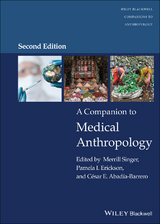
The fully revised new edition of the defining reference work in the field of medical anthropology
A Companion to Medical Anthropology, Second Edition provides the most complete account of the key issues and debates in this dynamic, rapidly growing field. Bringing together contributions by leading international authorities in medical anthropology, this comprehensive reference work presents critical assessments and interpretations of a wide range of topical themes, including global and environmental health, political violence and war, poverty, malnutrition, substance abuse, reproductive health, and infectious diseases. Throughout the text, readers explore the global, historical, and political factors that continue to influence how health and illness are experienced and understood.
The second edition is fully updated to reflect current controversies and significant new developments in the anthropology of health and related fields. More than twenty new and revised articles address research areas including war and health, illicit drug abuse, climate change and health, colonialism and modern biomedicine, activist-led research, syndemics, ethnomedicines, biocommunicability, COVID-19, and many others. Highlighting the impact medical anthropologists have on global health care policy and practice, A Companion to Medical Anthropology, Second Edition:
- Features specially commissioned articles by medical anthropologists working in communities worldwide
- Discusses future trends and emerging research areas in the field
- Describes biocultural approaches to health and illness and research design and methods in applied medical anthropology
Addresses topics including chronic diseases, rising levels of inequality, war and health, migration and health, nutritional health, self-medication, and end of life care Part of the acclaimed Wiley Blackwell Companions to Anthropology series, A Companion to Medical Anthropology, Second Edition, remains an indispensable resource for medical anthropologists, as well as an excellent textbook for courses in medical anthropology, ethnomedicine, global health care, and medical policy.
Merrill Singer is Emeritus Professor in the Anthropology Department at the University of Connecticut, USA, as well as Senior Research Scientist in the Institute for Collaboration on Health, Intervention, and Policy (InCHIP) at the University of Connecticut, USA. For his work in the field of medical anthropology, Professor Singer has been awarded a number of prestigious awards, including the Society for Medical Anthropology Career Award, and the Prize for Distinguished Achievement in the Critical Study. He is author and editor of numerous publications on disease interactions, global warming and health, including the Wiley Blackwell Companion to the Anthropology of Environmental Health.
Pamela Erickson is Professor of Anthropology at the University of Connecticut, USA. Her research focuses on medical anthropology, maternal and child health, global health, and sexual and reproductive health of adolescents and young adults. She is fellow of the American Anthropological Association and the Society for Applied Anthropology, and has also served on the Governing Council of the Family and Reproductive Health Section of the American Public Health Association.
César Abadía-Barrero is Associate Professor in the Anthropology Department and the Human Rights Institute at the University of Connecticut, USA. His research interests involve medical anthropology in Latin America as well as activist-oriented themes such as health and human rights, legal and moral issues in health, social science theory, and health inequalities.
The fully revised new edition of the defining reference work in the field of medical anthropology A Companion to Medical Anthropology, Second Edition provides the most complete account of the key issues and debates in this dynamic, rapidly growing field. Bringing together contributions by leading international authorities in medical anthropology, this comprehensive reference work presents critical assessments and interpretations of a wide range of topical themes, including global and environmental health, political violence and war, poverty, malnutrition, substance abuse, reproductive health, and infectious diseases. Throughout the text, readers explore the global, historical, and political factors that continue to influence how health and illness are experienced and understood. The second edition is fully updated to reflect current controversies and significant new developments in the anthropology of health and related fields. More than twenty new and revised articles address research areas including war and health, illicit drug abuse, climate change and health, colonialism and modern biomedicine, activist-led research, syndemics, ethnomedicines, biocommunicability, COVID-19, and many others. Highlighting the impact medical anthropologists have on global health care policy and practice, A Companion to Medical Anthropology, Second Edition: Features specially commissioned articles by medical anthropologists working in communities worldwide Discusses future trends and emerging research areas in the field Describes biocultural approaches to health and illness and research design and methods in applied medical anthropology Addresses topics including chronic diseases, rising levels of inequality, war and health, migration and health, nutritional health, self-medication, and end of life care Part of the acclaimed Wiley Blackwell Companions to Anthropology series, A Companion to Medical Anthropology, Second Edition, remains an indispensable resource for medical anthropologists, as well as an excellent textbook for courses in medical anthropology, ethnomedicine, global health care, and medical policy.
Merrill Singer is Emeritus Professor in the Anthropology Department at the University of Connecticut, USA, as well as Senior Research Scientist in the Institute for Collaboration on Health, Intervention, and Policy (InCHIP) at the University of Connecticut, USA. For his work in the field of medical anthropology, Professor Singer has been awarded a number of prestigious awards, including the Society for Medical Anthropology Career Award, and the Prize for Distinguished Achievement in the Critical Study. He is author and editor of numerous publications on disease interactions, global warming and health, including the Wiley Blackwell Companion to the Anthropology of Environmental Health. Pamela Erickson is Professor of Anthropology at the University of Connecticut, USA. Her research focuses on medical anthropology, maternal and child health, global health, and sexual and reproductive health of adolescents and young adults. She is fellow of the American Anthropological Association and the Society for Applied Anthropology, and has also served on the Governing Council of the Family and Reproductive Health Section of the American Public Health Association. César Abadía-Barrero is Associate Professor in the Anthropology Department and the Human Rights Institute at the University of Connecticut, USA. His research interests involve medical anthropology in Latin America as well as activist-oriented themes such as health and human rights, legal and moral issues in health, social science theory, and health inequalities.
Notes on Contributors
César E. Abadía-Barrero is Associate Professor of Anthropology and Human Rights at the University of Connecticut. His research has demonstrated how for-profit interests transform access, continuity, and quality of health care. He has conducted action-oriented ethnographic and mixed-method research on health-care privatization, health-care policies and programs, human rights judicialization and advocacy, and social movements in health in Brazil and Colombia. Currently, Dr. Abadía-Barrero is examining an intercultural proposal to replace environmental degradation with “buen vivir” (good living) in postpeace accord Colombia. In another project in the United States, he is studying the role of capitalism in dysregulating children’s bodies. He is the author of I Have AIDS but I am Happy: Children’s Subjectivities, AIDS, and Social Responses in Brazil (2011) and Health in Ruins: The Capitalist Destruction of Medical Care (Forthcoming).
Elise Andaya (PhD, New York University, 2007) is Associate Professor in Anthropology and Associate of the Center for the Elimination of Minority Health Disparities at the University at Albany (SUNY). She is a cultural medical anthropologist whose prize-winning research examines reproductive health, health-care policy and practice, and health disparities in the United States and Cuba. Her current research examines the race, health inequalities, and time (especially experiences of waiting) in the delivery of prenatal public health care in a New York City safety-net hospital.
Hans A. Baer is Principal Honorary Research Fellow in the School of Social Political Sciences at the University of Melbourne. He earned his PhD in Anthropology at the University of Utah in 1976. Baer taught at several US colleges and universities both on a regular and on a visiting basis. He was a Fulbright Lecturer at Humboldt University in East Berlin in 1988–1989. In 2004 Baer taught at the Australian National University and has been based at the University of Melbourne since 2006, as a regular academic until December 2013. He has published 25 books and some 220 book chapters and academic articles on a diversity of research topics, including Mormonism, African-American religion, sociopolitical life in East Germany before and after unification, critical health anthropology, medical pluralism in the United States, the United Kingdom, and Australia, the critical anthropology of climate change, Australian climate politics, mobility studies, and the political economy of higher education. Baer’s most recent books include Airplanes, the Environment, and the Human Condition (Routledge, 2020); Grappling with Societies and Institutions in the Era of Socio-Ecological Crisis: Journey of a Radical Anthropologist (Lexington Books, 2020), and Climate Change and Capitalism in Australia: An Eco-Socialist Vision for the Future (Routledge, 2022). He considers himself a scholar-activist and has been involved in a wide array of social movements, including the peace, labor, anti-apartheid, ethnic rights, environment, climate justice, and socialist movements.
Ron Barrett is Associate Professor of Anthropology at Macalester College. Conducting field research in India and North America, he has examined the ways that people come to terms with their mortality, ritual healing practices, and the social dynamics of infectious diseases. His dissertation research on mortality-informed stigma and the religious healing of leprosy is the topic of a book, Aghor Medicine: Pollution, Death and Healing in Northern India (University of California Press), which received the 2008 Welcome Medal from the Royal Anthropological Institute. Together with George Armelagos, he coauthored An Unnatural History of Emerging Infections, the second edition of which will be published in 2022 as Emerging Infections: The Human Determinants of Pandemic Diseases from Prehistory to the Present (Oxford University Press). Prior to his academic career, Barrett was a registered nurse with clinical experience in hospice, brain injury rehabilitation, and neurointensive care.
Charles L. Briggs is Professor of Anthropology, Co-Director of Medical Anthropology Program, Co-Director of Berkeley Center for Social Medicine, University of California, Berkeley, and the Alan Dundes Distinguished Professor in the Department of Anthropology of the University of California, Berkeley. His books include The Wood Carvers of Córdova, New Mexico: Social Dimensions of an Artistic “Revival”; Learning How to Ask: A Sociolinguistic Appraisal of the Role of the Interview in Social Science Research; Voices of Modernity: Language Ideologies and the Politics of Inequality (with Richard Bauman); Competence in Performance: The Creativity of Tradition in Mexicano Verbal Art; Stories in the Time of Cholera: Racial Profiling during a Medical Nightmare (with Clara Mantini-Briggs); Making Health Public: How News Coverage Is Remaking Media, Medicine, and Contemporary Life (with Daniel Hallin); Tell Me Why My Children Died: Rabies, Indigenous Knowledge and Communicative Justice (with Clara Mantini-Briggs); and Unlearning: Rethinking Poetics, Pandemics, and the Politics of Knowledge. He has received such honors as the James Mooney Award, the Chicago Folklore Prize, Edward Sapir Book Prize, the J. I. Staley Prize, the Américo Paredes Prize, the New Millennium Book Award, the Cultural Horizons Prize, the Robert B. Textor and Family Prize for Excellence in Anticipatory Anthropology, and fellowships from the John Simon Guggenheim Memorial Foundation, the National Endowment for the Humanities, the Lichtenberg-Kolleg, the Center for Advanced Studies in the Behavioral Sciences, the School for Advanced Research, and the Woodrow Wilson International Center for Scholars. He is currently President of the Society for Medical Anthropology.
Heide Castañeda is Professor of Anthropology at the University of South Florida. Her research areas include political and legal anthropology, medical anthropology, borders, migration, migrant health, citizenship, and policing, focusing on the US/Mexico border, United States, Mexico, Germany, and Morocco. She is the author of Borders of Belonging: Struggle and Solidarity in Mixed-Status Immigrant Families (Stanford University Press, 2019) and co-editor of Unequal Coverage: The Experience of Health Care Reform in the United States (NYU Press, 2018). Her latest book is Migration and Health: Critical Perspectives (Routledge). Dr. Castañeda has also published dozens of research articles on migration and health-care access for immigrant populations. Her work has been funded by the National Science Foundation, National Institutes of Health, the Fulbright Program, the German Academic Exchange Service (DAAD), and the Wenner-Gren Foundation for Anthropological Research.
Kitty Corbett is Professor Emerita in the Faculty of Health Sciences at Simon Fraser University, Burnaby/Vancouver, Canada. She has expertise in multimethod research, change theories, health communication, knowledge translation, cultural diversity, social marketing, and public health advocacy. She has contributed to public health projects and research addressing local to global health challenges of antibiotic resistance, appropriate pharmaceutical use, HIV and STI prevention, tobacco use, Chagas disease, cancer prevention, and promotion of local and traditional foods. With students, community partners, and colleagues, she has collaborated on and directed projects in the United States, Canada, Taiwan, Vietnam, Mongolia, Russia, Mexico, Guatemala, Peru, Argentina, and other countries. She has twice been a Fulbright Scholar, in Taiwan and Mexico.
William W. Dressler (PhD Connecticut, 1978) is Professor Emeritus of Anthropology at the University of Alabama. His research interests focus on cognitive culture theory, research methods, and especially the relationship between culture and the individual. Dressler and colleagues have examined these factors in settings as diverse as urban Great Britain, the Southeast United States, the West Indies, Mexico, and Brazil. His recent work emphasizes concepts and methods for examining the health effects of individual efforts to achieve culturally defined goals and aspirations. His research has been funded by both the National Institutes of Health and the National Science Foundation.
Mounia El Kotni is a medical anthropologist (PhD SUNY Albany, 2016) and postdoctoral researcher at the Cems-EHESS in Paris, France, and Fondation de France Research Fellow (2019–2021). She has been conducting research in Chiapas, Mexico, since 2013 on the medicalization of pregnancy and childbirth and on traditional midwives’ rights. More recently, her research has focused on the intersection between reproductive and environmental justice.
Ruth Fitzgerald is Professor of Social Anthropology at the University of Otago, New Zealand. She researches in the field of medical anthropology with a focus on ideologies of health, the cultural significance of new medical technologies, and moral reasoning and genetic testing with a geographic focus on Aotearoa, New Zealand. She was awarded the Te Rangi Hiroa Medal by the Royal Society of New Zealand for her work in medical anthropology and is currently the general editor of Sites: A Journal of Social Anthropology and Cultural Studies. She continues to collaborate with Julie Park and Michael Legge on publications in the everyday ethics of reproductive decision-making and genetic testing and teaches across the graduate and postgraduate programs of...
| Erscheint lt. Verlag | 23.2.2022 |
|---|---|
| Reihe/Serie | Blackwell Companions to Anthropology |
| Blackwell Companions to Anthropology | Wiley Blackwell Companions to Anthropology |
| Sprache | englisch |
| Themenwelt | Geisteswissenschaften |
| Medizin / Pharmazie ► Allgemeines / Lexika | |
| Sozialwissenschaften ► Soziologie | |
| Schlagworte | Anthropologie • Anthropology • Gesundheits- u. Sozialwesen • Health & Health Care Special Topics • Health & Social Care • Medical Anthropology • medical anthropology essays • medical anthropology issues • medical anthropology methods • medical anthropology reference • medical anthropology research • medical anthropology textbook • medical anthropology theories • Medizinische Anthropologie • Sociology • Sociology of Health & Illness • Soziologie • Soziologie d. Gesundheit u. Krankheit • Spezialthemen Gesundheitswesen |
| ISBN-10 | 1-119-71894-5 / 1119718945 |
| ISBN-13 | 978-1-119-71894-9 / 9781119718949 |
| Informationen gemäß Produktsicherheitsverordnung (GPSR) | |
| Haben Sie eine Frage zum Produkt? |
 EPUB (Adobe DRM)
Kopierschutz: Adobe-DRM
Adobe-DRM ist ein Kopierschutz, der das eBook vor Mißbrauch schützen soll. Dabei wird das eBook bereits beim Download auf Ihre persönliche Adobe-ID autorisiert. Lesen können Sie das eBook dann nur auf den Geräten, welche ebenfalls auf Ihre Adobe-ID registriert sind.
Details zum Adobe-DRM
Dateiformat: EPUB (Electronic Publication)
EPUB ist ein offener Standard für eBooks und eignet sich besonders zur Darstellung von Belletristik und Sachbüchern. Der Fließtext wird dynamisch an die Display- und Schriftgröße angepasst. Auch für mobile Lesegeräte ist EPUB daher gut geeignet.
Systemvoraussetzungen:
PC/Mac: Mit einem PC oder Mac können Sie dieses eBook lesen. Sie benötigen eine
eReader: Dieses eBook kann mit (fast) allen eBook-Readern gelesen werden. Mit dem amazon-Kindle ist es aber nicht kompatibel.
Smartphone/Tablet: Egal ob Apple oder Android, dieses eBook können Sie lesen. Sie benötigen eine
Geräteliste und zusätzliche Hinweise
Buying eBooks from abroad
For tax law reasons we can sell eBooks just within Germany and Switzerland. Regrettably we cannot fulfill eBook-orders from other countries.
aus dem Bereich