


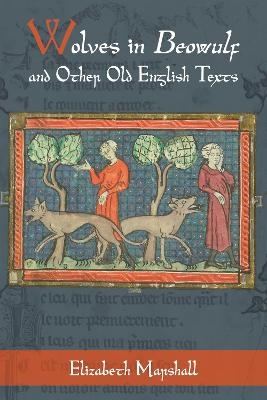
Wolves in Beowulf and Other Old English Texts
Seiten
2022
D.S. Brewer (Verlag)
978-1-84384-640-6 (ISBN)
D.S. Brewer (Verlag)
978-1-84384-640-6 (ISBN)
A fresh and sympathetic investigation of the depiction of wolves in early medieval literature, recuperating their reputation.
The best-known wolves of Old English literature are the Beasts of Battle, alongside ravens and eagles as ravenous heralds of doom who haunt the battlefield in the hope of fresh meat plucked from still-warm bodies. Yet to reduce these animals to mere corpse-scavengers is to deny that they are frequently imbued with a variety of far more nuanced meanings elsewhere in the corpus.
Two such meanings are inherited from ancient and medieval European lupine motifs: the superstition that the wolf could steal a person's speech, and the perceived contiguous natures of wolves and human outlaws. Tracing the history of these associations and the evidence to suggest that they were known to writers working in early medieval England, this book provides new, animal-centric readings of Wulf and Eadwacer, Abbo of Fleury and Ælfric's Passiones Eadmundi, and Beowulf, placing these texts within a lupine literary network that transcends time and place. By exploring the intricate, contradictory, and even sympathetic depictions of the wolves and wolf-like entities found within these texts, this book banishes all notions of the medieval wolf as the one-dimensional, man-eating creature that it is so often understood to be.
The best-known wolves of Old English literature are the Beasts of Battle, alongside ravens and eagles as ravenous heralds of doom who haunt the battlefield in the hope of fresh meat plucked from still-warm bodies. Yet to reduce these animals to mere corpse-scavengers is to deny that they are frequently imbued with a variety of far more nuanced meanings elsewhere in the corpus.
Two such meanings are inherited from ancient and medieval European lupine motifs: the superstition that the wolf could steal a person's speech, and the perceived contiguous natures of wolves and human outlaws. Tracing the history of these associations and the evidence to suggest that they were known to writers working in early medieval England, this book provides new, animal-centric readings of Wulf and Eadwacer, Abbo of Fleury and Ælfric's Passiones Eadmundi, and Beowulf, placing these texts within a lupine literary network that transcends time and place. By exploring the intricate, contradictory, and even sympathetic depictions of the wolves and wolf-like entities found within these texts, this book banishes all notions of the medieval wolf as the one-dimensional, man-eating creature that it is so often understood to be.
Elizabeth Marshall gained her PhD from the University of St Andrews, receiving awards for both her thesis and for her work researching the cultural and sociological issues related to top predator reintroduction to Britain.
Acknowledgements
Note on the Text
Abbreviations
Introduction: The Wolf in this Story
1 A Lexicological Survey of Lupine Outlaws
2 The Superstition of the Speech-Stealing Wolf
3 A Wolfish Way of Reading Wulf and Eadwacer
4 Abbo, Ælfric, and the Wolf in Edmund's Story
5 The Speech-stealing weargas and wulfas of Beowulf
Conclusion: The Stories Wolves Tell
Bibliography
Index
| Erscheinungsdatum | 16.06.2022 |
|---|---|
| Reihe/Serie | Nature and Environment in the Middle Ages |
| Verlagsort | Cambridge |
| Sprache | englisch |
| Maße | 156 x 234 mm |
| Gewicht | 487 g |
| Themenwelt | Geisteswissenschaften ► Sprach- / Literaturwissenschaft ► Anglistik / Amerikanistik |
| Geisteswissenschaften ► Sprach- / Literaturwissenschaft ► Literaturwissenschaft | |
| Sozialwissenschaften ► Soziologie | |
| ISBN-10 | 1-84384-640-3 / 1843846403 |
| ISBN-13 | 978-1-84384-640-6 / 9781843846406 |
| Zustand | Neuware |
| Informationen gemäß Produktsicherheitsverordnung (GPSR) | |
| Haben Sie eine Frage zum Produkt? |
Mehr entdecken
aus dem Bereich


aus dem Bereich
Poetik eines sozialen Urteils
Buch | Hardcover (2023)
De Gruyter (Verlag)
CHF 83,90


